EN


Industrial Cold Press Juicer vs Screw Press for Fruit Processing
When a processor starts comparing an industrial cold press juicer with a screw press, the labels can be misleading. “Cold press” describes a low-heat juice-making approach, while “screw press” describes a continuous mechanical compression method. In a fruit-processing project, they may be separate options, or a screw press may be one part of a broader cold-press line. What matters is whether the process fits the fruit, production rhythm, sanitation plan, and downstream use of both juice and pomace.
For B2B buyers, a specification sheet is only the starting point. Feed preparation, screen configuration, press settings, cleaning access, and the condition of the incoming fruit can all change the operating result. This comparison offers a practical way to choose an industrial cold press juicer or a screw press without treating a listed output or yield as universal.
First, Separate the Process Names
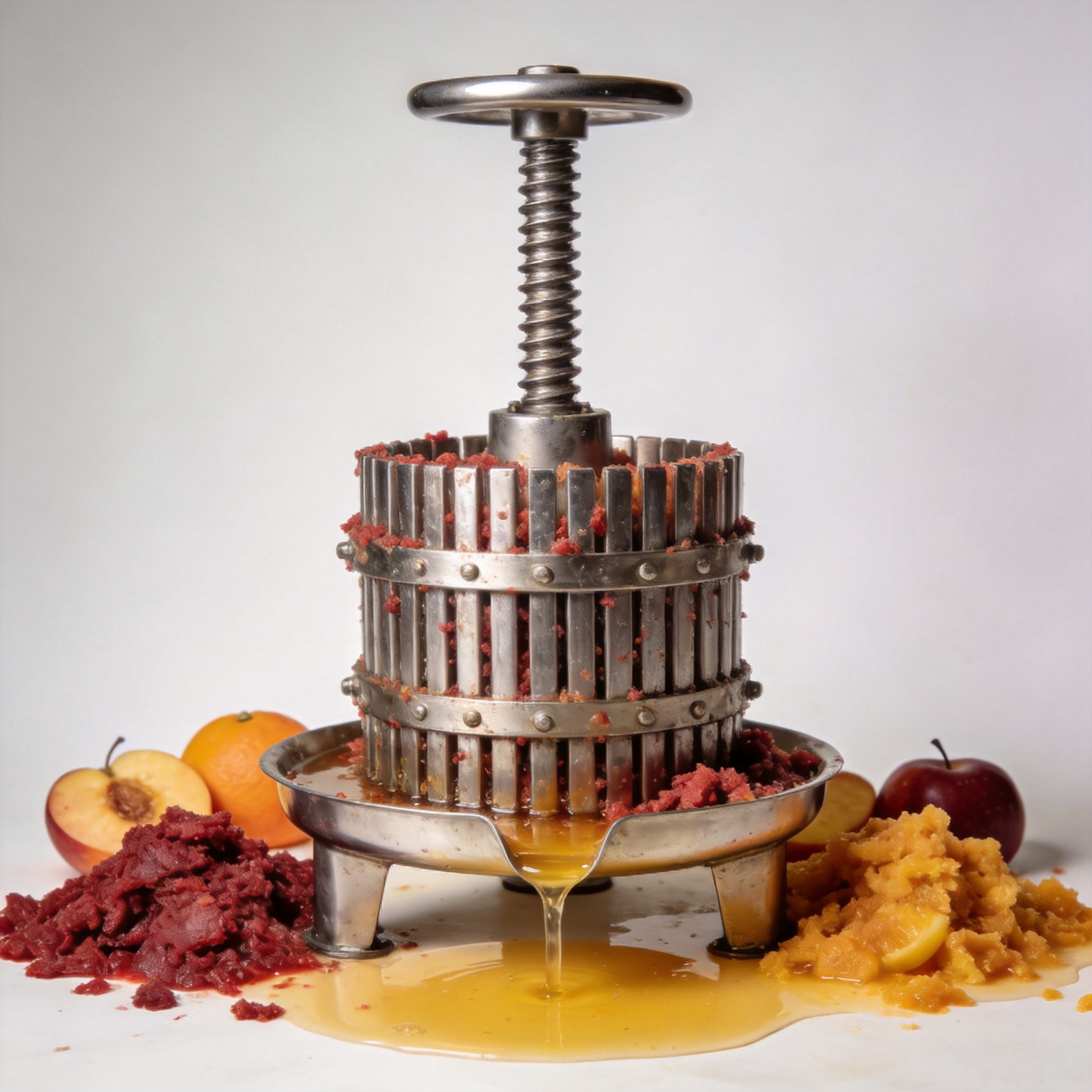
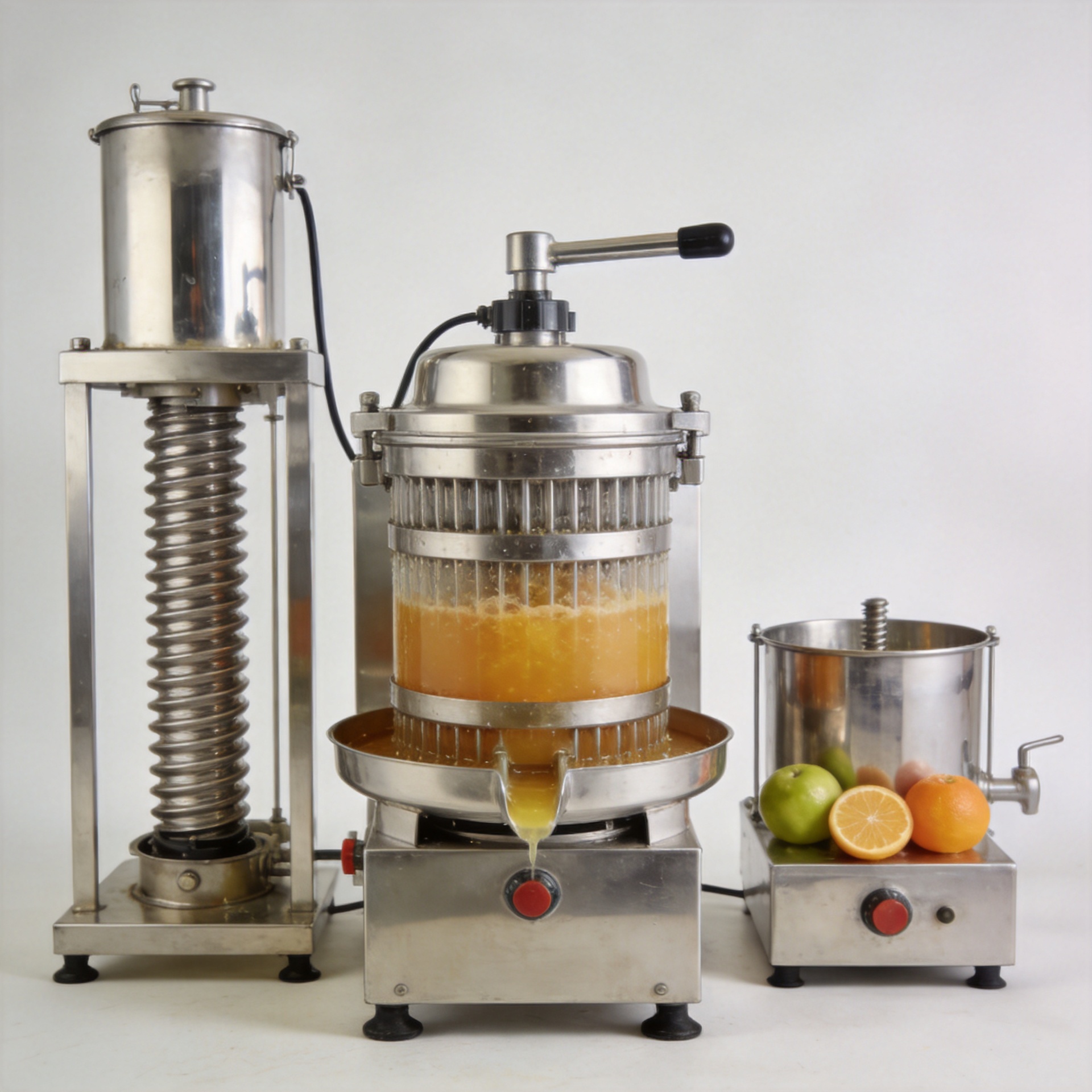
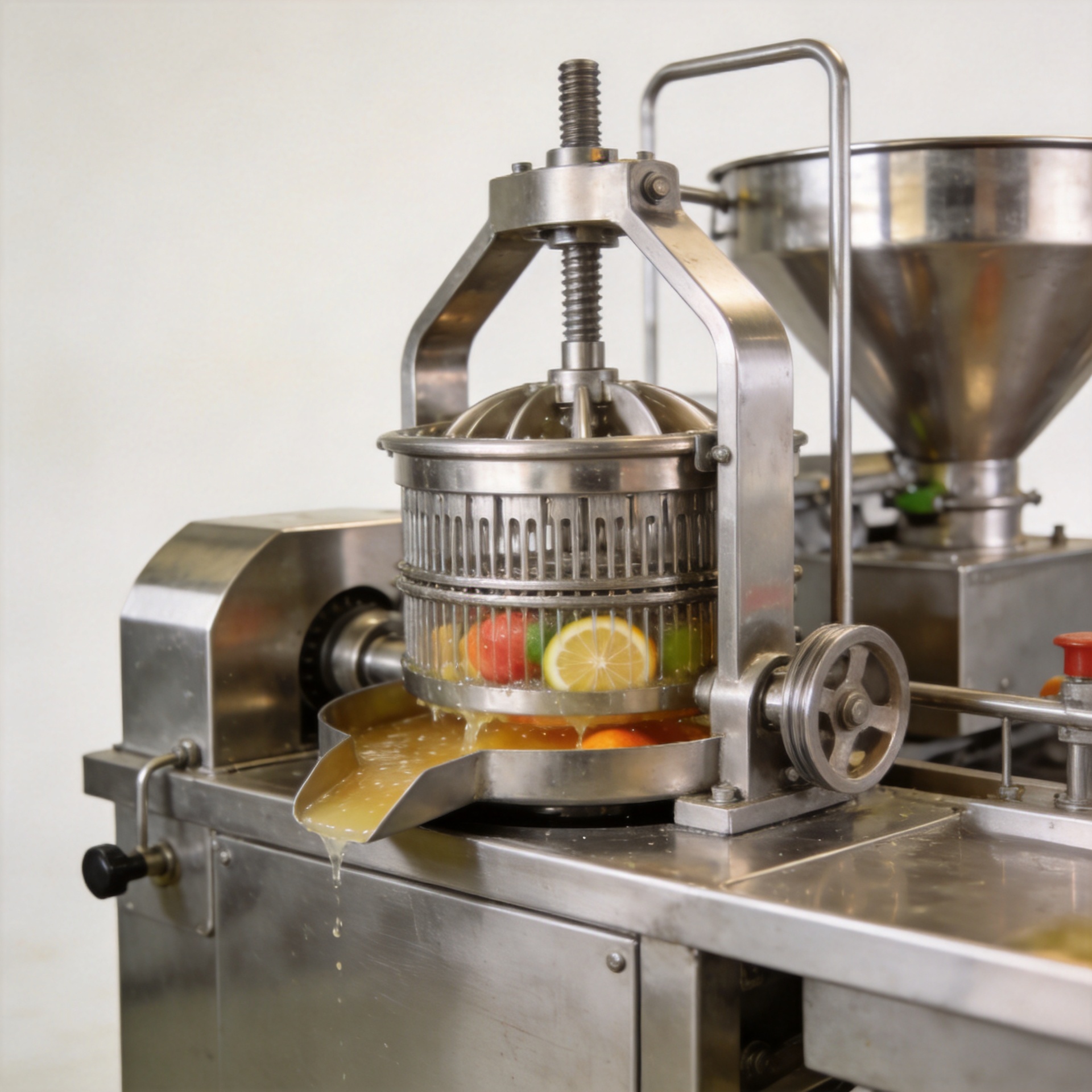
An industrial cold-press setup commonly aims to limit heat exposure during extraction. One familiar arrangement mills or pulps the fruit first and then presses the prepared pulp, sometimes with a batch or hydraulic press. The process can be appropriate where juice quality positioning, oxidation control, or a particular texture target is central to the product concept.
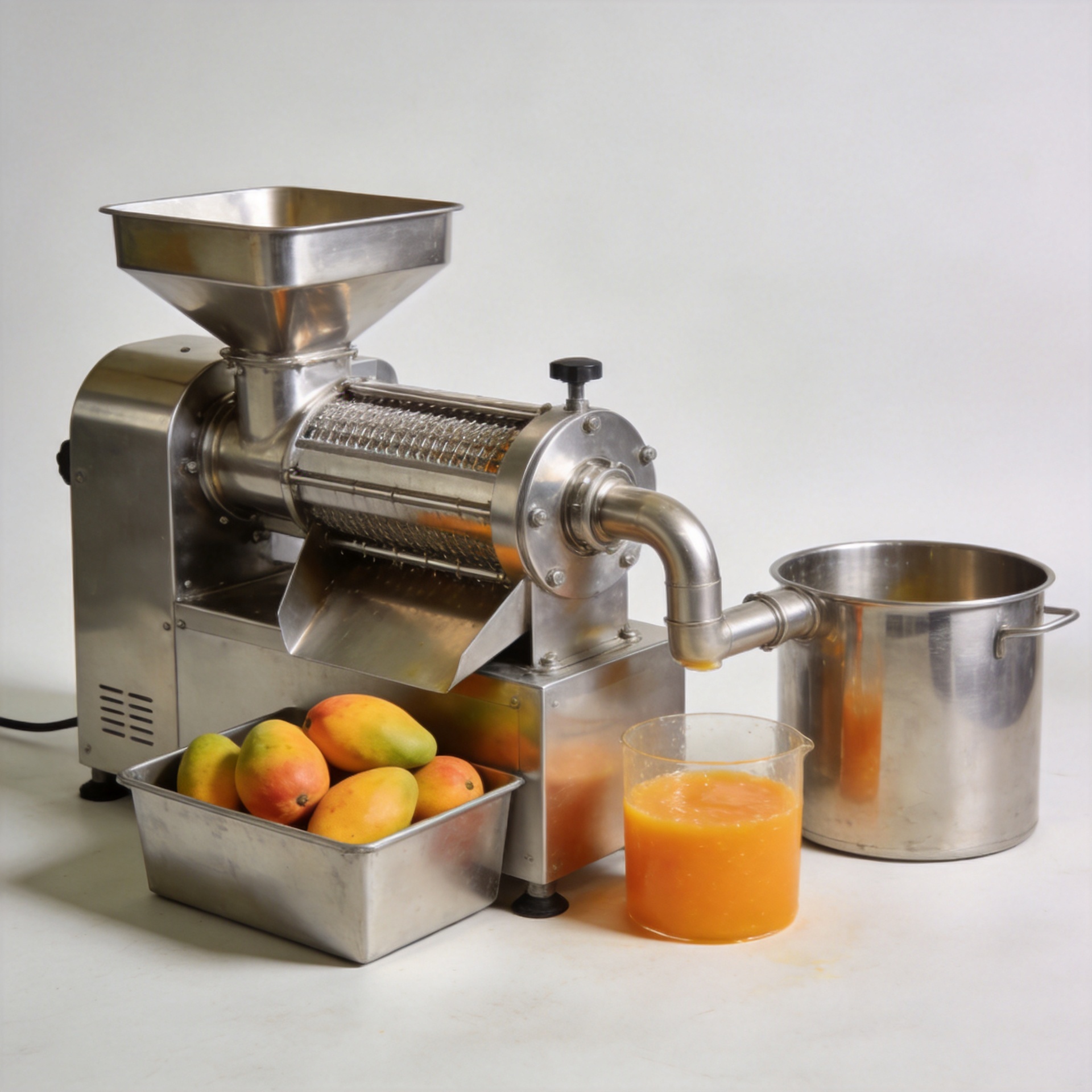
A screw press moves material forward with a rotating screw inside a perforated screen or barrel. As the available volume narrows, the material is compressed and liquid passes through the screen while pomace exits at the discharge end. In fruit processing, this continuous action can fit steady production, especially when the upstream washing, sorting, crushing, or pulping stages deliver a consistent feed.
That distinction matters because an industrial cold press juicer is often compared as a finished juice concept, while a screw press is evaluated as a machine module within a line. A buyer should therefore map the whole process before comparing motor power or headline capacity.
Industrial Cold Press Juicer vs Screw Press: Side-by-Side View
| Decision area | Industrial cold-press approach | Continuous screw press approach |
|---|---|---|
| Typical process flow | Often preparation followed by a dedicated pressing stage | Continuous compression through a screw and screen |
| Primary planning focus | Juice style, temperature management, batch handling, and pulp preparation | Feed consistency, throughput continuity, screen selection, and discharge handling |
| Fruit behavior | Can suit recipes that need controlled pulp preparation before pressing | Can suit many prepared fruit and vegetable feeds; fibrous or variable material needs testing |
| Operations | May require more attention to batch transfer and press-cycle timing | Usually supports a more continuous production rhythm when upstream feed is stable |
| Procurement question | What juice profile and process temperature are required? | What feed rate, moisture, fiber level, and cleaning routine will the press see? |
Use the table to frame the discussion rather than to rank the two options. A screw press may contribute to a low-temperature processing strategy, and a machine marketed as an industrial cold press juicer may use a different pressing architecture. Ask the supplier to draw the material flow from fruit reception to juice clarification or filling.
Choose by Fruit Condition, Not by Marketing Terms
Fruit variety and preparation determine whether a press will run smoothly. Apples, berries, citrus components, tropical fruit, tomato, and leafy vegetables do not behave the same way after crushing or pulping. Firm fruit may need a reliable crusher; soft fruit can create a dense mash; fibrous material can change drainage; and a high-pulp product may need a different separation plan from a clear juice product.
Before selecting an industrial cold press juicer, define the incoming material: whole or cut fruit, peel-on or peeled, fresh or thawed, expected solids, and seasonal variation. Then define the wanted output: fresh juice, puree-like juice, concentrate feed, or a stream that will be filtered later. These answers are more useful than a generic “fruit juice machine” request.
A higher nameplate capacity does not automatically make a machine the right fit. In practice, actual output depends on how evenly the feed is prepared and how consistently it enters the machine. A capacity target should be stated with the product, pre-treatment, operating hours, and acceptable pulp condition attached to it.
Key Specifications to Compare During Procurement
1. Throughput and operating rhythm
Ask whether the quoted capacity is a continuous feed rate, a press-cycle output, or an ideal rating under a defined material condition. Then compare it with the planned washing, crushing, pulping, collection, and cleaning windows. A continuous screw press can become a bottleneck if the upstream line cannot supply it steadily; a batch-oriented press can become the constraint if transfers and cycle time are not designed around it.
2. Yield claims and pomace targets
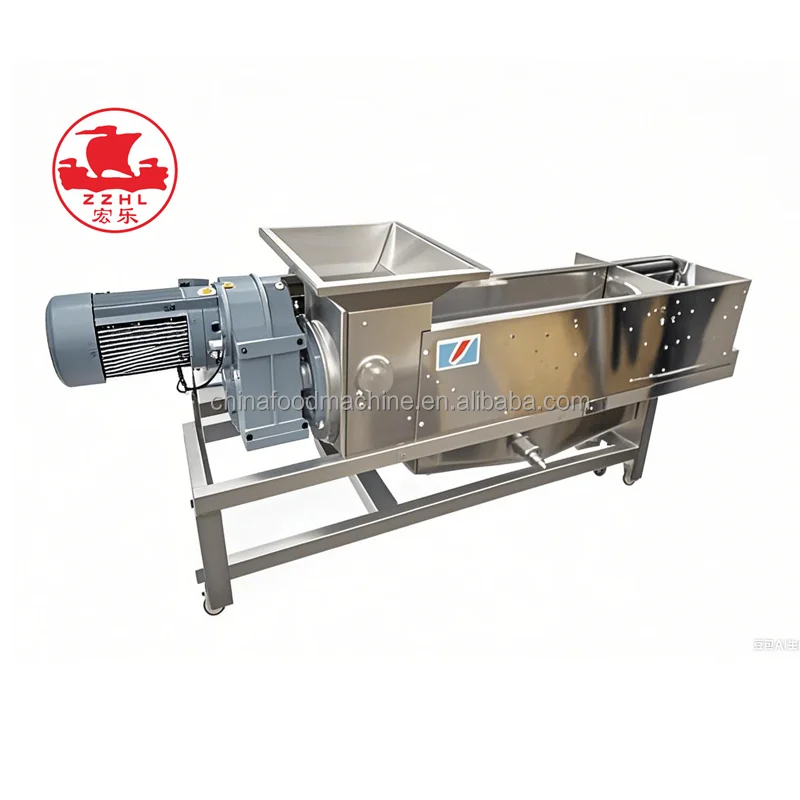
Yield is highly dependent on fruit variety, ripeness, particle size, screen condition, screw configuration, back-pressure adjustment, and operator settings. The matched product listing describes a food-grade SUS304 screw press with a stated 0.5–1 T/H range and an advertised 80% juice-yield figure. Treat that figure as a product-listing reference to verify with your own material, not as a universally assured result for every fruit.
3. Food-contact materials and cleaning access
For an industrial cold press juicer or a screw press, inspect food-contact material declarations, weld finish, screen removal, drainage points, and access for daily cleaning. Ask how the press is opened, which parts are wear items, and whether the proposed cleaning method fits your sanitation procedure. A machine that is hard to inspect can cost more in labor and production downtime than its purchase price suggests.
4. Downstream integration
Juice collection, pumping, filtration, pasteurization, chilling, and pomace conveyance should be reviewed as one system. A screw press can deliver a continuous stream, but the receiving tank and downstream pump must tolerate the expected solids. A cold-press concept may require extra attention to hold time and temperature control after extraction. Confirm pipe connections, electrical standards, controls interface, and space for maintenance before placing an order.
When a Screw Press Is the Better Fit
A screw press is often worth prioritizing when the plant needs continuous handling of prepared fruit or vegetables, expects regular production volumes, and can supply material at a stable rate. It can also be practical where the buyer wants a compact extraction module that connects to existing washing, crushing, or pulping equipment. The decision should still be based on a test or detailed technical review for the actual feedstock.
For buyers evaluating a defined machine option, the Food-Grade Screw Press for Fruit & Vegetable Processing is a relevant starting point for reviewing the listed capacity range and food-grade SUS304 construction. Confirm final configuration, suitability, and yield expectations with the supplier against your material and line requirements.
When an Industrial Cold-Press Approach Deserves More Attention
Give the cold-press process greater weight when your product strategy depends on a specific low-heat extraction approach, when recipe development requires controlled pulping and pressing stages, or when batch traceability is an important operational factor. That does not automatically exclude a screw press. It means the process design should show how temperature, exposure time, pulp handling, and cleaning are controlled from fruit preparation through juice collection.
There is no universal single-machine answer. A small processor with variable fruit types may value flexibility and process control; a larger operation with predictable feed may value continuous flow and integration. A sound decision is supported by an honest material-flow review and a clear acceptance test.
A Practical Buyer Checklist
- List each fruit or vegetable, its preparation method, and its expected seasonal variation.
- State the required hourly output as an operating condition, not only a nameplate number.
- Ask for a process-flow drawing that covers preparation, extraction, juice collection, pomace removal, and cleaning.
- Define which yield, moisture, pulp, and temperature measures will be checked during acceptance testing.
- Review food-contact materials, screen access, spare parts, service support, and the cleaning procedure.
- Confirm how the chosen industrial cold press juicer or screw press connects to downstream tanks, pumps, filtration, and filling equipment.
Conclusion
Comparing an industrial cold press juicer with a screw press is really a comparison of processing priorities. Cold-press language focuses attention on the extraction approach and juice concept; screw-press language focuses attention on continuous mechanical separation. Start with the fruit, the desired juice style, the required production rhythm, and the sanitation plan. With those points defined, you can request a configuration and acceptance criteria that make the equipment decision far more reliable.