EN


Industrial Dehydrator Machine: Questions to Ask a Manufacturer
Buying an industrial dehydrator machine is not simply a matter of comparing a catalog price or choosing the largest cabinet. For a food processor, distributor, or project buyer, the right purchase decision starts with a disciplined conversation about the product to be dried, the target output, the operating conditions, and the evidence the manufacturer can provide. A dehydrator removes moisture through controlled heat and airflow, but the way that process is engineered has a direct effect on batch consistency, labor, energy use, cleaning work, and the quality of the finished food.
Before you request a quotation, prepare a short product brief and a list of questions. This approach makes it easier to compare suppliers on the same basis and reduces the chance that an apparently suitable industrial dehydrator machine becomes difficult to operate after delivery.
1. What product will the industrial dehydrator machine process?
Start with the material, not the machine. Tell the manufacturer whether you will dry fruit slices, vegetables, herbs, spices, or another food material. Include the initial condition: fresh, washed, blanched, cut, peeled, or pre-treated. Different products release moisture at different rates and may need different tray loading, air distribution, or cleaning arrangements.
Ask the manufacturer to explain how the proposed industrial dehydrator machine handles your product shape, thickness, sugar content, stickiness, and acceptable final moisture level. A useful response describes the assumptions behind the recommendation instead of promising that one setting will suit every ingredient. If you plan to run several products, ask which changeovers require adjustment and how the recipe settings are documented.
2. How is capacity defined, and what evidence supports it?
Capacity figures can be misleading when suppliers use different bases. Ask whether the stated number refers to fresh input weight, finished dried output, tray loading, or a full production shift. Then ask for the assumed moisture removal, product thickness, loading density, drying time, and number of batches per day.
For an industrial dehydrator machine, the most useful capacity discussion connects the machine to your planned production rhythm. Request a simple calculation showing expected input per batch, estimated cycle time, unloading and loading time, and the daily throughput under normal operation. This lets you compare a compact unit that runs more cycles against a larger unit that may require more floor space and utilities.
Also ask how the supplier will validate the estimate. Can they test a representative sample, provide a process recommendation, or define an acceptance test before shipment? Written assumptions are more valuable than an unqualified capacity claim.
3. What should we ask about airflow, temperature, and control?
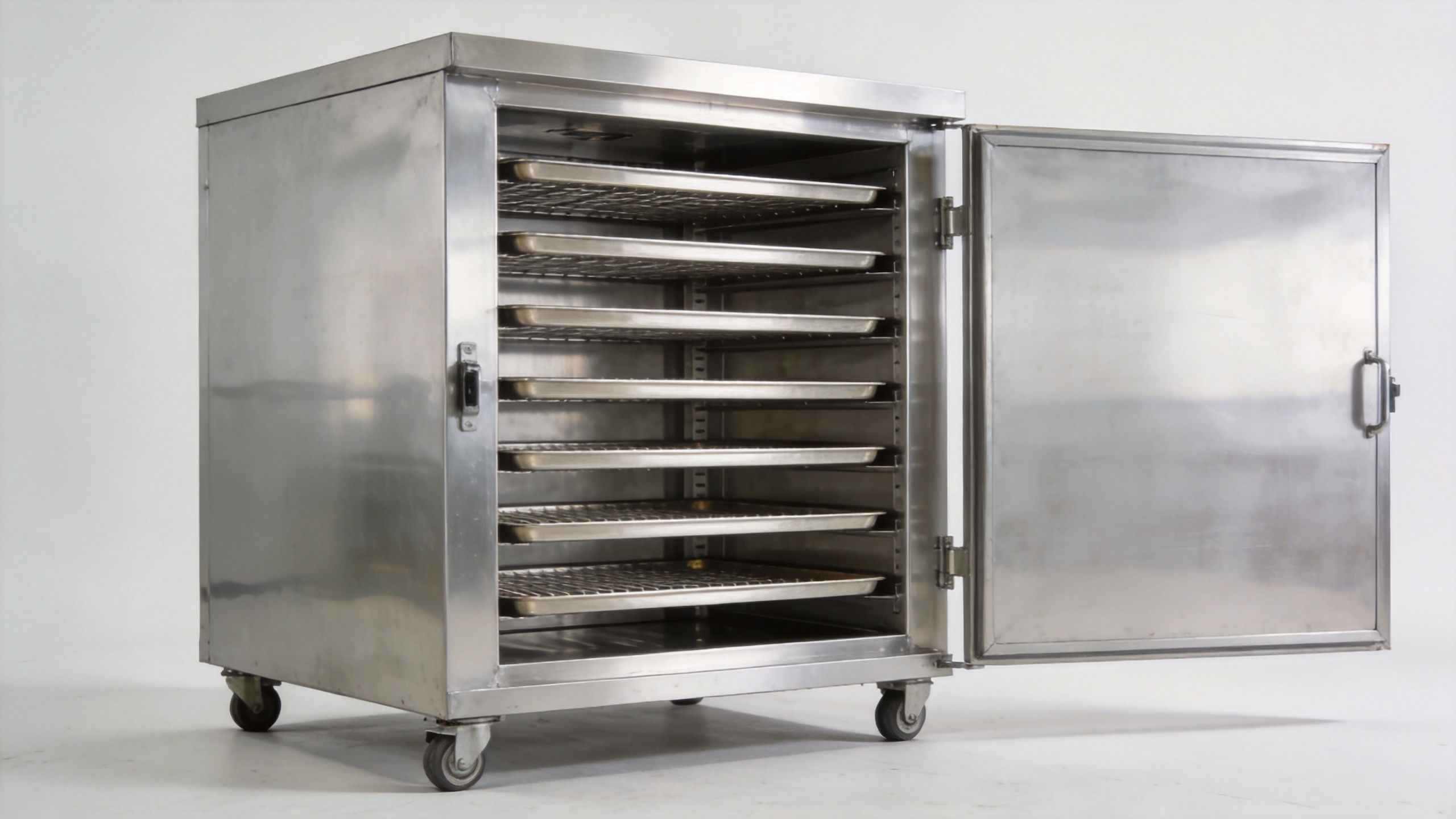
Heat alone does not produce an even result. In an industrial dehydrator machine, airflow carries moisture away from the food surface, so air direction, circulation pattern, fan arrangement, and tray spacing deserve detailed questions. Ask how the manufacturer reduces temperature and moisture differences between trays, and whether trays need to be rotated during a typical cycle.
Discuss the operating temperature range and how it is controlled. Buyers should ask about sensor location, setpoint accuracy, alarms, timer functions, recipe storage, and the action taken if a fan, heater, or sensor reports a fault. The goal is not to demand unnecessary automation; it is to understand how operators repeat a successful drying process from one batch to the next.
- Which parameters can an operator set and record?
- How is airflow balanced across the usable tray area?
- What prevents overheating or an incomplete drying cycle?
- Can the supplier describe the expected drying curve for a representative product?
4. Which construction and sanitation details need confirmation?
Food-contact construction affects daily cleaning as well as procurement risk. Ask which materials touch the product, what finish is used on food-contact surfaces, how trays are made, and whether the design has accessible corners, drains, seals, or panels. Do not assume that a stainless-looking exterior answers these questions; request the manufacturer’s specification for the surfaces that actually contact food or circulate process air.
Ask for the cleaning routine in practical terms. Which parts are removed for cleaning? How long does a routine clean take? Are replacement trays, seals, heaters, and fans available? If your facility follows a particular food-safety program or documentation requirement, explain it early so the manufacturer can confirm what drawings, material information, manuals, and electrical documents can be supplied.
5. What utility, footprint, and installation questions matter?
An industrial dehydrator machine must fit the plant, not just the purchase budget. Share your available floor area, door access, ceiling height, electrical supply, ventilation arrangement, and local installation constraints. Ask for the overall machine dimensions, service-clearance requirements, shipping dimensions, total connected load, and normal operating load.
Discuss how humid exhaust air is managed and what the installation requires from the buyer. Clarify whether the system needs ducting, a specific room condition, drainage, compressed air, or a foundation. These details help prevent late changes to a production room or a delay when the machine arrives.
6. How should we compare quotations fairly?
Send every manufacturer the same written brief and ask each one to answer the same questions. A comparable quotation for an industrial dehydrator machine should identify the model, usable capacity assumptions, tray quantity, heating and airflow configuration, control scope, electrical requirements, included accessories, delivery terms, commissioning support, warranty, and spare-parts recommendations.
| Comparison point | Question to ask | Evidence to request |
|---|---|---|
| Process fit | What product and loading assumptions support the recommendation? | Process sheet or test plan |
| Performance | How are cycle time and capacity calculated? | Written throughput assumptions |
| Controls | What can be set, monitored, and alarmed? | Control description or interface images |
| Build and cleaning | Which materials and components require routine care? | Specification and maintenance list |
| Support | What is included after delivery? | Manual, remote guidance, and spare-parts scope |
7. What should be agreed before placing the order?
Before paying a deposit, turn the supplier’s answers into an agreed specification. Confirm the product application, capacity basis, utilities, dimensions, delivery scope, documentation, inspection method, and responsibility for installation support. If a trial is important, state the sample, target condition, and pass/fail criteria in writing. This is especially useful when the industrial dehydrator machine will become part of a larger washing, cutting, or packaging line.
For buyers evaluating a fruit and vegetable drying project, it can also be helpful to review the confirmed product page for the Industrial Drying Vegetable Dryer Fruit Drier Machine Dehydrator Automatic alongside the supplier discussion. Use the product page as a starting point, then ask for the exact configuration and documentation that match your materials and production plan.
Final procurement checklist
A well-prepared manufacturer conversation is specific, documented, and focused on operating reality. Bring product samples or clear product details, a target capacity, site utility information, and a list of quality requirements. Then ask the manufacturer to explain—not merely state—how the proposed industrial dehydrator machine meets those conditions. A supplier that can provide transparent assumptions, usable technical documents, and a practical support plan gives your team a stronger basis for comparing offers and planning a reliable drying operation.