EN


Industrial Juicer Machine Selection: Screw Press vs Hydraulic Press
Choosing an industrial juicer machine is less about finding the highest headline yield and more about matching extraction physics to the fruit, the production schedule, and the rest of the line. For a processor handling apples, berries, tropical fruit, vegetables, or mixed pulp, the wrong press can create avoidable bottlenecks in feeding, filtration, sanitation, and waste handling. This comparison explains where screw presses and hydraulic presses fit, what each design asks of your operation, and how to turn a machine quotation into a practical buying decision.
Start with the material flow, not the machine name
Within the Juice Extractor & Fruit Pulper equipment cluster, a press is one stage in a system. Raw material condition affects every downstream choice. Whole, hard fruit usually needs washing, sorting, crushing or milling before pressing; softer fruit may need pulping and screening; fibrous vegetables can require controlled feeding and an appropriate screw geometry. Ask suppliers to map the route from receiving to pressed juice, pomace discharge, clarification, and pasteurization rather than quoting an isolated industrial juicer machine.
Also define whether production is batch-oriented or continuous. A processor making seasonal, premium, small-lot juice has different priorities from a plant supplying a daily beverage line. Space, labor availability, cleaning windows, water use, and the destination of pomace can matter as much as nominal capacity.
How a screw press works in an industrial juicer machine line
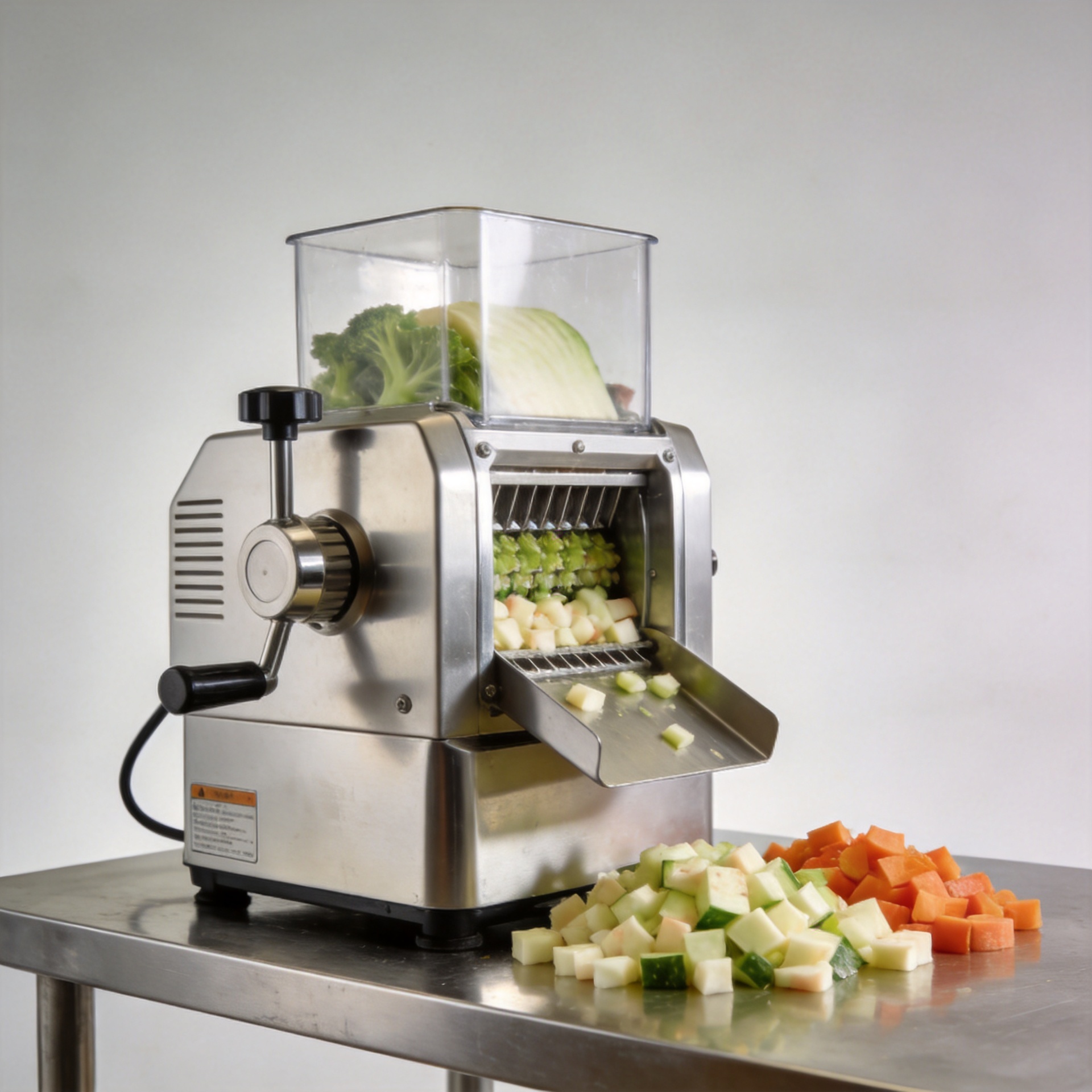
A screw press feeds prepared material through a rotating screw inside a screen or perforated cage. As the available volume narrows, pressure separates liquid from solids and pushes pomace toward the discharge. The continuous nature of the process is its central advantage: with stable upstream feeding, it can provide a steady juice stream for screening, holding, or further processing.
Choose a screw-based industrial juicer machine when you need repeatable flow, a compact footprint, and an easier path to line integration. It is commonly evaluated for fruit and vegetable processing where prepared material can be fed consistently. The key procurement question is not simply “What is the yield?” but “What yield is achieved on our material, at our feed condition, with our intended screen, pressure setting, and operating speed?”
- Strengths: continuous processing, straightforward integration, lower batch handling, and practical scaling for regular production schedules.
- Watch points: feed preparation, screen selection, fiber behavior, wear components, and the cleaning procedure for cages, screws, and discharge zones.
- Ask for: a trial using representative raw material, a clear capacity basis, and a list of contact materials and routine service parts.
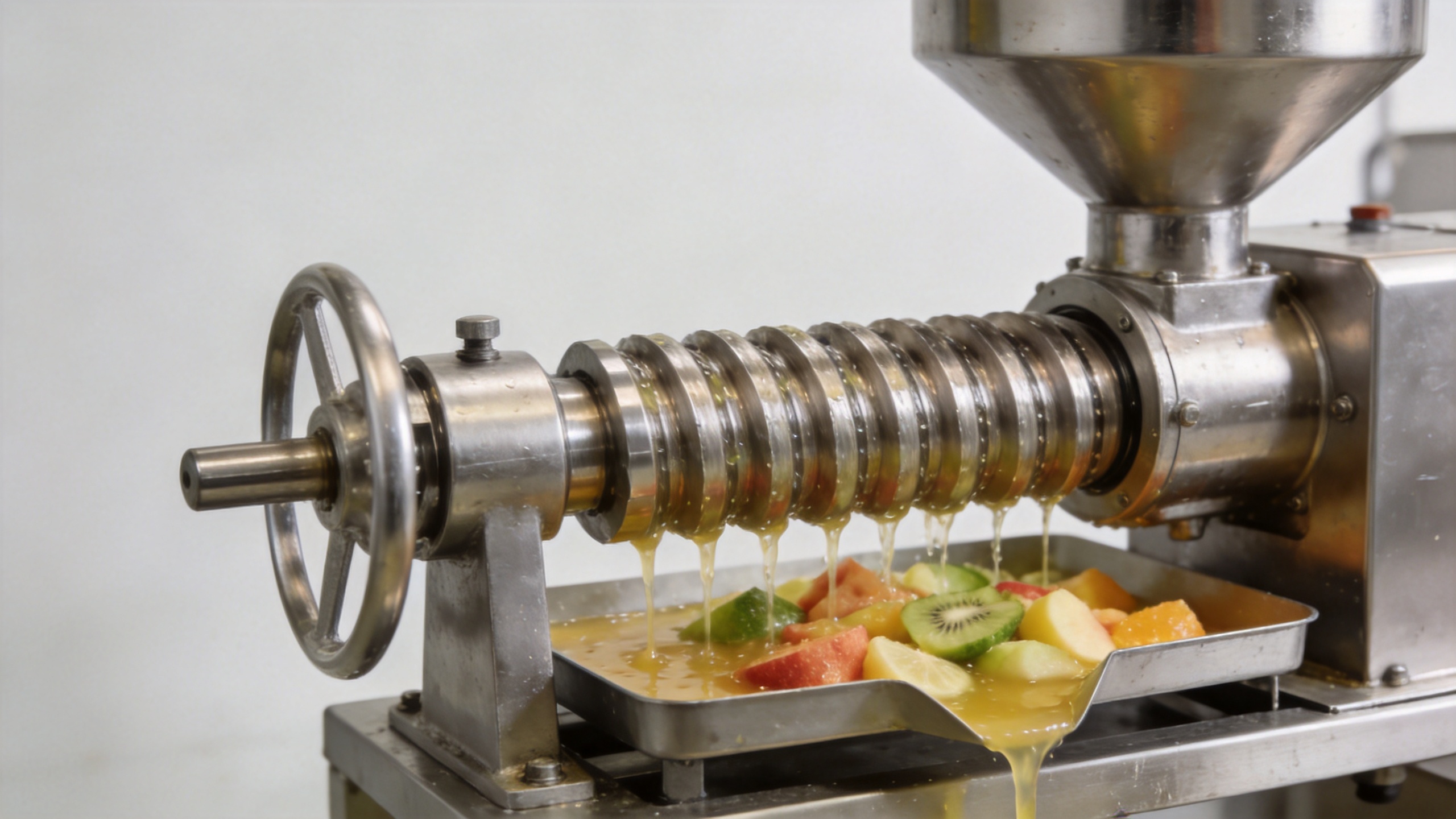
For buyers comparing a configured option, review the available Food-Grade Screw Press for Fruit & Vegetable Processing alongside the complete line requirements. The product title identifies a 0.5–1 T/H range and SUS304 construction; confirm the exact material, feedstock, utilities, and test conditions in the technical proposal before purchase.
How a hydraulic press changes the decision
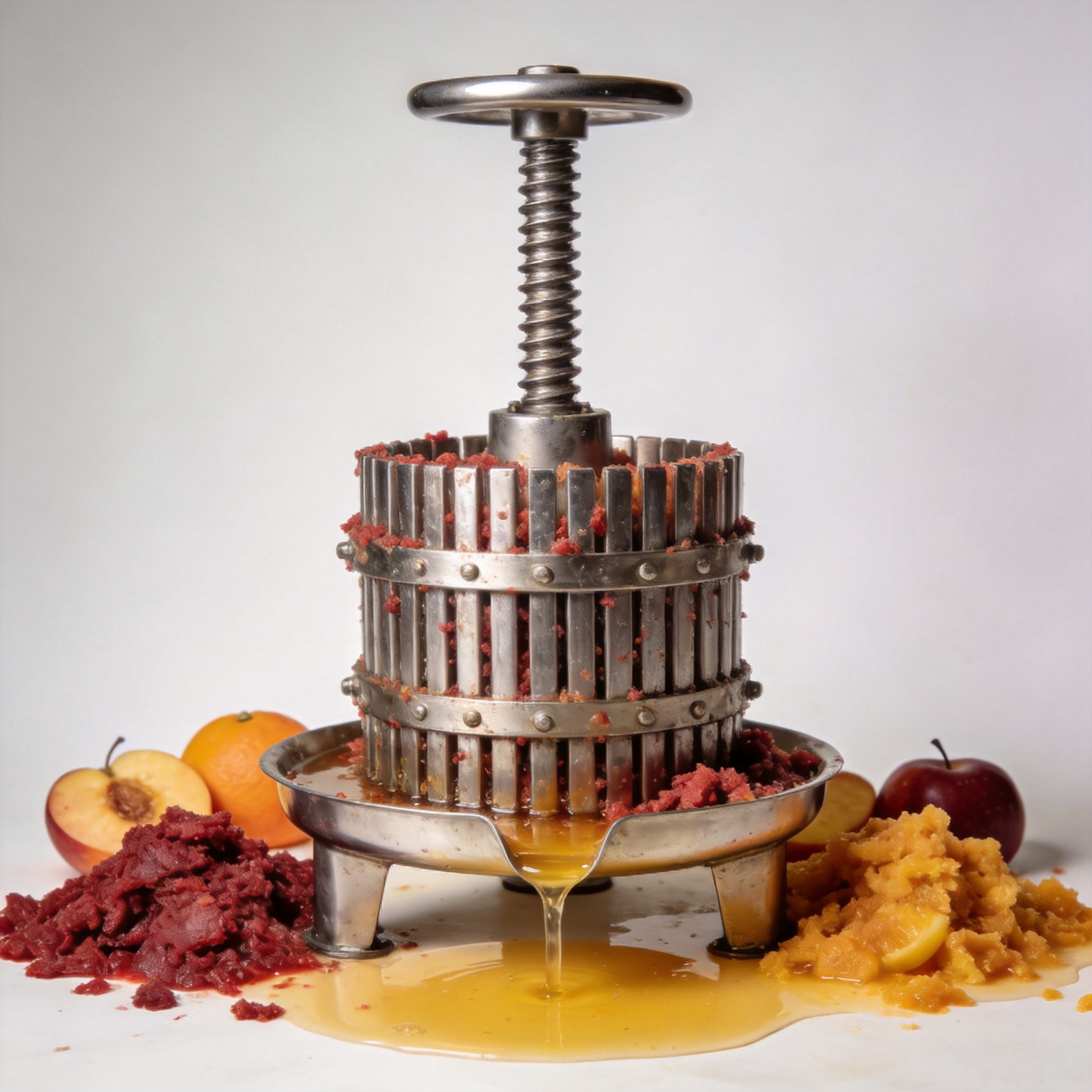
A hydraulic press typically applies pressure to a prepared charge in a batch cycle. Depending on the design, fruit mash or material is filled, pressed, drained, released, and unloaded before the next charge begins. This makes the method attractive when gentle, controlled pressing and batch traceability are more important than a continuous flow profile.
Hydraulic equipment can suit premium or specialty processing where the operator wants to manage each lot separately. It can also be a sensible choice when production is intermittent and labor is already available for loading and unloading. However, the buyer should calculate real output using the full cycle—not only the pressing time. Filling, pressure build-up, drainage, discharge, cleaning, and changeover all affect effective hourly throughput.
- Strengths: controlled batch operation, potential suitability for delicate mash, and clear lot separation.
- Watch points: floor space, manual handling, cycle time, cloth or bag management where applicable, and integration with a continuous downstream line.
- Ask for: a documented cycle-time estimate, labor requirement, pressing chamber capacity, and cleaning/access arrangement.
Screw press vs hydraulic press: compare the operating model
| Decision factor | Screw press | Hydraulic press |
|---|---|---|
| Production mode | Continuous once feeding is stable | Batch cycles |
| Line integration | Often suited to continuous washing, pulping, filtration, and holding systems | Requires buffer planning between batches and downstream equipment |
| Best evaluation focus | Feed consistency, screen/pressure setup, real throughput, wear parts | Cycle time, batch size, labor, draining and unloading time |
| Operational priority | Stable daily flow and scalable process rhythm | Lot control and deliberate batch processing |
| Procurement risk | Assuming one fruit type represents every material | Overlooking non-press time in hourly capacity calculations |
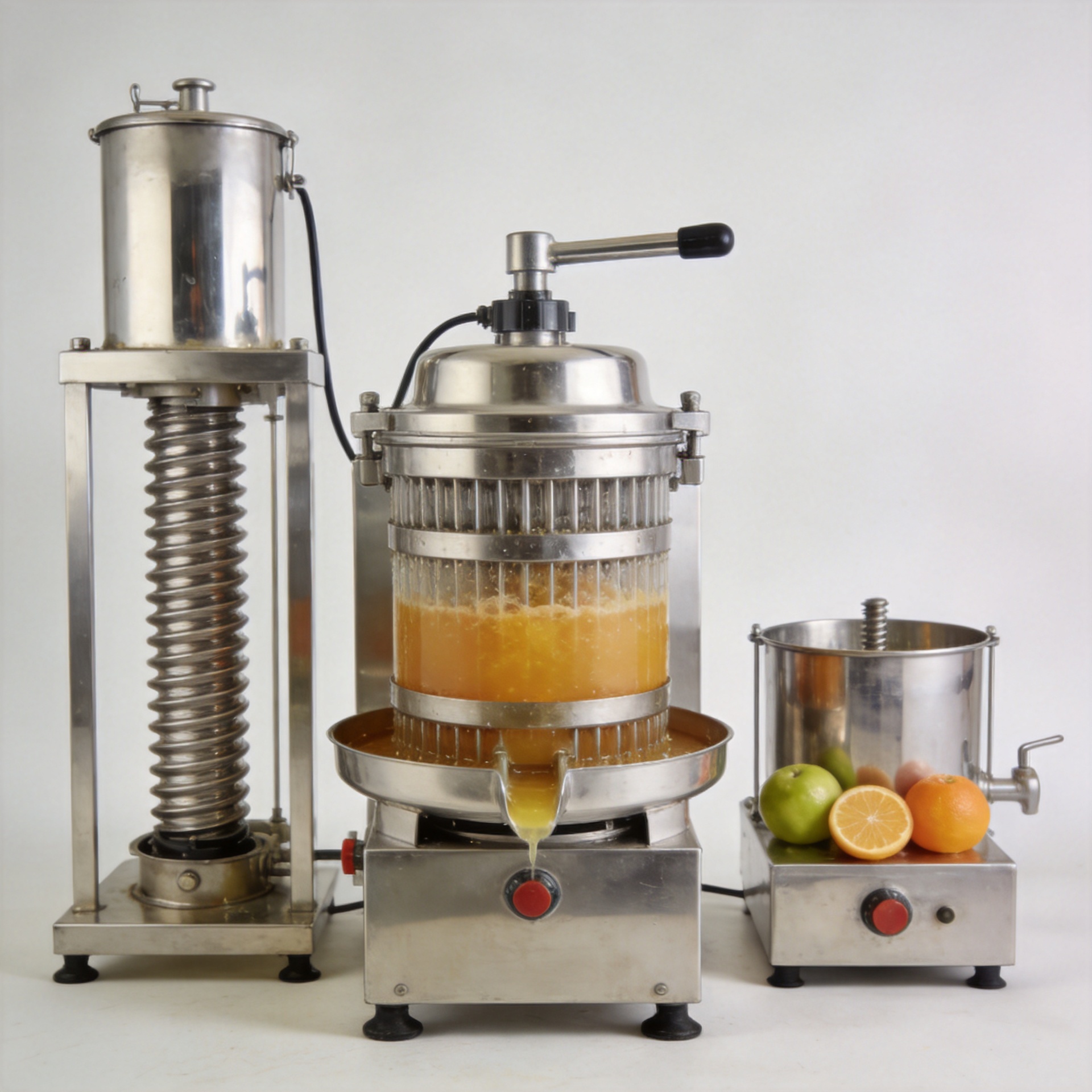
Neither design is automatically “better.” A screw press may be the stronger answer for a processor whose business case depends on predictable continuous output. A hydraulic press may be more appropriate when product positioning, batch handling, or seasonal workflow supports a cycle-based operation. The correct industrial juicer machine is the one that meets your verified production target without forcing compromises elsewhere in the line.
Use these industrial juicer machine questions during a supplier trial
A supplier trial is the fastest way to expose the difference between a suitable industrial juicer machine and a generic quotation. Bring representative raw material from more than one delivery condition, then record the incoming weight, prepared-mash weight, juice recovered, pomace condition, run time, cleaning time, and power use. These records make it possible to compare the screw press and hydraulic press on the same basis.
For a screw press, ask the supplier to demonstrate how feed rate, screen choice, and screw pressure are adjusted when fiber content or ripeness changes. For a hydraulic press, request a complete cycle log that includes loading, pressing, draining, unloading, and washdown. In both cases, inspect the areas that operators must access routinely. A practical industrial juicer machine should not require a complicated teardown for ordinary cleaning or a minor product change.
Finally, agree in writing on the acceptance metric. It may be stable juice flow, a defined processing capacity, manageable solids carryover, or a pomace moisture target. The metric should reflect the business goal of the line, not an isolated demonstration result.
Build a procurement checklist before requesting quotations
- Describe the raw materials. List fruit or vegetable varieties, maturity range, fiber level, initial preparation, and expected seasonal variation.
- Set a realistic capacity definition. State whether capacity means incoming raw material, prepared mash, juice output, or finished bottled product. These are not interchangeable.
- Map the interfaces. Confirm how material reaches the press and where juice and pomace go next. Include pumps, screens, tanks, conveyors, and controls.
- Request sanitation details. Juice processors need cleaning access and an operating plan that supports their food-safety system. FDA Juice HACCP guidance, for example, emphasizes hazard analysis and validated control measures; local rules and the final process design should be reviewed with qualified food-safety personnel.
- Compare trials on like-for-like conditions. Use the same raw material, preparation method, measurement basis, and target operating point when comparing proposals.
- Plan commissioning and support. Confirm manuals, spare-parts recommendations, remote assistance, electrical requirements, installation conditions, and acceptance criteria.
Industrial juicer machine FAQ for procurement teams
What should an industrial juicer machine trial prove?
An industrial juicer machine trial should prove material handling, hourly output, juice quality, and cleaning practicality. Ask the industrial juicer machine supplier to state the test basis and acceptance criteria.
Can one industrial juicer machine process every fruit?
Not necessarily. An industrial juicer machine must be matched to fruit texture, fiber, preparation, and the intended juice profile. Confirm industrial juicer machine performance with representative material.
How should buyers compare industrial juicer machine capacity?
Compare industrial juicer machine capacity using the same input condition and the same time basis. A continuous industrial juicer machine and a batch industrial juicer machine cannot be compared from a headline number alone.
Which industrial juicer machine information belongs in a quotation?
A useful industrial juicer machine quotation identifies materials of construction, utility requirements, process interfaces, cleaning access, wearing parts, and service scope. It should also define the industrial juicer machine operating range.
When is a screw industrial juicer machine practical?
A screw industrial juicer machine is often practical when stable flow and line integration are priorities. The buyer should validate how that industrial juicer machine responds to feed variation.
When is a hydraulic industrial juicer machine practical?
A hydraulic industrial juicer machine can fit batch-oriented production and controlled lot handling. Measure the full industrial juicer machine cycle, including filling and unloading.
What is the final industrial juicer machine decision rule?
Select the industrial juicer machine that supports verified production goals, sanitation procedures, and downstream equipment. A well-documented industrial juicer machine trial reduces commissioning risk.
Make the final selection around risk, not brochure claims
A robust industrial juicer machine purchase starts with a material test and ends with a line-level acceptance plan. Ask the supplier to explain the operating limits, not just the preferred case. What happens when fruit is softer than expected? How is screen blockage recognized? Which parts wear first? How does the machine fit cleaning time and shift changeover? Clear answers make it easier to compare a screw press and a hydraulic press on operational risk rather than marketing language.
For export projects, align electrical configuration, documentation, packing, and remote commissioning support before shipment. Zhengzhou HongLe Machinery Equipment Co., Ltd. serves international food-processing buyers and can provide equipment-selection discussions based on capacity targets and factory conditions. Bring your raw-material profile, target output, and process diagram to the conversation; those inputs lead to a more useful press recommendation than a capacity number alone.