EN


Industrial Peanut Butter Making Machine: What to Include in Your RFQ
Buying an industrial peanut butter making machine is rarely a matter of comparing a few headline prices. A useful quotation depends on the production conditions behind it: your ingredients, expected output, product texture, filling format, site utilities, and the support you will need after commissioning. When those inputs are missing, suppliers may quote very different scopes under the same machine name. The result is a price comparison that looks simple but is not truly comparable.
For a B2B buyer, the practical goal is to issue an RFQ that turns a broad request into an engineering brief. This helps each supplier size the industrial peanut butter making machine around the same operating assumptions and makes technical, commercial, and service differences visible before a purchase decision is made.
Start With the Product You Actually Need to Make
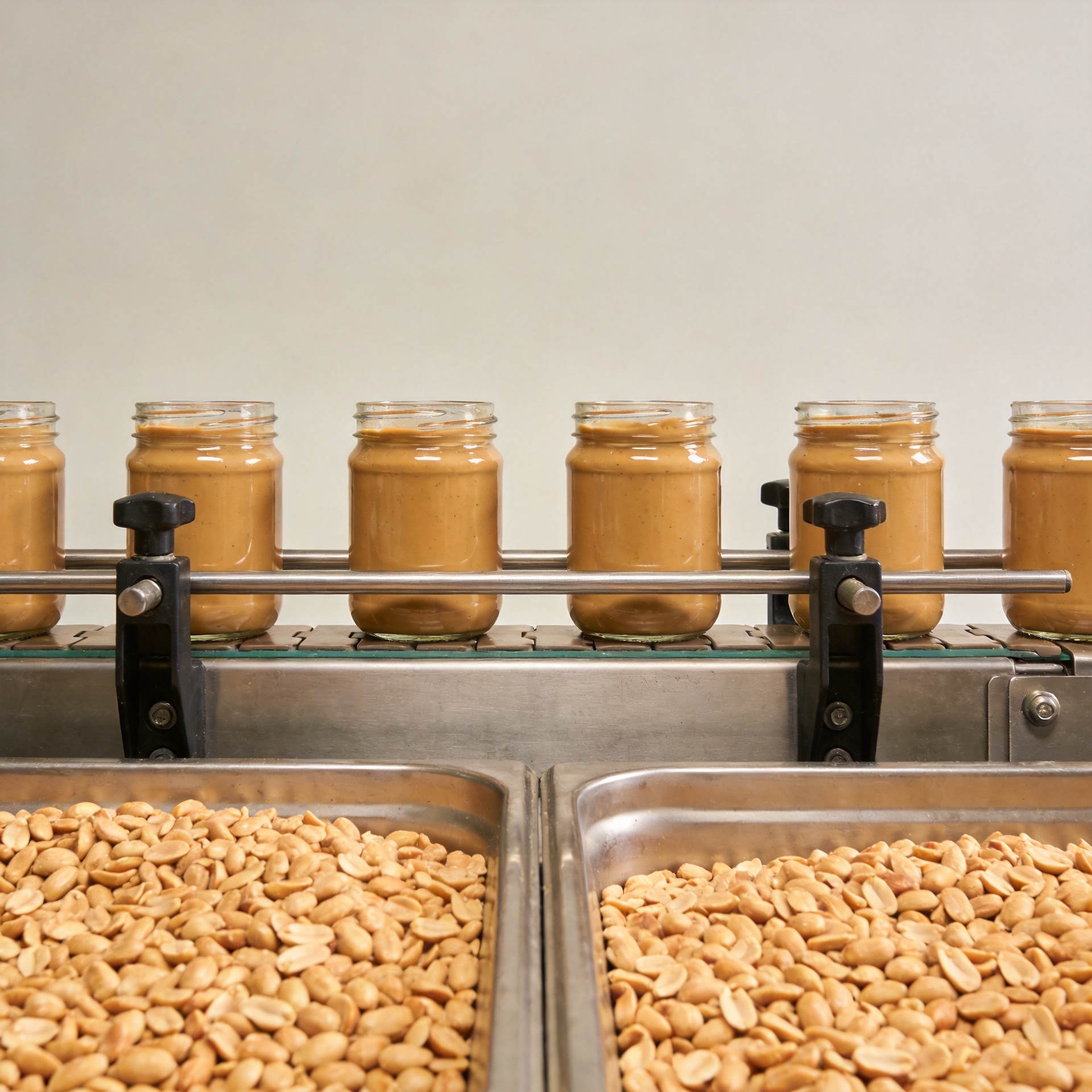
Describe the peanut butter, not just the equipment. Specify whether you will process roasted peanuts only or also need upstream roasting, cooling, peeling, sorting, conveying, mixing, and filling. An RFQ should also state whether you will make smooth, crunchy, sweetened, unsweetened, stabilized, or blended nut products. These choices affect the proposed line configuration and the way an industrial peanut butter making machine is selected.
Include the raw-material condition: peanut variety, incoming moisture range if known, whether skins remain, expected particle size for crunchy recipes, and any inclusions such as sugar, salt, cocoa, or other nuts. If the line may process more than one nut, say so early. A supplier cannot responsibly judge grinding, mixing, and cleaning requirements from the word “peanut” alone.
Texture deserves its own line in the RFQ. State your target smoothness, acceptable particle size where relevant, oil separation expectations, and whether the product must remain pumpable at the filling temperature. Viscosity changes can affect grinder selection, tank agitation, transfer pumps, pipe sizing, and filling equipment.
Define Capacity as a Production Scenario, Not a Label
Ask for a quoted capacity in kg/h, but also explain how you plan to run the line: hours per shift, shifts per day, working days per year, and expected batch or continuous operation. The phrase “200 kg/h” is not enough unless suppliers know whether it refers to finished product, raw peanuts, a short demonstration run, or sustained production with routine changeovers.
In a realistic factory schedule, cleaning, material replenishment, recipe changes, and packaging interruptions all influence realized output. Request that the supplier identify the assumptions behind the stated capacity and any factors that can reduce it, such as a thicker formula, a different roast level, or a slower downstream filler. This is especially important when a peanut butter commercial machine must connect to equipment you already own.
Also state your growth plan. If demand may increase, ask whether the proposed line can be expanded by adding tanks, a second grinder, additional filling heads, or parallel handling modules. Bigger is not automatically better: excess capacity can add cost and maintenance complexity if the rest of the line cannot support it.
Make Line Scope and Interfaces Explicit
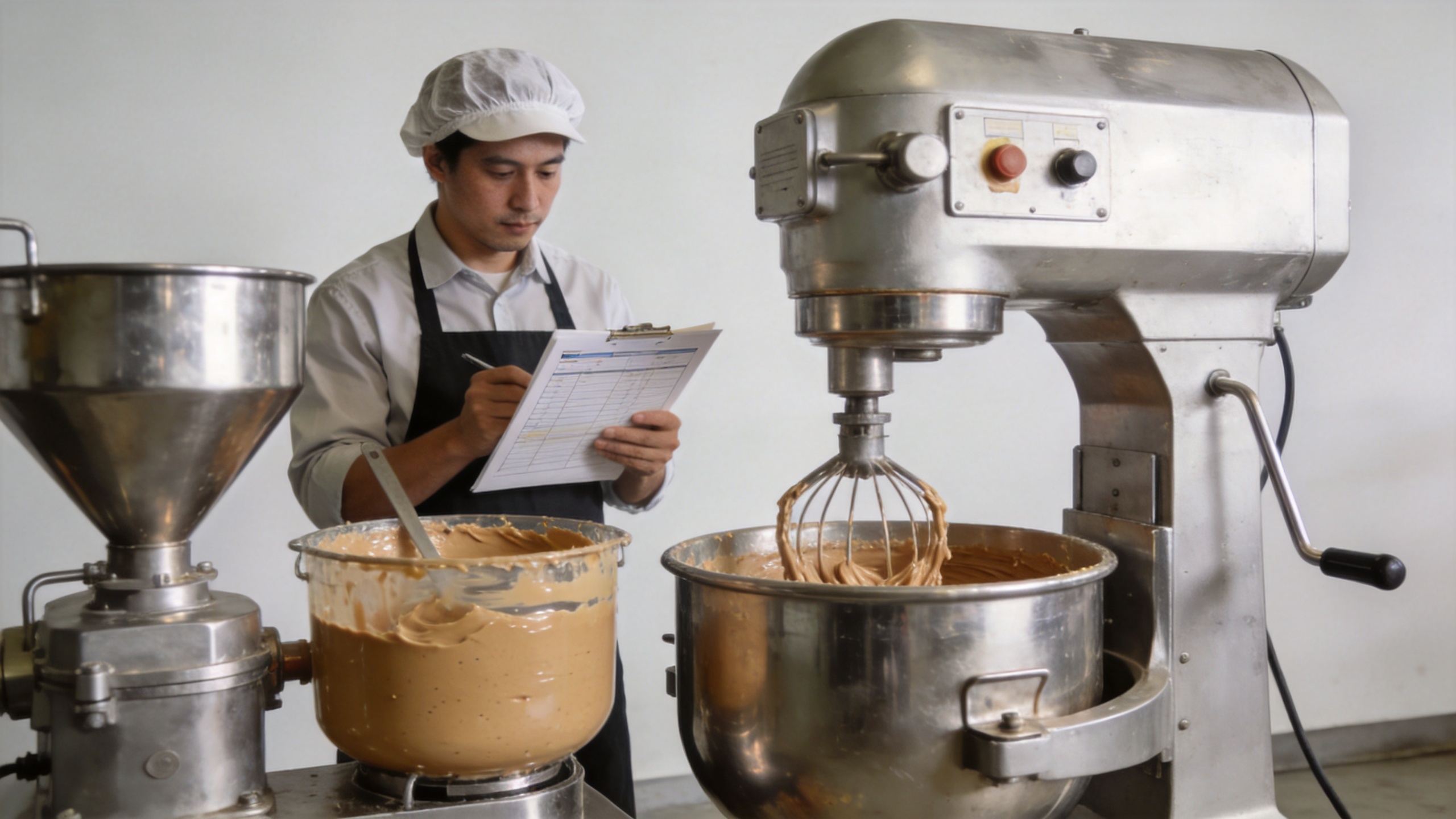
Many search results present peanut-butter systems as a sequence of roasting, cooling, peeling, grinding, mixing, and packaging. Your RFQ should mark each stage as included, excluded, or already available on site. Otherwise, one supplier may quote only a colloid mill while another prices a much broader process line.
For every existing machine, provide the relevant interface details: inlet and outlet height, transfer method, nominal output, control arrangement, footprint constraints, and preferred material-contact connections. If packaging is in scope, list the container type, fill-volume range, closure method, labeling requirements, and required speed. A high-viscosity paste needs a filling solution matched to the product and package; a grinding quotation alone cannot answer that part of the project.
Where you need a defined reference point, you can ask suppliers to explain how an automatic peanut butter production machine for nut factories would fit the requested process scope, without assuming that one configuration suits every factory.
Give the Supplier the Site, Utility, and Compliance Picture
A technically suitable industrial peanut butter making machine can still be difficult to install if the RFQ leaves out the site conditions. Attach a simple layout or list the available length, width, ceiling height, access route, floor loading information if available, and preferred equipment flow. Mention whether you need the supplier to propose a layout, installation supervision, or both.
List your available electrical supply, frequency, compressed-air specification, water source, drainage, steam or thermal-oil availability where applicable, and local voltage requirements. Ask the supplier to list every utility demand separately rather than stating only total installed power. This makes it easier to identify site modifications before the order is placed.
Food safety and cleanability should be part of the RFQ as well. Published research on sanitation of peanut-butter processing equipment highlights the need for a product-appropriate, documented cleaning approach. Rather than prescribing an unverified cleaning method, ask suppliers to describe contact materials, disassembly points, cleaning procedure, residue-management approach, and the documentation they will provide. If your market or customer requires particular standards, specify them and ask the supplier to identify what evidence they can provide.
Request Comparable Technical and Commercial Deliverables
Ask every bidder to return the same information set. At a minimum, request a process-flow diagram, equipment list, material-contact specification, electrical and utility schedule, general layout, control-system scope, recommended spare-parts list, operation and maintenance documents, lead time, installation scope, warranty terms, and quotation validity. Ask which items are optional and which are included in the base price.
Define acceptance requirements before you compare quotations. Examples include the product recipe used for testing, target output, smoothness or particle-size expectation, continuous run duration, safety checks, and the documents to be delivered at shipment. Clear acceptance criteria protect both sides because they connect the proposal to an agreed operating condition instead of a vague promise.
Finally, ask for Incoterms, packaging method, shipment plan, payment milestones, and service response process. Initial price is only one cost element. Spare-parts availability, remote commissioning support, training, and the clarity of the handover package can have a meaningful effect on the total ownership experience of a peanut butter commercial machine.
A Copy-and-Use RFQ Checklist
- Product and ingredients: recipe types, peanut condition, inclusions, target texture, and viscosity behavior.
- Output: finished-product kg/h, shifts, annual production target, and future expansion expectation.
- Scope: required upstream, grinding, mixing, transfer, filling, and packaging stages.
- Package: container type, fill range, closure, labeling, and desired filling speed.
- Site: layout limits, electrical supply, water, air, drainage, and thermal utilities.
- Quality and cleaning: contact materials, cleaning procedure, safety needs, and required documentation.
- Commercial terms: delivery basis, lead time, warranty, commissioning, training, spare parts, and acceptance test.
Turn the RFQ Into a Better Decision
The strongest RFQ does not attempt to dictate every design detail. It gives suppliers enough operating context to propose the right configuration and enough common checkpoints for you to compare their responses fairly. If useful, include the verified automatic peanut butter production machine for nut factories as a reference when requesting a scope-based discussion.
If your priority is a dependable industrial peanut butter making machine, start with production reality, make interfaces visible, and require each quotation to state its assumptions. That approach produces a more useful technical discussion than asking only for a headline price.