EN


Leaf Vegetable Cutter vs General Vegetable Chopper: Which Fits Your Process?
A leafy vegetable cutter machine and a general vegetable chopper can both shorten preparation time, but they solve different production problems. For a fresh-cut processor, central kitchen, or vegetable packer, the decision should start with the crop you handle most often, the cut you need, and the way operators wash down equipment between runs.
As a technical selection exercise, it helps to look beyond a supplier specification sheet. A leafy vegetable cutter machine is usually evaluated around how it feeds flexible leaves, handles variable moisture, and delivers a repeatable segment cut. A general chopper is usually evaluated around versatility across firmer vegetables, discs or blade sets, and changeover options.
Start with the material, not the machine category
Leafy inputs behave differently from potatoes, carrots, onions, or firm fruit. Spinach, lettuce, parsley, leeks, and cabbage can fold, bridge, clump, or carry surface moisture. That is why a leafy vegetable cutter machine is often the more relevant starting point when greens make up most of the daily schedule. Its feed path and cutting action are intended to move light, flexible material through the cutting zone with less manual correction.
A general vegetable chopper can make more sense when the plant switches among hard vegetables, fruit, and green onion, and when dice, slice, shred, or other formats are required. The trade-off is that a multi-purpose machine may require more attention to feed preparation and blade setup when soft leaves are the main input. Search results for commercial leafy cutters commonly describe applications such as lettuce, spinach, cabbage, and leeks; use this as a cue to ask suppliers about your exact raw material rather than as a claim that every cutter handles every crop.
Compare feeding behavior and cut presentation
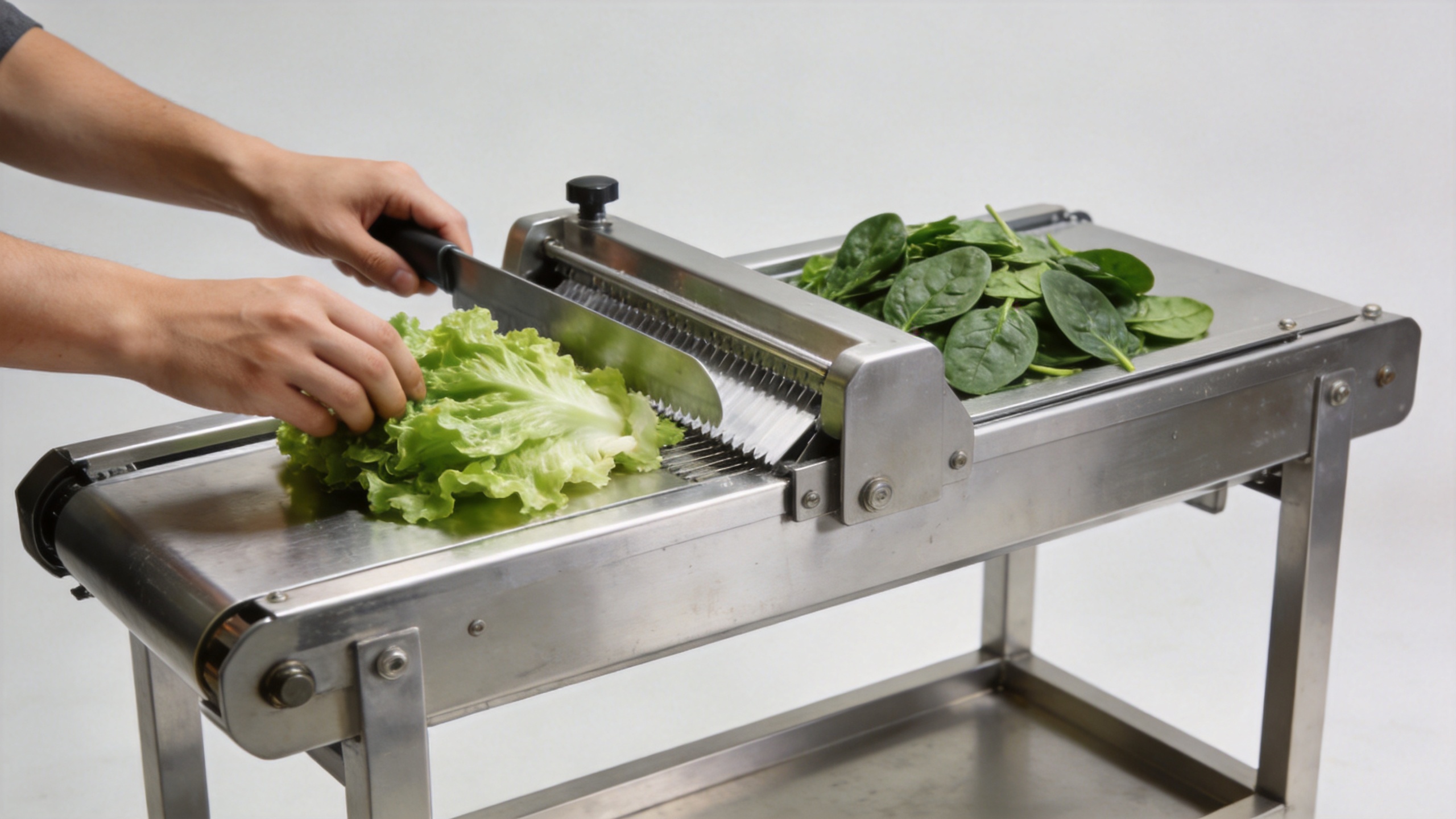
For a salad line or a prepared-greens workflow, a leafy vegetable cutter machine should be assessed with actual product samples. Ask whether whole leaves, bunches, or pre-trimmed material are expected at the inlet. Observe whether operators need to repeatedly separate material, and check the cut after the machine has been running long enough for moisture and trim to accumulate.
The useful comparison is not simply “purpose-built versus versatile.” A leafy vegetable cutter machine can support a stable leafy-greens routine, while a general chopper may support broader menus and more product formats. Look at cut length consistency, bruising or tearing, fines, and whether the output fits downstream washing, weighing, mixing, or packing. For a commercial lettuce cutter application, request a trial using the lettuce variety and moisture condition that the line will process.
| Decision point | Leaf-focused cutter | General vegetable chopper |
|---|---|---|
| Primary input | Leafy, flexible greens processed frequently | Mixed vegetables and firmer ingredients |
| Typical priority | Steady leafy-material flow and segment cutting | Multiple product shapes and preparation tasks |
| Changeover approach | Often simpler when product family stays similar | May involve discs, blades, or feed adjustments |
| Trial focus | Leaf handling, fines, and cut appearance | Format range and setup time across products |
Factor in changeovers before comparing purchase prices
Many buyers initially compare a leafy vegetable cutter machine only by hourly output. That is not enough. The practical question is how often the line changes from leafy greens to another ingredient, whether a blade change is needed, and how much product remains in the feed and cutting area at the end of a batch. A machine that fits one product family can reduce routine handling; a broader chopper can be the stronger fit when frequent menu changes are part of the business model.
Map a normal production day before requesting quotations. List each raw material, the required cut, batch size, planned cleaning break, and the next operation. Then use that map to decide whether a leafy vegetable cutter machine should be a dedicated station or whether a general machine can cover the workload without creating a bottleneck.
Make cleaning and maintenance part of the selection test
Fresh produce processing makes cleanability a production issue, not an afterthought. A leafy vegetable cutter machine should be reviewed for access to blades, guards, feed surfaces, and areas where leaf fragments can collect. The same test applies to a general chopper: can the relevant parts be removed, inspected, cleaned, and reassembled within the time available between batches?
Supplier demonstrations often make cleaning look straightforward. In an operating schedule, however, a shortened wash-down can turn into a quality and labor concern. Ask for the cleaning sequence, tools required, recommended inspection points, and the maintenance tasks that operators can perform safely. Do not assume a feature from a catalog; validate the routine with the machine configuration you are considering.
Which option fits your process?
Choose a leafy vegetable cutter machine when leafy greens are the recurring core material, segment cutting is the principal task, and stable flow through a dedicated station matters more than broad format flexibility. A commercial lettuce cutter evaluation should include a real production sample, expected throughput, cleaning access, and the downstream equipment that receives the cut product.
Choose a general vegetable chopper when your operation regularly processes mixed produce and needs several shapes or product types from one station. The right choice depends on actual operating conditions, not on a category label. For buyers comparing leaf-focused equipment, review the available Leaf Vegetable Cutting Commercial Parsley Cutter Chopper Parsley Leek Spinach Cutting Chopping Machine against your material and workflow. If a wider mix of potato, fruit, and green onion is central to the process, also review the Commercial Industrial Electric Vegetable Cutter Dicing Machine for Potato Fruit & Green Onion as a separate category fit.
Before placing an order, send suppliers your product list, target cuts, sample weights, production schedule, available utilities, sanitation routine, and downstream layout. That information creates a more useful comparison than a generic capacity figure and helps determine whether a leafy vegetable cutter machine is a dedicated-process need or a general chopper is sufficient for the current line.