EN
EN


Mango Juice Processing Machine: Building a Pulping and Extraction Line
Choosing a mango juice processing machine is less about buying one standalone unit and more about matching a sequence of preparation, pulping, extraction and hygienic handling steps to the fruit you receive. Mango is fibrous, contains a large stone, and varies in ripeness across seasons. A line that works smoothly starts with a clear product target: single-strength juice, puree, nectar base, or pulp for further blending and filling.
For equipment buyers, the practical question is not simply “what machine makes mango juice?” It is how each station protects pulp quality, separates unwanted solids, and hands material to the next process without becoming the bottleneck. This guide breaks down the choices a processor should make when planning a mango pulping and extraction line.
Start with the finished mango product and incoming fruit condition
Before specifying a mango juice processing machine, define the intended output and the condition of incoming fruit. Fresh mangoes may arrive with soil, stems, mixed maturity and varying fiber levels. A puree-oriented operation needs consistent pulp separation and may add refining; a juice-oriented process may use dilution, blending, filtration or clarification after extraction. These are different process objectives, even when the same fruit is used.
Ask suppliers and your operations team to document four inputs: expected hourly throughput, fruit size range, ripeness window, and the target level of pulp or suspended solids. This prevents an upstream washing or sorting section from feeding fruit faster than the pulper can handle. It also helps determine whether manual trimming, mechanical destoning, preheating, or a combination of these steps is appropriate.
A practical mango pulping and extraction flow
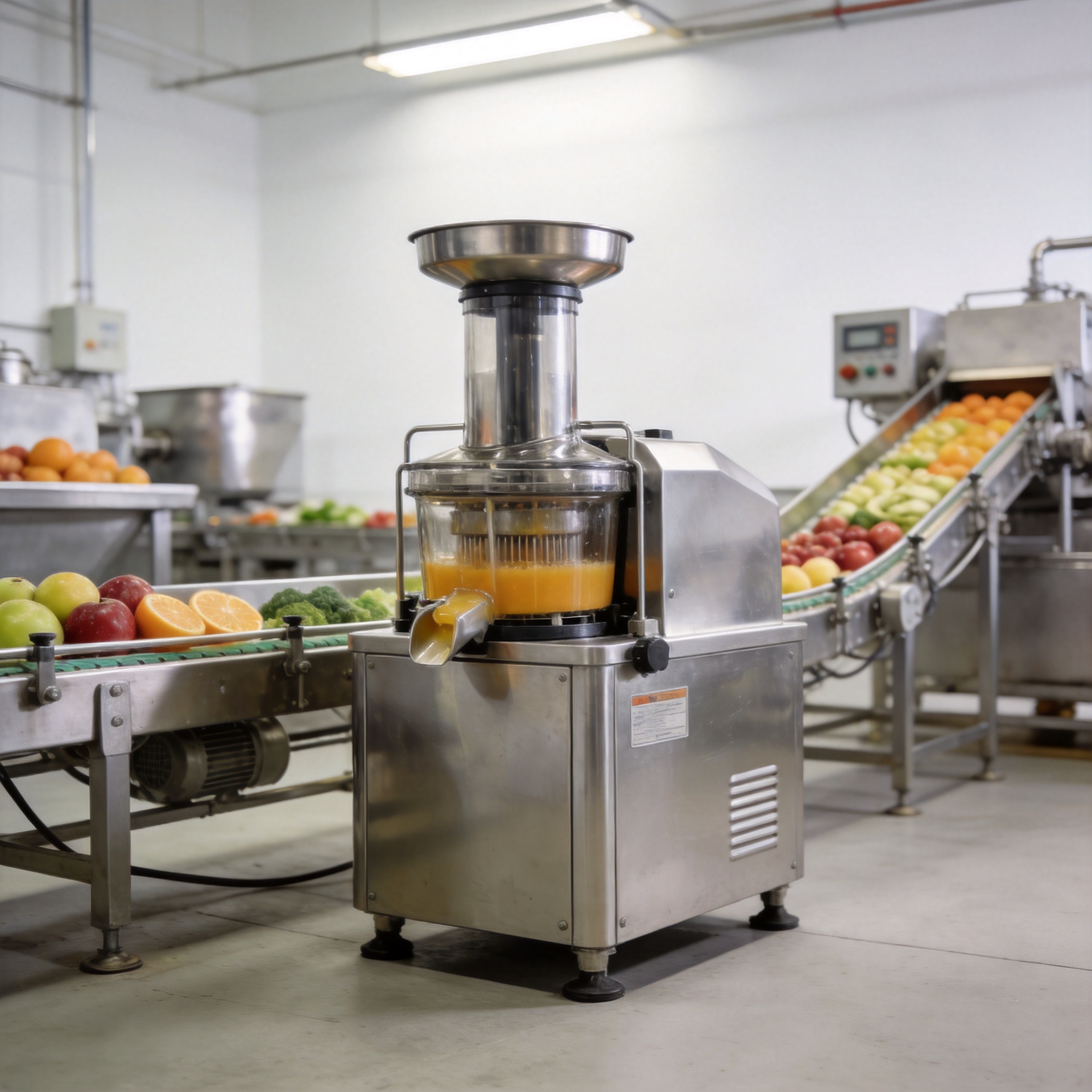
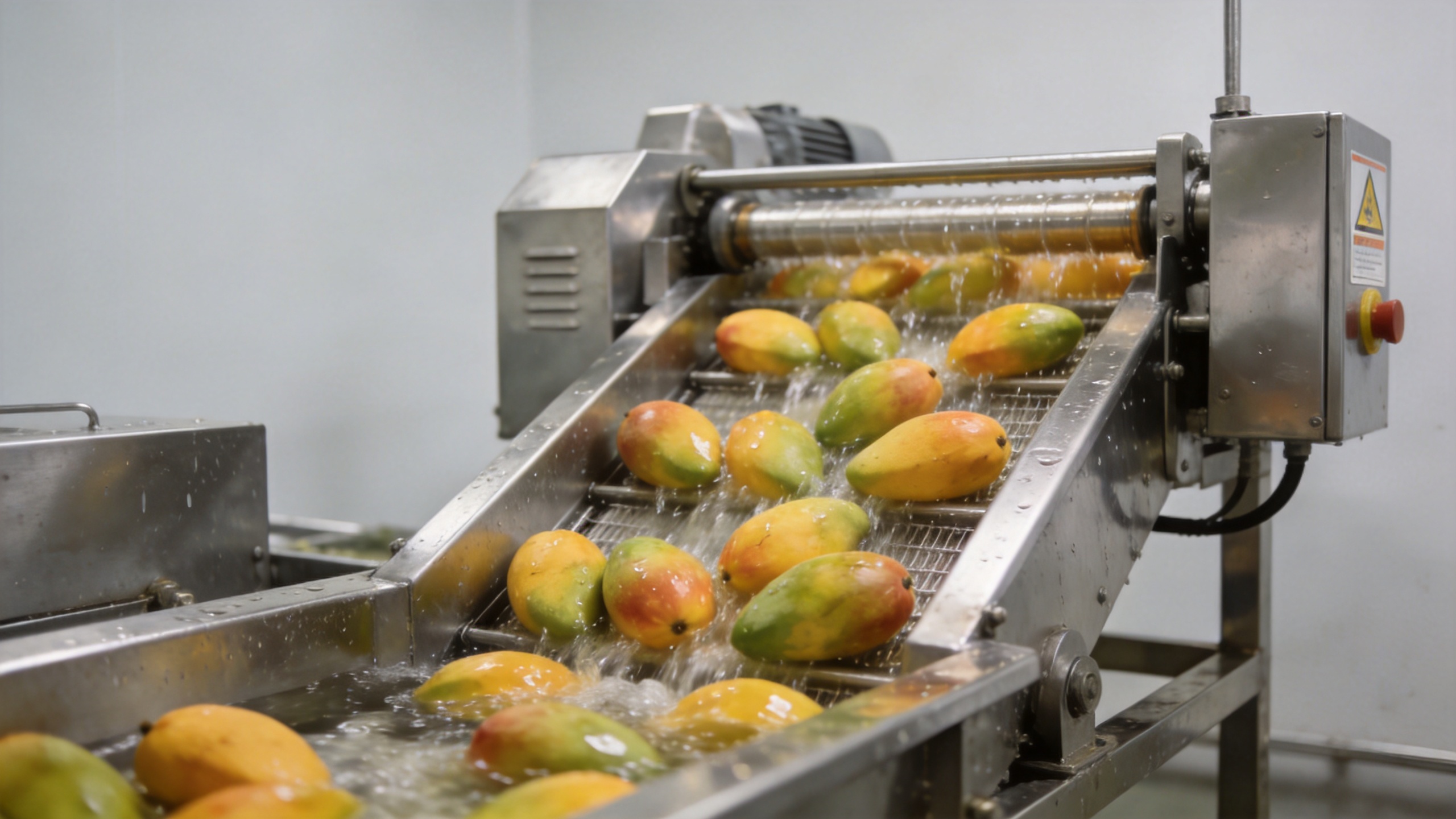
A typical mango juice processing machine line follows a controlled flow rather than a single “juice maker” concept:
- Receiving, washing and sorting: remove field debris and reject damaged fruit before it reaches cutting or pulping equipment.
- Preparation: depending on the selected process, fruit may be cut, softened or fed to a destoning stage designed for mango.
- Pulping and separation: a pulper separates usable flesh from skins, stones and coarse residue. Screen selection and rotor action influence pulp texture and yield.
- Finishing or refining: this stage can reduce coarse fiber and improve consistency where the finished product requires a smoother body.
- Collection and downstream treatment: extracted pulp or juice moves to a buffer, blending, thermal treatment, filling or another validated downstream process.
The most useful way to evaluate a mango juice processing machine is to map where each stream goes: product forward, residue out, and cleaning media safely away from product contact areas. General mango-pulping equipment descriptions consistently identify separation of pulp from seed, skin and residue as a central function. That makes residue handling and access for cleaning purchasing topics, not afterthoughts.
Choose the pulper and extractor around separation duty
For mango, the pulping section must handle soft flesh while keeping large stones and peel from damaging the product path. Buyers should compare the equipment based on the duty it performs rather than assuming one design suits every product. A primary pulper may be intended for coarse separation, while a finishing stage may focus on texture control. A screw press can serve a different extraction or dewatering role depending on where it is placed in the process.
When reviewing a mango juice processing machine, ask for a process discussion that covers feed method, screen access, residue discharge, cleaning access, motor and drive protection, and the relationship between feed rate and final quality. The decision should also account for how much usable pulp needs to remain with the product stream. An aggressive setting can change yield and texture; a conservative setting can leave recoverable pulp in residue. Trials using representative material provide a sound basis for balancing those trade-offs.
For a verified product-page reference during line discussions, review the Food-Grade Screw Press for Fruit & Vegetable Processing alongside the pulping section, then confirm its intended role with the supplier rather than treating a product title as a complete line specification.
Build hygiene and process control into the layout
A reliable mango juice processing machine line should support cleaning, inspection and controlled processing from the outset. Food-contact materials, sanitary weld quality, drainability, access panels and the ability to isolate zones all affect routine operation. For processors serving regulated export markets, relevant food-safety frameworks may require documented process controls for conditions such as heat treatment, acidification or refrigeration. The exact requirements depend on the market and product, so confirm them with qualified compliance professionals.
Layout matters as much as the individual machine. Give operators adequate space to remove screens, inspect pulping components, clean residue outlets and service drives. Keep raw-fruit handling separate from post-extraction areas where possible. Include buffer capacity where a downstream process has a slower cycle than the extraction section.
Use capacity as a line calculation, not a headline number
Comparing a mango juice processing machine by a single capacity figure can be misleading. A nominal fruit-feed rate does not guarantee the same pulp output for different mango varieties, ripeness levels or separation settings. Build a capacity sheet that lists each station’s practical rate, expected downtime for cleaning, changeover needs, and the material hold-up between stages.
| Planning question | Why it matters |
|---|---|
| How many kilograms of fruit arrive per hour? | Sets washing, sorting and preparation requirements. |
| What product texture is required? | Guides pulping, screening and finishing choices. |
| How will pits, skins and fiber be discharged? | Determines sanitation, waste handling and operator workload. |
| What happens after extraction? | Ensures the next tank, thermal process or filler can accept product continuously. |
Procurement checklist for a mango processing line
During supplier comparison, request a clear process flow, utility list, equipment layout, product-contact material description, cleaning method, commissioning scope and spare-parts recommendation. Share representative mango samples when possible and agree on what the test should measure: texture, separation result, residue condition and stable running behavior. These details provide a more dependable basis for selection than price alone.
The right mango juice processing machine brings preparation, pulping and extraction into a manageable production flow. By defining the product target first, validating separation duty with real fruit, and planning hygiene and downstream capacity early, buyers can create a line that is easier to run, clean and scale.