EN
EN


Mango Pulper Machine Buying Guide: How to Choose a Commercial Fruit Pulp Making Machine
Every mango season, processing plant managers face the same question: is the mango pulper we have (or are about to buy) actually matched to our real throughput? Selecting the wrong mango pulper machine is one of the most common and costly procurement mistakes in commercial fruit processing. After reviewing dozens of supplier quotations and watching operations lose significant seasonal revenue to the wrong capacity choice, one pattern keeps repeating: buyers optimize for purchase price when they should be optimizing for yield, compatibility, and total seasonal output. This guide works differently. It's structured as a decision framework — work through each section in order and you'll leave with a clear picture of which machine tier fits your operation before you send a single RFQ.
1. Understand Capacity Before Anything Else
The first specification to evaluate on any commercial mango pulper is rated throughput. The rated figure on a mango pulper spec sheet — 1 t/h, 2.5 t/h, 5 t/h — refers to fresh mango input, not processed pulp output. At a typical extraction yield of 65–70%, a "1 t/h" mango pulper machine produces roughly 650 kg of finished pulp per hour. Commercial mango pulpers typically span the following operational tiers:
| Capacity (t/h) | Target Operation |
|---|---|
| 0.5–1 t/h | Small-scale processors, pilot lines |
| 1–3 t/h | Mid-scale regional juice or pulp operations |
| 3–5 t/h | Large commercial pulp and aseptic packaging lines |
| 5–10 t/h | Industrial-grade mango pulp export facilities |
Matching your mango pulper capacity to your actual daily target requires a straightforward calculation: divide your planned daily tonnage by your operational hours — typically 8 to 16 hours for a commercial run. Oversizing locks up capital in idle machinery. Undersizing creates bottlenecks that degrade fruit quality as waiting batches begin to oxidize — both outcomes add cost.
2. Integrated Destoning, Peeling, and Pulping — Why This Matters for ROI
The most significant cost-efficiency variable in any mango pulper purchase is whether the machine integrates destoning and peeling into a single continuous pass. Two-stage destoner-pulper combinations — where a first stage removes the seed and a second stage refines the pulp — consistently deliver yield rates above 98%, compared with 85–92% on older single-stage squeeze designs.
Run the economics: on a 2 t/h mango pulper running 12 hours per day during a 60-day peak season, a 6-point yield improvement means roughly 144 additional kilograms of pulp per shift, totaling more than 8.5 tonnes of sellable product over the season. At typical aseptic pulp pricing of USD 1,000–1,500 per tonne, that difference pays for a meaningful portion of the machine. The "cheaper" single-stage unit frequently isn't cheaper once the season's output is tallied.
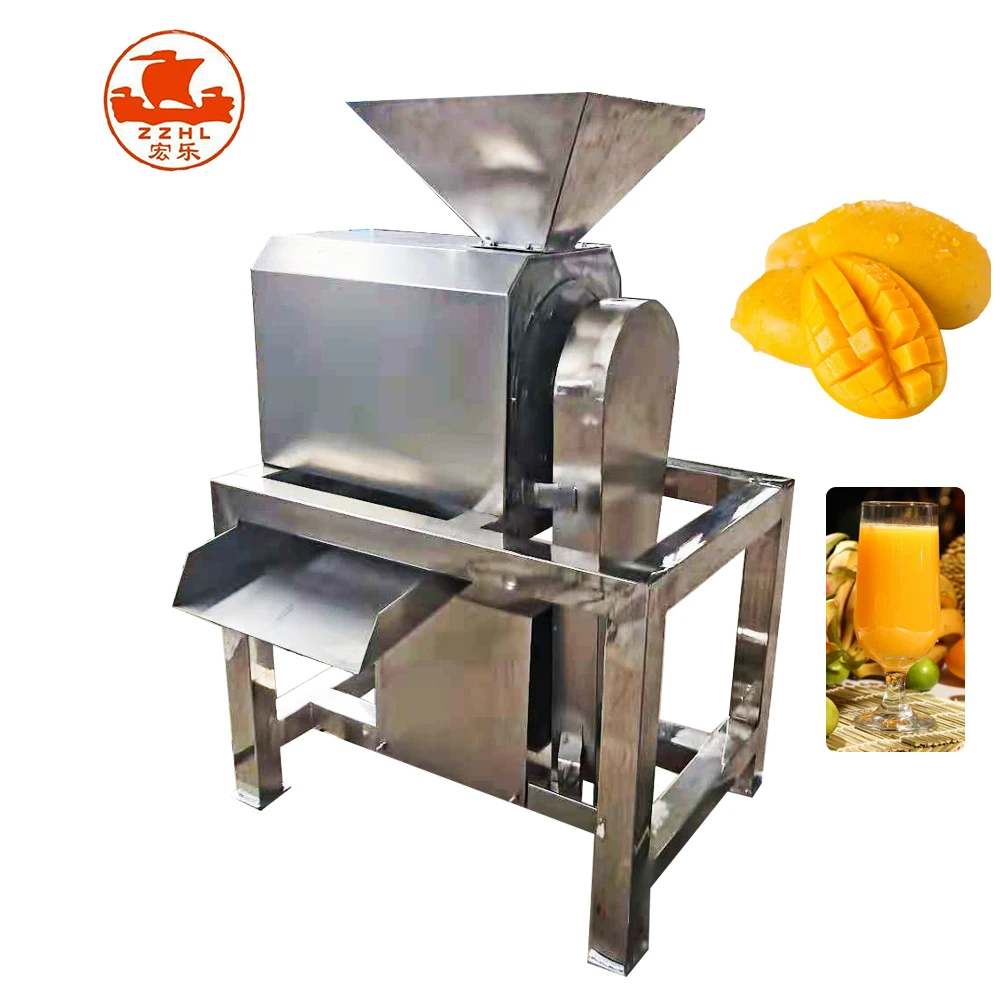
For operations focused on mango juice extraction and peeling efficiency, a dedicated mango juice extractor peeling machine with seedless extraction capability offers further advantages: minimal operator intervention, consistent pulp texture, and reduced fiber contamination in the final product. The Mango Juice Extractor Peeling Machine from HongLe Machinery is engineered for this all-in-one extraction approach, handling mango and cherry varieties in a single pass.
3. Screen Mesh Size: The Specification Most Buyers Skip
If there's one parameter consistently left unclarified when sourcing a commercial mango pulper, it's sieve mesh size. The mesh directly determines three things that affect your end-product value:
- Pulp fineness: Finer meshes (0.4–0.6 mm) are required for smooth beverage bases and yogurt-grade pulp; coarser meshes (0.8–1.2 mm) are better suited for frozen pulp chunks and industrial food ingredient applications.
- Throughput efficiency: Finer mesh settings extend processing time and increase the frequency of cleaning cycles — a hidden labor cost on high-volume lines.
- Variety compatibility: Fibrous mango varieties such as Tommy Atkins and Keitt require coarser initial screens to prevent clogging; Alphonso and Ataulfo perform well on finer mesh configurations.
Lock down your target end-product specification before selecting a mango pulper. Some machines support interchangeable screen insert systems — a premium worth considering if you serve multiple end-market specs or process multiple mango varieties from the same line across the season.
4. Multi-Fruit Compatibility and Year-Round Line Utilization
Few commercial processors run a mango pulper exclusively on mango year-round. The practical question during procurement is: once mango season ends — typically 60 to 120 days depending on your region and variety — can the same pulper handle passion fruit, apricots, tomatoes, or guava without a full retooling?
Modern dual-channel fruit pulper machines are designed to handle a broader material range, including high-acid fruits and stone fruits, without requiring custom tooling changes for each product. For operations in West Africa, Southeast Asia, or South America — where multiple tropical fruits cycle through the same line across the year — multi-material compatibility directly reduces your cost per unit of pulp produced and shortens the payback period on the capital investment.
Key questions to put to any mango pulper supplier before committing:
- What is the maximum fiber content the machine handles without sieve damage?
- Does the destoning mechanism require a different head configuration for apricot, peach, or other stone fruits?
- What is the estimated CIP (clean-in-place) cycle time for changeovers between fruit varieties?
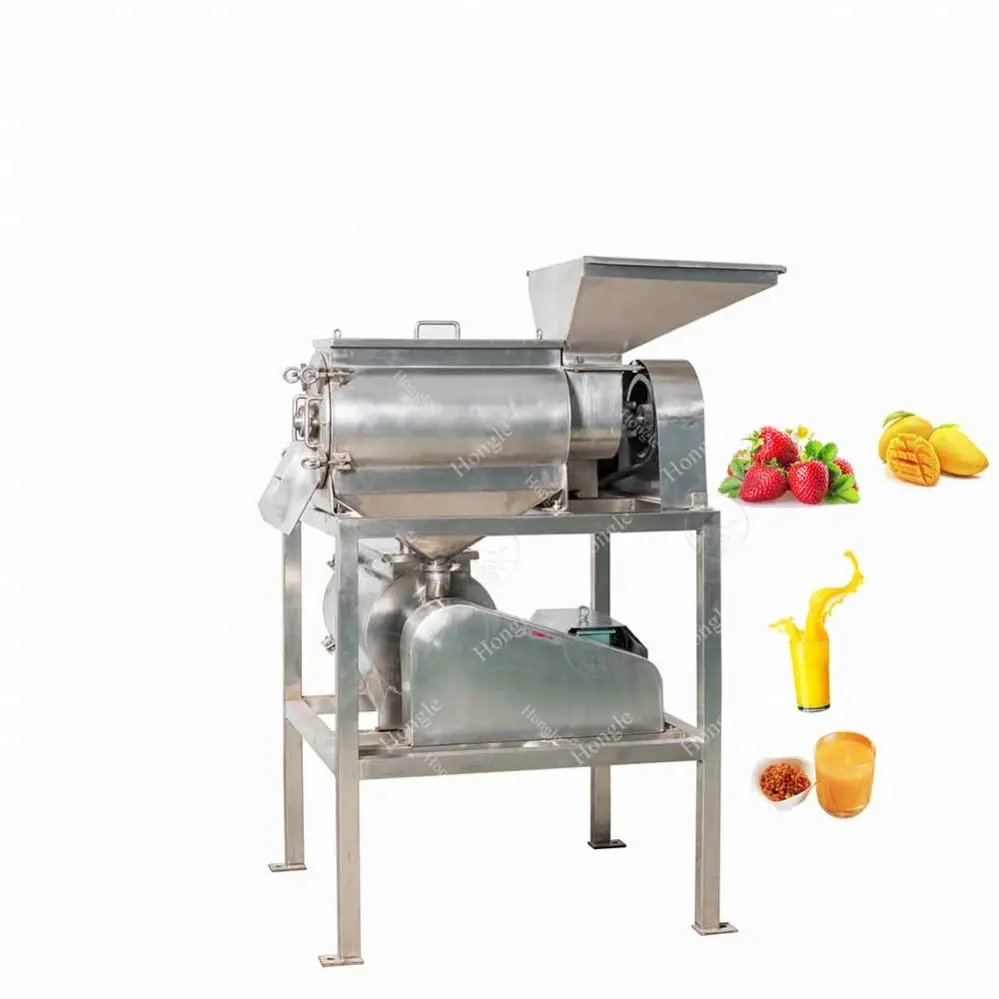
The Apricot Tomato Passion Fruit Crusher and Mango Destoner Pulp Making Machine addresses this multi-material requirement by combining a stone fruit crusher with a mango destoner and pulping function — a single machine architecture that reduces the equipment footprint for processors handling seasonal fruit variety transitions.
5. Mango Pulper Price Guide: What Budget Buys at Each Capacity Level
Current supplier pricing for purpose-built mango pulper machines falls into the following tiers. These price bands apply to dedicated mango pulper units for commercial production:
| Capacity | Price Range (USD) | Typical Configuration |
|---|---|---|
| 0.5–1 t/h | $4,000–$6,000 | Single-channel, stainless steel body, manual screen cleaning |
| 1–3 t/h | $6,000–$10,000 | Dual-channel or destoner-pulper combination, variable-frequency drive |
| 3–5 t/h | $10,000–$18,000 | Integrated line unit with CIP support and PLC control panel |
| 5 t/h+ | $18,000+ | Full production line integration, aseptic-ready configurations available |
Some mango pulper listings appear in the USD 1,200–1,500 range on B2B marketplaces. These are typically single-stage squeeze pulpers without an integrated destoning mechanism, limited material compatibility, and no documentation of yield performance. They are suitable for cottage-scale operations — not for commercial pulp export or co-packing where yield consistency, food safety documentation, and line throughput are non-negotiable procurement criteria.
When comparing two machines within the same price band, prioritize yield data documentation over catalog claims, confirm that replacement parts — sieves, impellers, shaft seals — are available within 2 weeks from local distributors, and verify that the supplier has confirmed export references in your target market region.
6. Final Decision Checklist Before You Purchase
Use this checklist as your final gate before issuing a purchase order for any commercial mango pulper:
- Daily mango input target (tonnes) ÷ planned operating hours = minimum required mango pulper capacity (t/h) — confirmed?
- End-product texture specification confirmed (smooth juice-grade, aseptic pulp chunks, frozen product)?
- Mesh size requirement finalized based on product spec and primary fruit variety?
- Multi-fruit processing needs assessed for off-season utilization?
- Supplier has provided documented pulp yield test data — not catalog specifications?
- Spare sieve sets, impellers, and shaft seals are either included or can be sourced within 2 weeks?
- Total budget includes freight, installation, and first-season maintenance costs beyond the machine price?
The operations that report the smoothest mango pulping seasons consistently made capacity the first decision, yield verification the second, and price the third. That order reflects how the economics actually accumulate over a production season — and it's the same order any experienced equipment procurement manager would follow.