EN


Nut Butter Grinder Machine: Key Features for Smooth and Consistent Output
In a commercial line, a nut butter grinder machine is a process-control point: it influences texture, mouthfeel, filling behavior, and production stability. Smooth output depends on controlled grinding, steady feed, and sensible heat management.
Teams often spot inconsistency at discharge. This guide explains what helps a grinder for peanut butter deliver a repeatable result and what operators should check first.
Why grinding control determines the final texture
Nut butter is a concentrated suspension of fine solids in oil. To feel smooth, the particles need to be reduced and distributed evenly while the natural oil remains well incorporated. In many commercial systems, a rotor-stator or colloid-mill grinding zone applies intense shear as the paste moves through a narrow, adjustable gap. That combination can refine particles, break down agglomerates, and help create a more uniform paste.
The important word is controlled. A smaller gap can increase refinement, but it also raises the need to manage throughput, product temperature, and wear. Targeted equipment guidance notes that a 50 μm milling gap can produce a finer result, while a wider gap shifts the particle distribution larger. That is a useful starting observation, not a universal setting: peanut type, roast level, moisture, added oil, sugar, and stabilizers all change how a formulation behaves. The appropriate setting is the one validated on the actual recipe and required output rate.
1. An adjustable, repeatable grinding gap
A fine-texture process needs a gap adjustment that operators can set deliberately and return to after cleaning or maintenance. Look for a clear adjustment mechanism, secure locking, and a documented method for recording the production setting. If a machine cannot hold its setting, operators may compensate by changing feed speed or adding oil, which makes root-cause analysis much harder.
Repeatability matters as much as the lowest possible gap. A practical startup routine includes checking the zero reference, confirming the selected gap, and running a short sample before releasing product to the main tank. When a recipe changes, record the gap together with feed temperature, viscosity observation, and discharge appearance. Those notes turn a nut butter grinder machine from a black box into a controllable station.
2. Rotor-stator geometry and stable shear
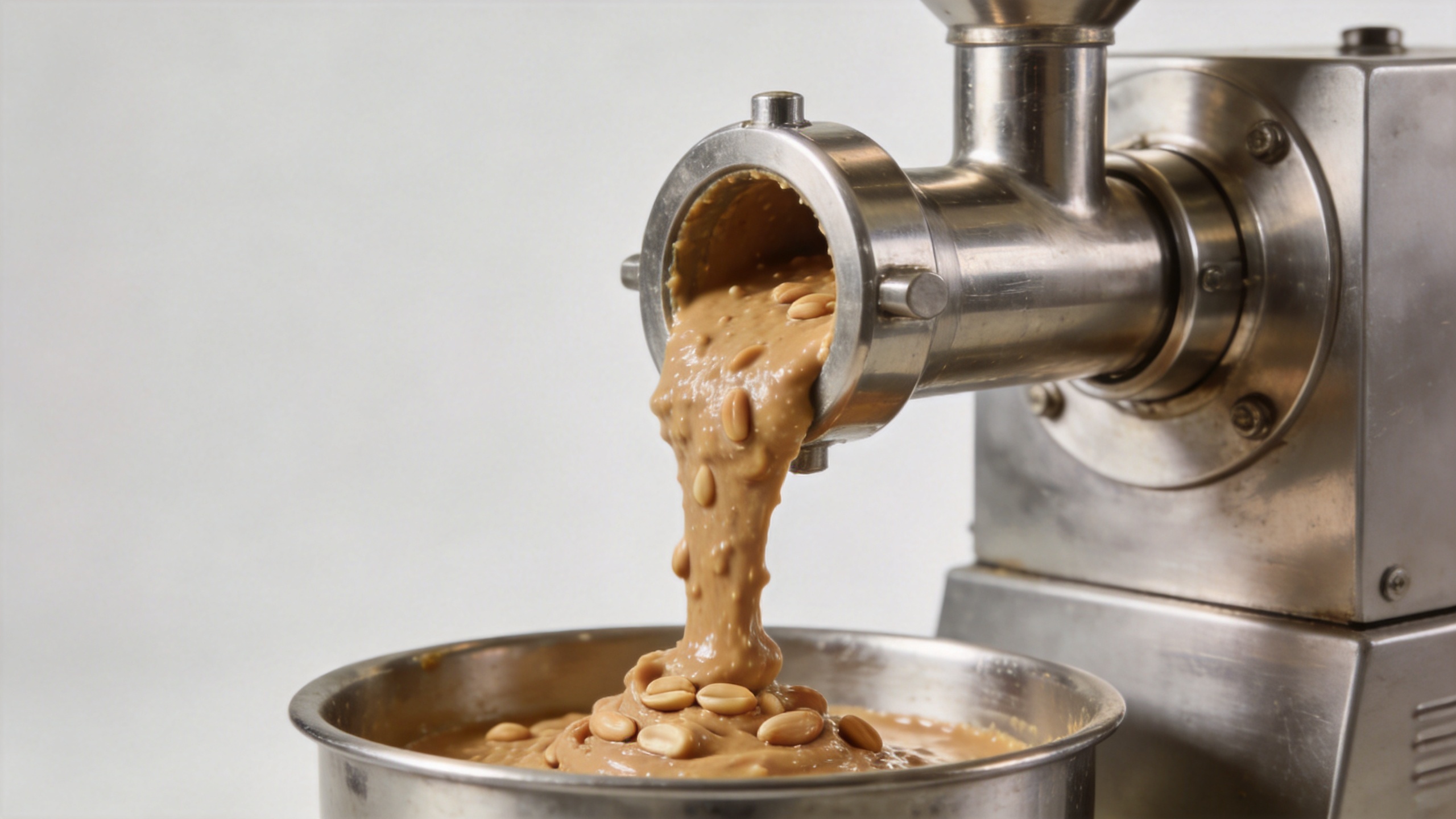
The grinding set should generate consistent shear across the product path. Rotor-stator geometry, surface condition, and correct assembly all influence whether every portion of paste receives comparable treatment. Uneven wear can create a process that looks stable at first but gradually produces wider particle variation, changing the sensory result and increasing the number of rework cycles.
Ask suppliers how the grinding components are inspected, how replacement parts are identified, and what assembly checks are required after service. For buyers comparing a grinder for peanut butter, it is more useful to discuss maintainable grinding performance than to rely only on a headline capacity figure. Capacity must be evaluated with the target fineness and formulation, not as an isolated number.
3. Feed consistency before the mill
Even an accurately adjusted grinder cannot correct an unstable feed indefinitely. Roast profile, nut particle size before fine grinding, ingredient temperature, and the rate of oil or other additions all affect viscosity. If thick paste and thin paste arrive alternately, the grinding load changes and the discharge can fluctuate.
A good line design gives the grinder a steady, conditioned feed. This may include a hopper or buffer tank, a controlled transfer pump, and recipe-defined addition points. Operators should watch for bridging, air entrainment, and sudden surges. Air in the paste can make the discharge look irregular and can complicate downstream filling, while an uncontrolled surge may reduce residence time in the grinding zone.
4. Temperature management without overprocessing
Grinding converts mechanical energy into heat. Some temperature rise can lower viscosity and help flow, but excessive or uncontrolled heat can alter flavor perception, increase oil separation risk, or make a batch difficult to compare with the next. The goal is not simply to run cold; it is to run within a recipe-approved range and measure that range at meaningful points.
Useful checks include product temperature at feed, discharge temperature, and temperature after any recirculation loop. If the outlet rises unexpectedly, investigate the grind gap, throughput, feed condition, and component condition before changing several variables at once. A jacketed tank, suitable cooling arrangement, or controlled recirculation may support the process, but it does not replace disciplined monitoring at the nut butter grinder machine.
5. A discharge path designed for steady flow
Smooth texture is only valuable if it reaches the next process step consistently. The discharge path should avoid unnecessary restrictions, dead zones, and abrupt changes that allow paste to settle or build up. Pumps, valves, and pipe sizing should be matched to the product’s viscosity and the planned operating rate.
During commissioning, watch the discharge rather than relying only on motor readings. A stable stream, repeatable pressure behavior, and similar appearance from one sample to the next are practical signals that the upstream settings are aligned. If output pulses or changes color and gloss during a run, investigate feed stability and air entry as well as the grinder itself.
6. Hygienic design and cleaning access
Nut butter production equipment must also support reliable sanitation and fast inspection. Product-contact surfaces, seals, and the grinding assembly should be accessible according to the plant’s cleaning method. Residual paste from a previous run can affect flavor, allergen control, or the first minutes of the next batch.
Before purchasing, ask for the cleaning sequence, disassembly points, recommended inspection intervals, and the parts most likely to require replacement. A machine that is difficult to clean may be technically capable of a fine grind yet still create inconsistency because operators shorten cleaning or delay routine checks.
A practical evaluation checklist for buyers
- Can the grinding gap be adjusted, locked, and documented for repeat runs?
- How does the supplier define capacity: by formulation, fineness, and operating conditions?
- What feed consistency and temperature range does the process require?
- How are rotor-stator wear and assembly condition inspected?
- What controls prevent feed surges, air entry, and unstable discharge?
- How does the equipment fit cleaning, maintenance, and downstream filling needs?
Connecting the grinder to a complete production line
For new projects, evaluate the grinder as part of the full process rather than as a standalone purchase. Roasting, cooling, pre-grinding, ingredient dosing, fine grinding, buffering, and filling all influence the result. A matched line helps the grinder operate in a predictable window instead of constantly correcting for upstream variation.
For a reference point when discussing line configuration, see this automatic peanut butter production machine for nut factories. Confirm the final configuration, processing requirements, and product specifications directly with the equipment supplier before making a purchasing decision.
Conclusion
A reliable nut butter grinder machine combines an adjustable grinding zone with steady feed, controlled temperature, cleanable construction, and a discharge path suited to viscous paste. Buyers who evaluate these features together are better positioned to create smooth texture and stable output across normal production shifts. The strongest next step is a recipe-based trial: define the desired texture, run representative ingredients, record the operating window, and assess the whole line—not only the grinder for peanut butter.
Frequently Asked Questions
What does a nut butter grinder machine control?
A nut butter grinder machine controls the grinding action applied to paste. A grinder for peanut butter should be evaluated with the recipe, target texture, feed condition, and downstream flow in mind.
How should a grinder for peanut butter be set?
Set a grinder for peanut butter through recipe trials rather than copying another plant’s number. Record nut butter grinder machine gap, feed temperature, throughput, and sample texture together.
Can a nut butter grinder machine solve an unstable feed?
No. A nut butter grinder machine performs more consistently with a stable feed. A grinder for peanut butter cannot fully compensate for changing roast, viscosity, air entry, or sudden transfer surges.
Why does a grinder for peanut butter get warm?
A grinder for peanut butter converts some mechanical energy into heat. Monitor the nut butter grinder machine inlet and outlet temperatures, then adjust the process according to the validated recipe window.
What should buyers inspect on a nut butter grinder machine?
Buyers should inspect adjustment repeatability, rotor-stator condition, seals, cleaning access, and service procedures. A grinder for peanut butter also needs a discharge path suited to viscous paste.