EN
EN


Onion Cutter Machine Guide: Choosing Blades and Output for Processing Lines
Buying an onion cutter machine for a processing line is less about finding the fastest-looking unit and more about matching cut quality, raw-material condition, and downstream flow. For a procurement team, a machine that produces a clean, repeatable cut at the required output can reduce rework, simplify portion control, and make the rest of the line easier to plan. This guide focuses on commercial vegetable-cutting applications rather than household choppers.
Start with the finished onion product. Rings for foodservice, dices for frozen mixes, strips for toppings, and coarse pieces for sauces each place different demands on an onion cutter machine. The right choice begins with the required cut specification and works backward through blade configuration, feeding method, capacity, cleaning routine, and integration points.
Define the Finished Cut Before Comparing Machines
“Onion cutting” is not one operation. Slicing creates rings or half-rings; dicing produces cubes for prepared foods; strip cutting supports salad and topping applications; and coarse chopping can suit fillings or sauces. Ask the production team to approve a sample specification that states cut size, acceptable variation, peel condition, and the maximum amount of breakage or fines.
Blade selection should follow that specification. A slicing disc is appropriate when uniform thickness matters. Dicing normally requires a coordinated cutting arrangement rather than a single slicing action. A strip-cut pattern may need a different knife geometry and feed direction. If one line must serve several products, confirm whether the machine supports practical blade changes and whether the changeover can be completed safely between batches.
Also clarify the condition of the incoming onions. Whole bulbs, peeled onions, halved onions, and pre-trimmed material do not move through an onion cutter machine in the same way. A machine can be technically capable of a cut pattern yet still perform poorly if the feed opening, hold-down arrangement, or product preparation does not suit the raw material.
Match Output Capacity to the Real Line, Not a Catalog Maximum
Capacity should be treated as a line calculation. Published commercial vegetable-preparation equipment can range from roughly 350 kg/h to around 1,000 kg/h, while larger industrial slicer examples are listed from about 500–1,500 kg/h and beyond. These are illustrative ranges, not a promise for every onion application: actual output changes with onion size, moisture, cut dimension, loading consistency, and operator practice.
For an onion cutter machine, calculate the required hourly rate from the planned finished-product demand, then add a realistic allowance for cleaning, blade changes, inspection, and short stops. Avoid selecting a unit that only meets demand at its stated maximum. A more useful comparison is sustained output at the required cut size, with the normal preparation method and the actual number of operators available.
| Question | Why it matters |
|---|---|
| What is the target kg/h after trimming? | It aligns machine capacity with usable product, not incoming weight. |
| Which cut sizes are required? | It determines blade and accessory needs. |
| What happens during changeover? | It affects practical throughput and labor planning. |
| Where does cut onion go next? | It determines discharge height, conveyor needs, and buffer capacity. |
Choose a Feed and Blade Arrangement That Protects Consistency
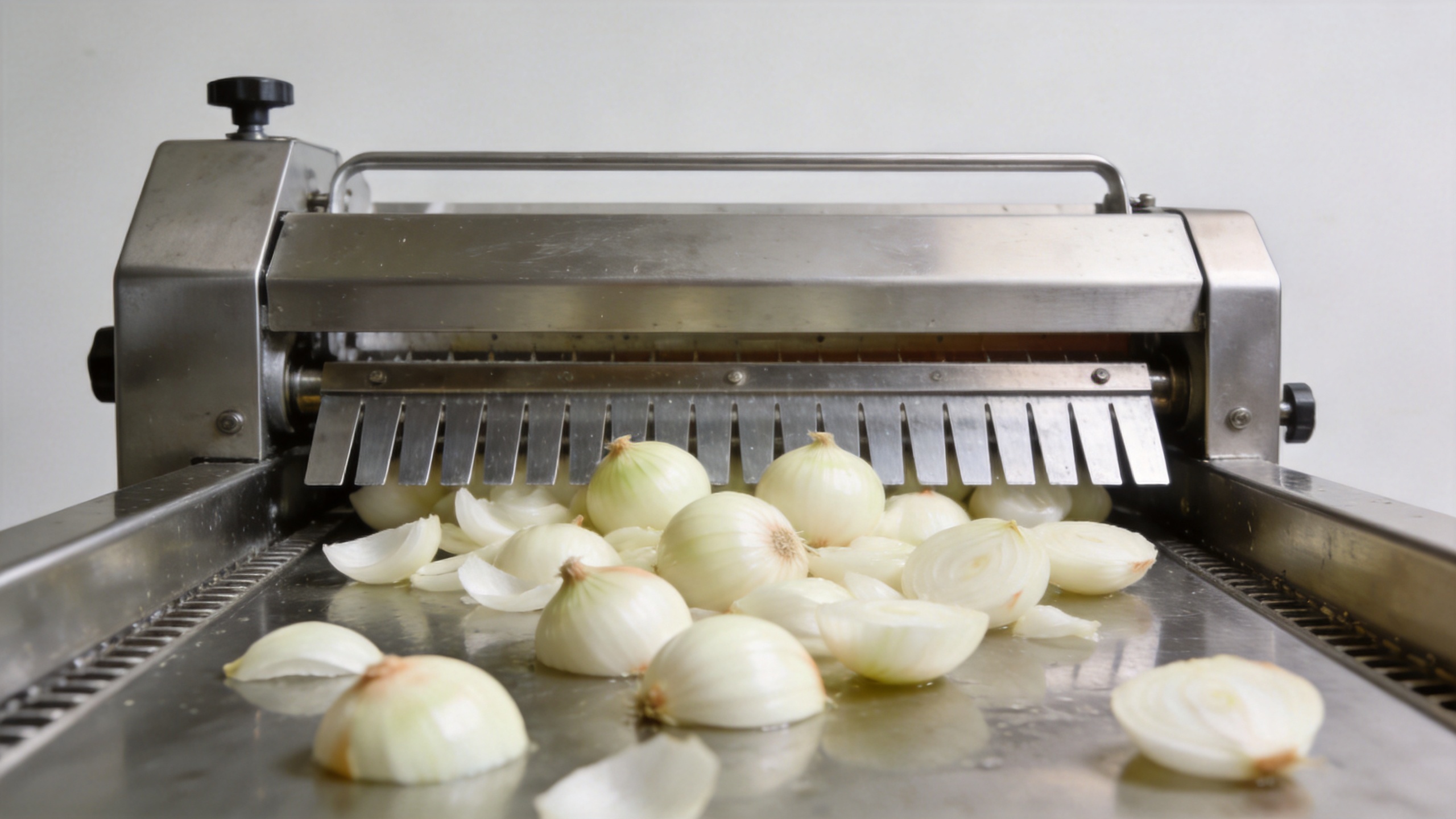
Uniform output depends on more than sharp knives. The feed system must present onions to the cutting zone consistently, and the blade arrangement must handle the intended product size without excessive crushing. During evaluation, request a test with onions similar to your own raw material. Look at slice thickness, dice shape, broken pieces, and the amount of juice or fines left around the cutting area.
Blade service deserves equal attention. Procurement teams should ask how blades are removed, cleaned, sharpened, and identified for replacement. Keep a documented spare-blade plan, especially where a single cut specification drives a high-volume product. Dull or damaged blades can reduce visual quality and create variable yields long before a complete stoppage occurs.
Plan Hygiene, Safety, and Line Integration Early
An onion cutter machine should fit the sanitation schedule as well as the production plan. Check access to food-contact areas, the time required for disassembly, drainage around the machine, and the procedure for returning blades to service. A short cleaning routine is useful only if it can be carried out thoroughly and consistently by the operating team.
For line integration, confirm the infeed height, discharge direction, electrical supply, floor space, and interface with washing, peeling, conveying, weighing, or packaging equipment. The discharge point should not create a bottleneck that makes the cutter wait. If the line feeds multiple destinations, a buffer conveyor or receiving hopper may be more valuable than a small increase in nominal cutter speed.
Use a Commercial Evaluation Checklist
- Approve the finished cut specification with production and quality teams.
- Test representative onions and inspect yield, uniformity, and fines.
- Compare sustained output at the required cut, not only maximum rated capacity.
- Confirm blade options, safe changeover steps, and spare-part availability.
- Map cleaning access, operator tasks, and line interfaces before installation.
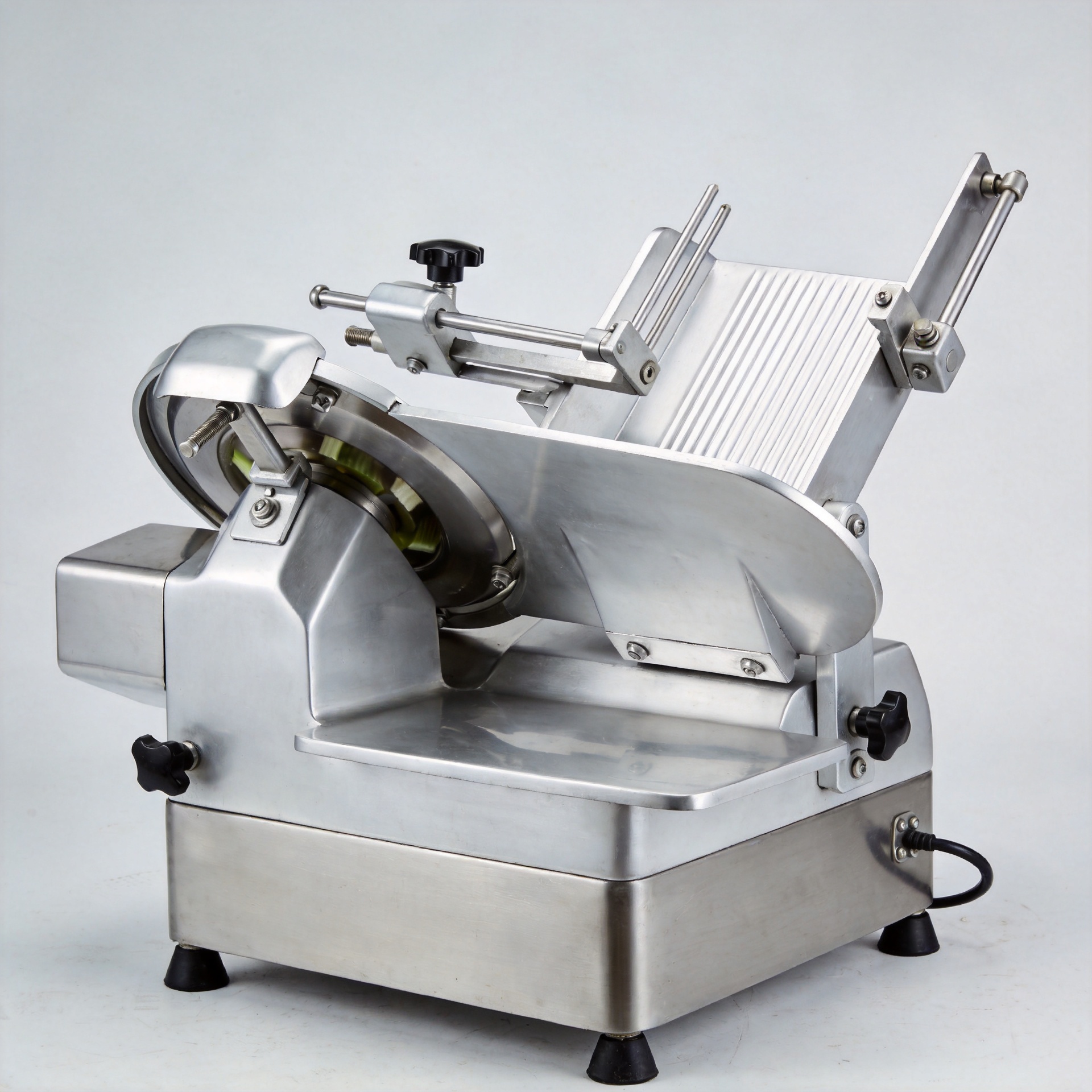
For buyers assessing a vegetable-cutting solution, the Commercial Industrial Electric Vegetable Cutter Dicing Machine for Potato Fruit & Green Onion Motor As Core Component can be reviewed against this same checklist. Confirm the required onion cut, throughput, and site conditions with the supplier before finalizing a configuration.
Onion Cutter Machine Procurement FAQ
How should an onion cutter machine be sized?
Size an onion cutter machine around the required finished output, then compare the onion cutter machine with the real preparation and cleaning time. A trial helps show whether the onion cutter machine can maintain the selected cut through a normal shift.
Which blade should an onion cutter machine use?
An onion cutter machine should use a blade arrangement that matches the approved slice, dice, or strip specification. Before ordering an onion cutter machine, request cut samples and ask how the onion cutter machine handles blade changes.
Can one onion cutter machine make several cuts?
Some configurations allow an onion cutter machine to support more than one cut pattern, but changeover time matters. If product variety is high, confirm that the onion cutter machine can be cleaned and reconfigured safely without interrupting the schedule excessively.
What should buyers inspect during an onion cutter machine test?
During a test, inspect the onion cutter machine for uniformity, fines, juice release, and safe feeding. Test representative raw material because an onion cutter machine may respond differently to onion size, firmness, or trimming condition.
How does an onion cutter machine fit a line?
Check the infeed, discharge, conveyor interface, and sanitation clearance around the onion cutter machine. A well-matched onion cutter machine supports the pace of upstream preparation and downstream packing rather than becoming an isolated high-speed point.
What documentation is useful for an onion cutter machine purchase?
Ask for the operating procedure, cleaning steps, blade identification, electrical requirements, and spare-parts list for the onion cutter machine. This documentation makes the onion cutter machine easier to evaluate across production, maintenance, and food-safety teams.
Make the Selection Decision on Repeatable Results
A suitable onion cutter machine is one that repeatedly delivers the approved cut at a sustainable rate while fitting the hygiene and material flow of the whole processing line. A structured trial, clear blade questions, and a realistic output calculation give purchasing teams a stronger basis for comparison than headline capacity alone. By treating blades, product preparation, and line integration as one decision, processors can choose equipment that supports dependable day-to-day production.