EN


Peanut Butter Processing Machines: How to Plan Material Flow in a Small Factory
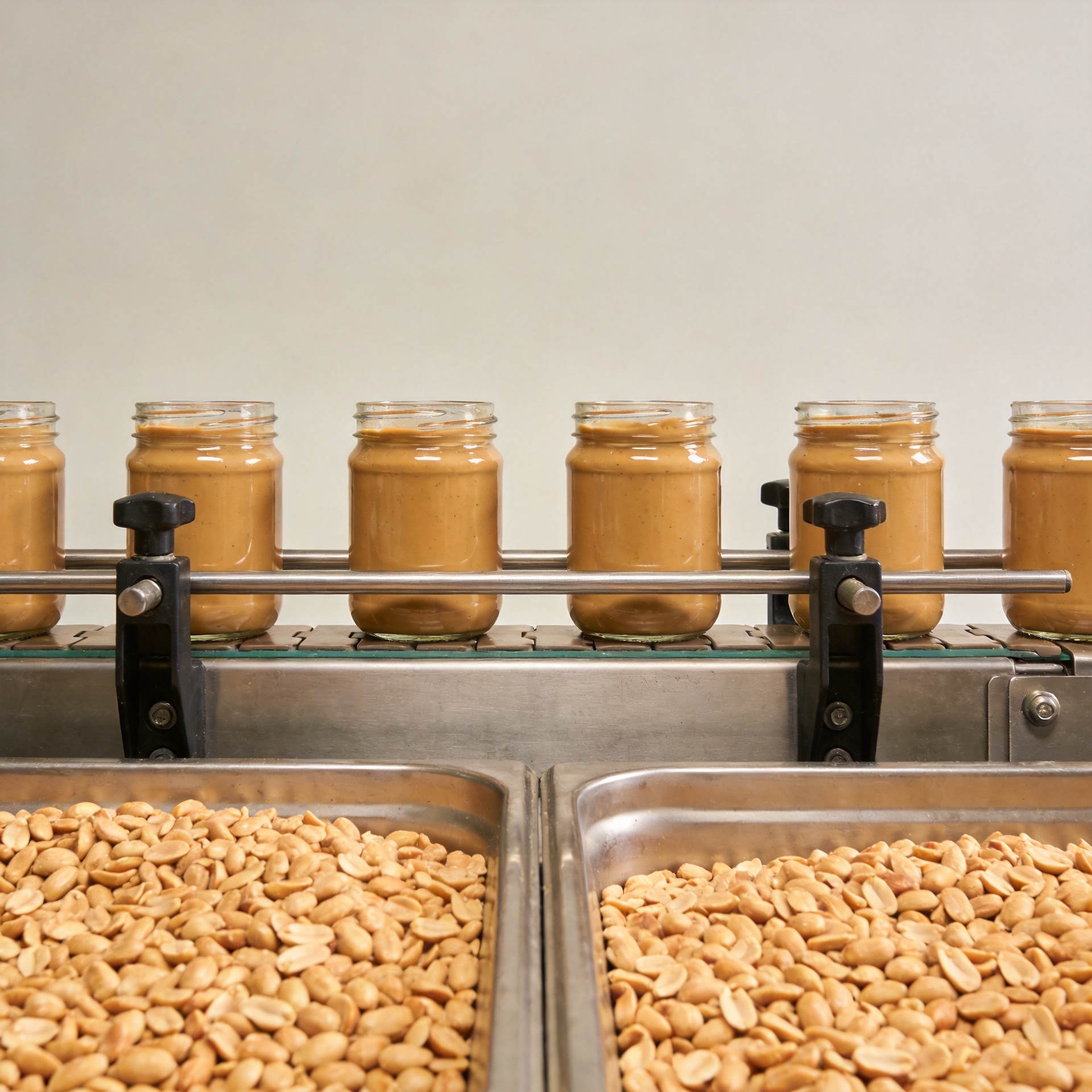
For a small nut-processing plant, selecting a peanut butter processing machine is only one part of the decision. The stronger starting point is the material route: where peanuts enter, where heat treatment ends, where buffers are needed, and how finished jars leave without crossing raw-material traffic. This approach helps a buyer compare a compact line on throughput, hygiene, labor and future expansion rather than on grinder specifications alone.
The practical objective is a one-way path: receiving and preparation, roasting and cooling, grinding and blending, then filling and packing. Each handoff should have a defined container, cleaning responsibility and capacity match. A small peanut butter making machine can fit well in this layout when upstream and downstream steps can feed it steadily and clear its output at a stable pace.
Start With the Product Route, Not the Equipment List
Draw the process before asking for quotations. For a typical smooth peanut butter product, the route may be receiving, inspection, cleaning or sorting, roasting, cooling, blanching or splitting where required, grinding, blending, holding, filling, sealing, coding and case packing. The exact sequence changes with the recipe and the condition of incoming peanuts, but the planning question remains the same: what enters each zone, and what leaves it?
Keep raw peanut handling separate from areas where roasted material, finished paste and packed product move. Peanut-butter food-safety planning examples use flow diagrams and distinguish raw-peanut areas from primary pathogen-control areas. In a small building, separation can come from room layout, scheduling, dedicated totes, marked traffic lanes and cleaning procedures; it does not necessarily mean a large number of rooms.
Match Each Process Handoff to the Peanut Butter Processing Machine
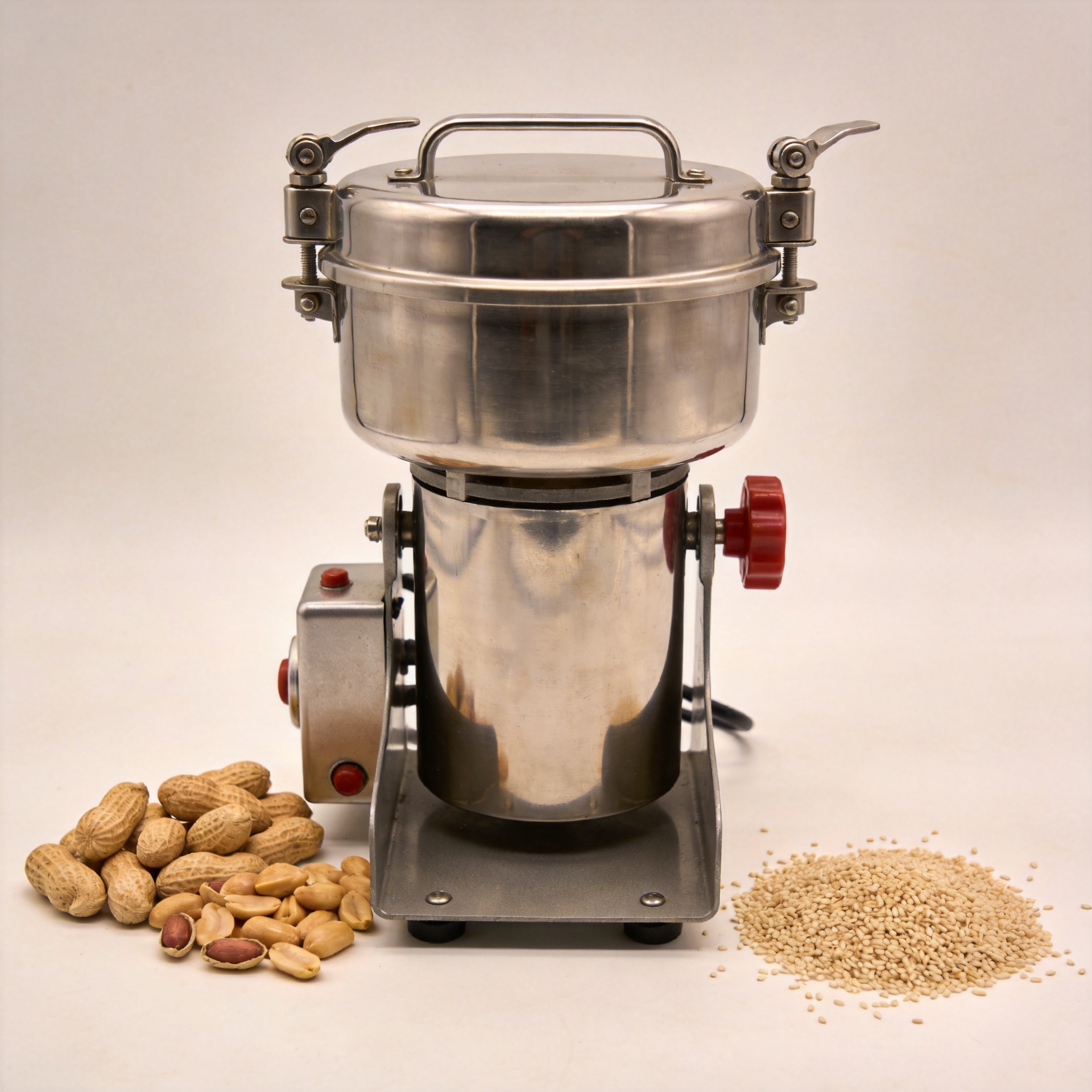
Grinding is often the visual center of a line, yet its performance is shaped by the handoffs around it. Before choosing a peanut butter processing machine, ask how roasted peanuts will be cooled and delivered, how long they can wait, and how ground product moves to blending or filling. A short, controlled path reduces repeated handling and makes housekeeping easier.
| Handoff | Planning question | What to avoid |
|---|---|---|
| Roaster to cooler | Can hot product cool before the next operation without blocking the aisle? | Using open containers that invite mix-ups or interrupt traffic. |
| Cooler to grinder | Is there a measured buffer so the grinder is neither starved nor overloaded? | Feeding by guesswork and creating uneven operator workload. |
| Grinder to blender or holding tank | Can paste move by a clean, manageable route with a clear cleaning plan? | Long, improvised transfer routes that are difficult to inspect. |
| Filling to packing | Can containers, lids and cartons arrive without crossing raw ingredients? | Placing packing materials in a wet or high-traffic processing area. |
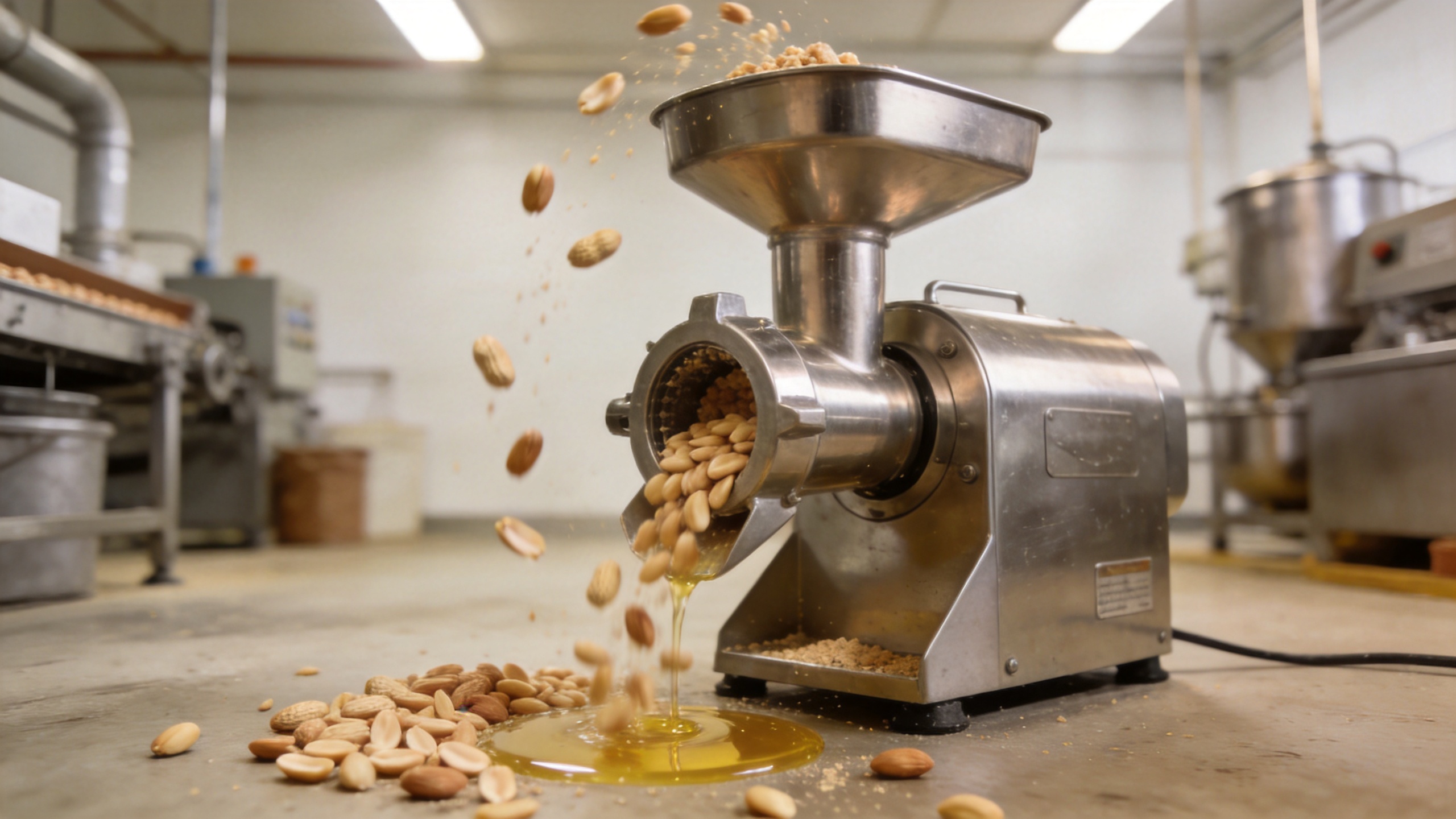
This comparison matters because a nominal capacity does not automatically become line output. The limiting step may be cooling, a manual ingredient addition, filling speed, changeover time or packing labor. Build the layout around the constraint first, then select equipment that supports it.
Size Buffers and Capacity as a System
Buyers often compare machines by hourly figures. That is useful, but use the number as a system input, not a promise of finished-goods output. If a grinder can process material faster than the filler accepts it, the plant needs an appropriate holding arrangement or an operating plan that prevents product from waiting in an unsuitable location. If the roaster is slower than the grinder, the grinder will spend time idle.
One confirmed example is an automatic peanut butter production machine for nut factories listed with a 200 kg/h configuration and vacuum-packing feature. Treat that type of specification as a starting point for a supplier discussion. Confirm the product formula, particle-size target, filling format, operating hours and actual upstream/downstream capacities before making a capacity decision.
For a small factory, a simple planning worksheet is usually more useful than a large theoretical layout. List every step, its expected hourly rate, the batch or buffer volume, the responsible operator, the cleaning requirement and the direction of travel. The first mismatch on that sheet is often where investment or layout changes are needed.
Plan the Building Around Hygiene and Operator Movement
A compact plant benefits from fewer crossings. Separate people, materials, waste and packaging movements as far as the site permits. Keep receiving close to the raw-material store; direct roasted material toward the processing zone; place filling and packing on the finished-product side. Provide a deliberate route for cleaning tools and waste so they do not pass through finished-product handling.
Ventilation, air flow, traffic patterns and cleaning procedures are practical planning topics for peanut-butter facilities. During supplier discussions, ask where dust may be generated, which surfaces are contacted by product, which parts are opened for cleaning, and what clearance is needed around each machine. These questions make a peanut butter processing machine comparison more useful than a basic equipment checklist.
Choose a Configuration That Leaves Room to Grow
A small line does not have to be a permanently fixed line. Leave physical and process space for a larger holding vessel, a second grinder, a different filling head or additional packing capacity. Use straight runs where possible, but do not force a straight line if it creates unsafe crossings or leaves no service access. A practical arrangement is one operators can run, clean and troubleshoot consistently.
For consideration-stage buyers, compare configurations by their fit with the intended product range. A line for one smooth, shelf-stable recipe may need a different blend of storage, mixing and filling flexibility than a line that will make multiple nut butters or introduce inclusions. A small peanut butter making machine should therefore be evaluated with its feed, transfer and packaging interfaces, not as a stand-alone purchase.
What to Send Before Requesting a Quotation
- Target products, recipe characteristics and planned pack sizes.
- Expected output per hour, shift and month, plus the intended operating schedule.
- A simple drawing with room dimensions, doors, columns, drainage and utility locations.
- The proposed material route from receiving to finished-goods storage.
- Preferred automation level, available labor and cleaning expectations.
- Voltage, compressed-air and other available utilities, if known.
With these inputs, a supplier can discuss whether the equipment sequence is balanced and where a small factory should use a manual step, a buffer or an automated transfer. The result is a more transparent comparison of a peanut butter processing machine solution and a clearer commissioning plan.
Conclusion: Let Material Flow Set the Equipment Priorities
Small-factory planning works well when material flow leads the equipment decision. Map the route, separate raw and finished-product traffic, match capacities at every handoff, and reserve access for cleaning and maintenance. Then compare individual machines against that operating plan. This turns the procurement conversation from “Which grinder should we buy?” into “Which connected process can we run reliably?”—the question that supports a scalable peanut butter operation.