EN


Pineapple Peeler Machine: Processing Options for Fruit Businesses
A pineapple peeler machine can turn a slow, knife-heavy preparation task into a more controlled processing step. For fruit businesses handling fresh-cut pineapple, juice ingredients, canned fruit, frozen pieces, or food-service prep, the question is not simply whether to automate. The more useful question is which peeling approach fits the fruit condition, target output, hygiene plan, and labor model.
As a practical starting point, map the whole flow before comparing machines: receiving, sorting, washing, trimming, peeling and coring, cutting, inspection, packing, and cold handling. A peeler that is fast on its own can still create a bottleneck if washed fruit arrives inconsistently or if the cutting station cannot keep pace. Keeping unwashed and washed produce zones separate is also a sensible process-control principle, because it helps reduce opportunities for cross-contamination before the edible fruit is exposed.
What a Pineapple Peeler Machine Does in a Processing Line
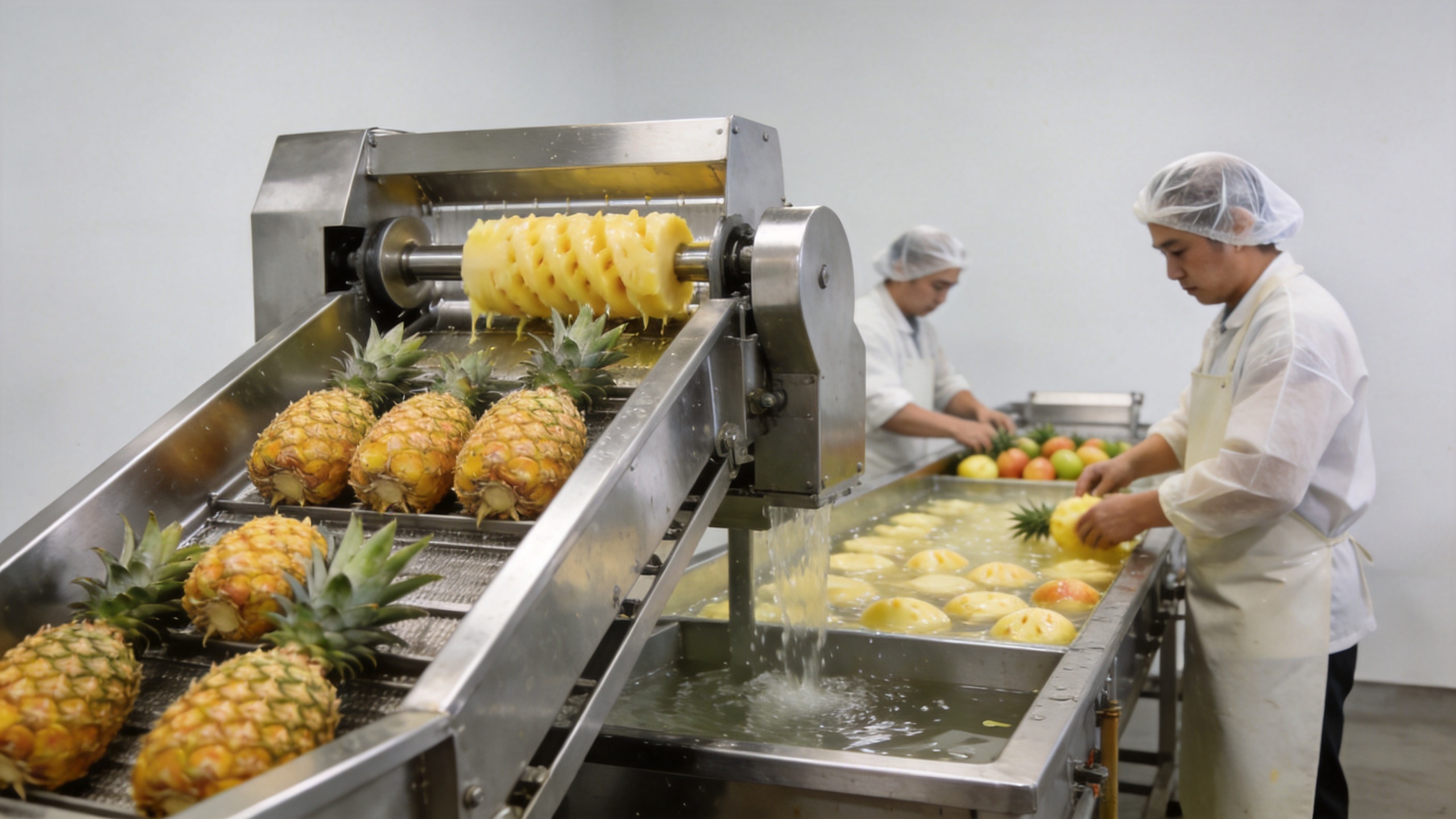
A commercial pineapple peeler machine typically removes the outer rind and may also handle coring, depending on the configuration. The desired result varies by business. A fresh-cut operation may want a peeled cylinder ready for rings, chunks, or spears. A processor supplying pulp may prioritize a consistent feed into the next cutting or crushing step. A hotel, restaurant, or central kitchen may value a compact unit that reduces repetitive knife work without needing a full production line.
The key is to define the required output before asking for a quotation. Specify the average pineapple diameter range, ripeness range, crown and base treatment, acceptable flesh loss, desired core treatment, and the shape needed downstream. These details affect how a pineapple peeler machine should be configured and how easily operators can keep output consistent.
Choose Among Manual, Tabletop, and Higher-Throughput Options
Manual hand tools can suit low and irregular volumes, especially where operators already perform several preparation tasks. Their main strengths are low initial cost and flexibility. Their trade-off is variable yield and a strong dependence on operator technique.
Tabletop or semi-automatic equipment can be a sensible middle ground for growing food-service and fresh-cut operations. It can standardize the peeling motion while keeping the line compact. Buyers should ask how the equipment handles fruit size variation, how often blades need adjustment, and how quickly the machine can be cleaned between production periods.
For larger plants, a higher-throughput pineapple peeler machine may need to connect with washing, trimming, cutting, and conveying equipment. Supplier listings may quote very different capacities, so figures should be compared with their operating conditions in view. One searched commercial listing, for example, describes a capacity of up to 1,200 pineapples per hour and SUS304 food-contact parts. Treat such figures as supplier-specific examples: confirm the test fruit size, operator count, trim requirement, and actual yield before using them in a capacity plan.
Build the Processing Flow Around Hygiene and Yield
Peeling exposes edible flesh, so the upstream wash and sanitation routine matters as much as machine speed. Food-safety guidance for fresh produce emphasizes a flow that separates unwashed from washed product. In practice, that means planning clear receiving and wash zones, suitable drainage, clean food-contact surfaces, and a handoff that does not return peeled fruit to a dirty side of the room.
Yield should be measured at the same time. Track whole-fruit input weight, usable peeled flesh, trim loss, and rework. A machine that appears to remove peel quickly may not be a suitable option if it removes too much flesh or leaves enough rind for repeated manual trimming. Run trials with representative fruit from the intended supply season, not only with ideal samples.
Key Specifications to Check Before Buying
- Fruit range: Confirm the acceptable diameter, length, and ripeness range for the pineapple peeler machine.
- Output style: Clarify whether the machine peels only, peels and cores, or prepares fruit for a specific downstream cut.
- Throughput basis: Ask whether capacity is stated per hour under continuous feeding and what staffing it assumes.
- Food-contact construction: Review the material grade and access to blades, guards, and contact surfaces for cleaning.
- Yield control: Ask how blade position and trimming depth are adjusted, then verify the result with a sample run.
- Integration: Check inlet and outlet height, footprint, utilities, drainage, and compatibility with washing or cutting equipment.
- Service planning: Include spare blades, operating instructions, remote support, and routine maintenance in the evaluation.
A Practical Evaluation Method for Fruit Businesses
Start with a one-shift production estimate, then convert it into a realistic hourly requirement after allowing for breaks, cleaning, fruit sorting, and changeovers. Next, decide which step currently constrains output. If trimming is the bottleneck, a peeler alone may not solve it. If the line already has adequate washing and cutting capacity, then a pineapple peeler machine may provide a focused improvement in labor consistency.
During supplier discussions, ask for a video or sample test that shows the complete fruit path, not just a close-up of a finished pineapple. Compare waste, finished appearance, cleaning access, operator actions, and recovery time when a fruit is out of range. For businesses sourcing several fruit and vegetable processing machines, it can also be useful to review related peeling equipment categories such as this commercial garlic and ginger peeling machine to discuss general automation, cleaning, and service expectations. The product is for garlic and ginger, not pineapple, so its specifications should not be used as pineapple-machine specifications.
Turn a Machine Purchase Into a Workable Processing Plan
The right pineapple peeler machine is part of a process, not a stand-alone answer. Define fruit variability, target form, hygiene controls, yield tolerance, and downstream capacity first. Then use a representative trial to confirm the real operating window. This approach helps fruit businesses select equipment that supports cleaner flow, more consistent preparation, and a processing plan that can scale with demand.