EN


Potato Chip Slicer Machine: What Matters for Consistent Slice Quality?
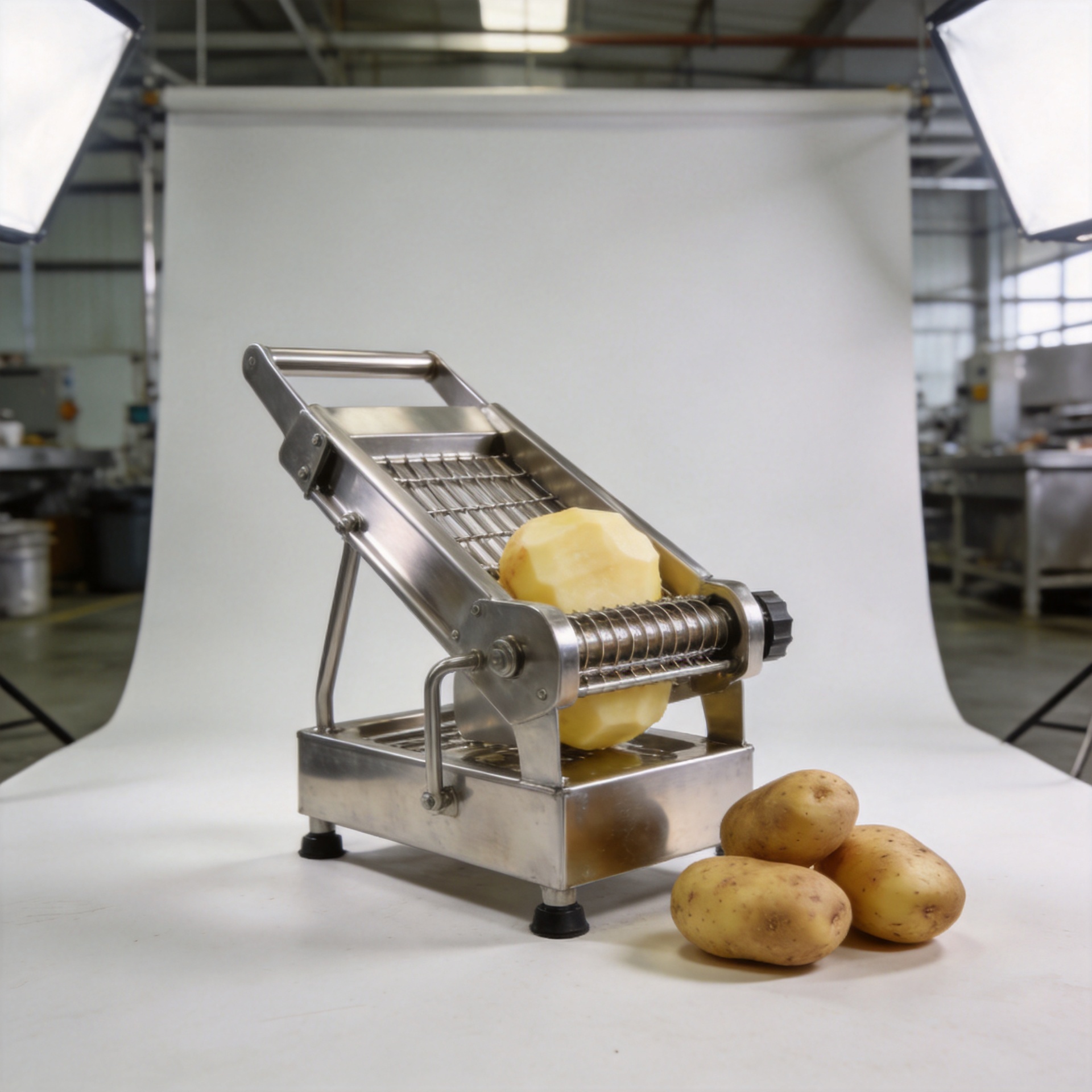
For a chip processor, a commercial potato chip slicer is not simply a cutting station. It establishes the shape, thickness and surface condition that the fryer, seasoning system and packaging line must handle. When slices vary, the result can be uneven frying, excess fines, inconsistent pack appearance and a harder production day. The useful question is not whether a commercial potato chip slicer can cut potatoes; it is whether it can repeat the same cut under your real product and operating conditions.
As a technical advisor evaluating food-processing equipment, I start with production conditions rather than a headline capacity. Potato variety, storage condition, washing quality, target thickness, operator routine and line handoff all influence what the commercial potato chip slicer delivers. That is why stable quality comes from a controlled process, not one isolated specification.
Start with the slice standard, not the machine brochure
Before comparing a commercial potato chip slicer, define what an acceptable slice looks like. Set a target thickness range, then agree on how your team will inspect it. Include whole slices, broken slices, edge damage and the amount of small material created during cutting. A machine can appear productive while still creating a downstream problem if its output contains too much variation or damage.
For an awareness-stage project, this distinction matters: thickness is not just a dial setting. It is a production control point. The target must be understood by purchasing, operators and quality staff in the same way. If your product mix changes often, record the setting and the actual sample result for each product rather than assuming one position works for every potato.
Blade condition is the first quality control point
The blade is where a commercial potato chip slicer either makes a clean, repeatable cut or starts creating variation. A sharp, correctly installed blade supports a smoother cut. A worn, nicked or poorly seated blade can drag the product, bruise the surface or leave irregular edges. These defects may become more obvious after frying, when broken pieces darken or thin areas cook faster.
Build blade inspection into the shift routine. Check cleanliness, mounting security and visible damage before production; check representative slices after start-up; and define who can approve a blade change. Do not wait for customer-facing defects to make the decision. In practice, a blade-management routine is often more valuable than trying to compensate for a cutting problem with a faster feed rate.
Control feed presentation and potato preparation
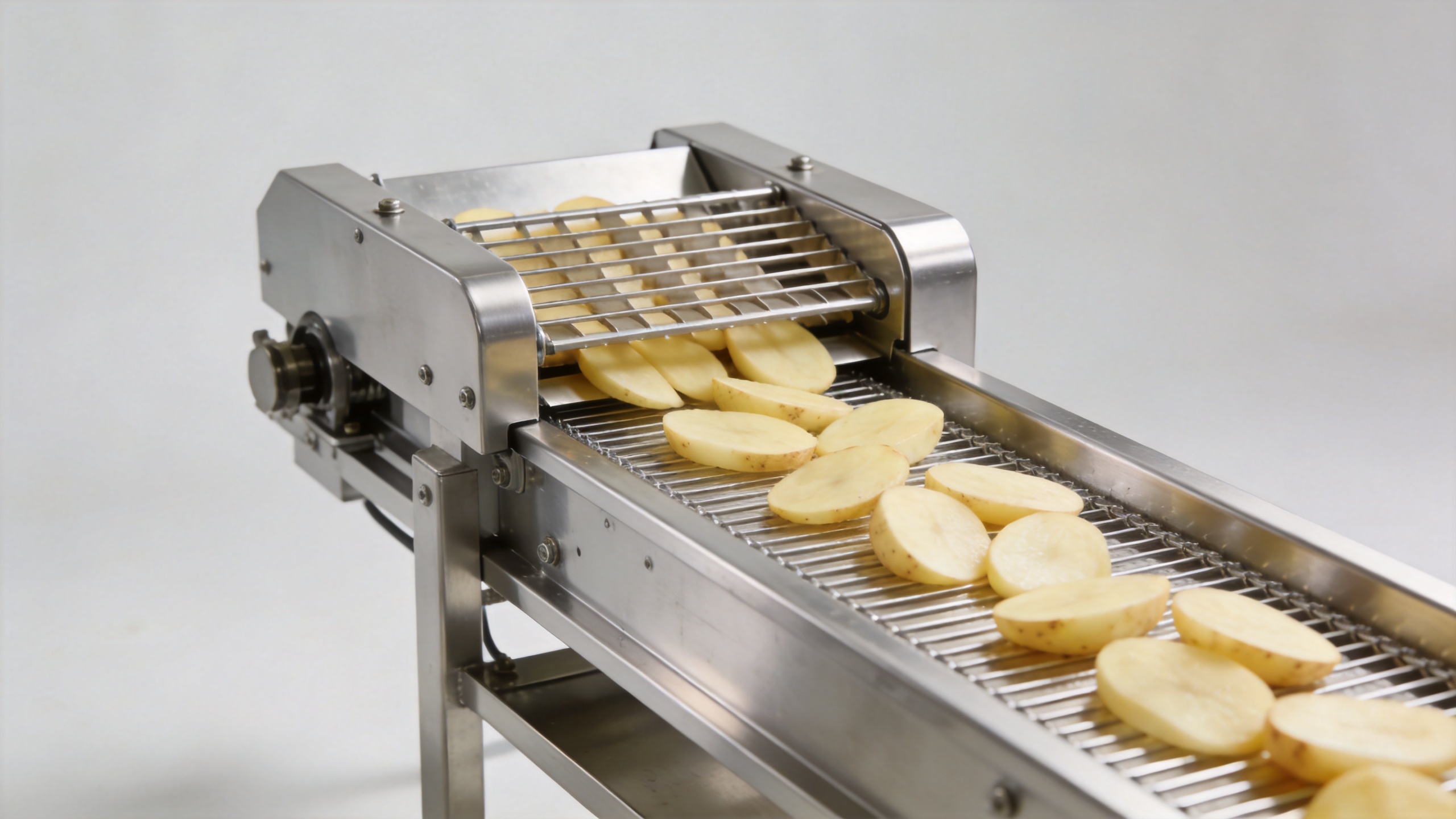
A commercial potato chip slicer needs potatoes to arrive in a consistent condition. Size variation, uneven trimming, loose debris and poor washing can change how the product meets the cutting area. Feed control matters because the potato must be supported and presented consistently; unstable presentation can show up as variable thickness, partial cuts or extra fragments.
This is where teams sometimes misread the problem. It is tempting to treat every irregular slice as a machine fault, but the actual cause may be product preparation or the way operators load the feed. Review the whole path: washing, inspection, sizing, feed rate and the transfer from the commercial potato chip slicer to the next stage. The equipment and the preparation standard have to work together.
Verify thickness under real production conditions
Set-up samples are necessary, but they are not enough. A commercial potato chip slicer should be checked after it has reached normal operating rhythm, not only during the first few minutes. Take samples at planned intervals, measure thickness using one agreed method and note the machine setting, potato batch and operator. This makes drift visible before it becomes a large volume of off-spec product.
A simple control plan can include three questions: Are slices within the agreed range? Are edges clean enough for your product standard? Has the amount of fines changed since the previous check? If the answer changes, investigate one factor at a time—blade, feed, product condition or cleaning—rather than changing several settings at once and losing the cause.
Match the slicer to the rest of the line
Consistent cutting does not end at the discharge point of a commercial potato chip slicer. The handoff to rinsing, frying or conveying must protect the slices you have just made. A transfer that drops, crowds or holds slices unpredictably can turn good cutting into breakage. During planning, ask how the cutter output will be accepted by the downstream equipment and how operators will clear product safely during a stop.
This line-level view is especially important for growing processors. A standard solution may cover many needs, while unnecessary customization can add maintenance complexity. The right decision depends on your target throughput, product range, cleaning schedule and the skills available for maintenance—not on capacity alone.
Use a practical acceptance checklist
When evaluating a commercial potato chip slicer, use representative potatoes and record the result. Confirm the target thickness, sample at more than one point in the run, inspect slice condition and observe the transition to the next process. Ask the supplier to clarify the operating and maintenance steps that affect repeatability. For processors reviewing a broader vegetable-cutting need, the Commercial Industrial Electric Vegetable Cutter Dicing Machine for Potato Fruit & Green Onion is a confirmed product-page reference for further equipment discussion.
Build stability into the daily routine
The most reliable commercial potato chip slicer program combines a defined slice standard, blade care, consistent feed preparation, scheduled sample checks and line coordination. None of these controls is difficult alone, but missing one can make the other controls less effective. Start with a documented baseline, train operators to recognize change and use actual samples to guide adjustments.
When you assess a commercial potato chip slicer this way, you move beyond asking whether it runs. You create the conditions for stable slice quality that downstream operations can trust.