EN


Potato Chip Slicer Setup Guide for Snack Production Lines
A potato chip slicer is one of the first control points in a snack line. Before a potato reaches the fryer, its slice profile affects how evenly it moves through washing, dewatering, frying, seasoning, and packing. For a factory buyer, the useful question is not simply “Which slicer cuts potatoes?” It is “Which potato chip slicer configuration fits the required throughput, product style, cleaning routine, and downstream equipment?”
This guide focuses on commercial vegetable-cutter applications rather than household mandolines. It explains the decisions that should be confirmed before a machine is added to a snack production line.
Start with the product specification, not the machine brochure
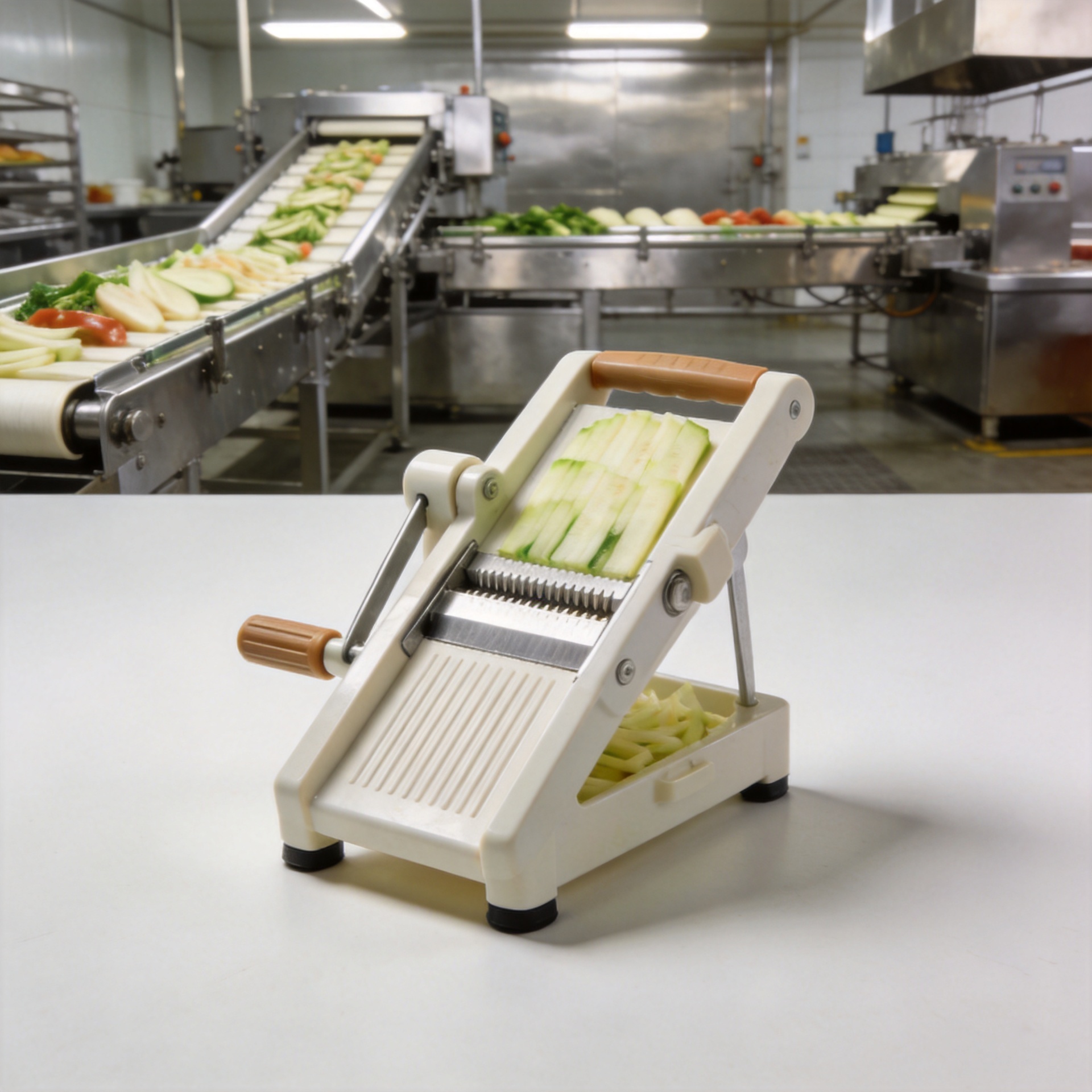
Define the target slice before comparing equipment. A potato chip slicer may be set up for flat slices, crinkle cuts, strips, or other formats depending on the cutting head and blade arrangement. Thickness is equally important. Published commercial offerings show that adjustment ranges vary widely: some examples are around 1–5 mm, while other systems list thinner or wider ranges. Treat those figures as market examples, not a promise for every model. Ask the supplier to confirm the actual blade set, adjustment method, and repeatability for your required chip thickness.
Uniformity matters because downstream processes receive the same piece geometry. If slices vary greatly, operators may need to work harder to manage frying consistency and finished-product appearance. For an awareness-stage purchase project, this is the key principle: establish the product standard first, then configure the cutter around it.
Match slicing capacity to the line bottleneck
Capacity should be evaluated as a line number, not an isolated motor number. Start with planned raw-potato intake per hour, expected operating hours, shift pattern, and realistic allowances for cleaning, blade changes, and product changeovers. Then compare that target with the feed method, cutter design, and the capacity of washing, dewatering, frying, cooling, seasoning, and packing stations.
- Feed continuity: Decide whether manual loading, assisted feeding, or a linked conveyor best supports the planned production rhythm.
- Product condition: Confirm the acceptable potato size range and whether washed or peeled potatoes will enter the potato chip slicer.
- Downstream handoff: Check discharge direction, elevation, and transfer method so slices do not accumulate between cutting and the next process.
- Expansion margin: A modest capacity reserve can be useful, but oversized equipment should still fit the actual fryer and packaging bottlenecks.
A line should not be specified from the slicer outward. Instead, map the complete material flow and identify the slowest stable process. That approach helps buyers avoid paying for a cutter that cannot be used at its intended rate.
Choose a cutting head and blade arrangement that operators can manage
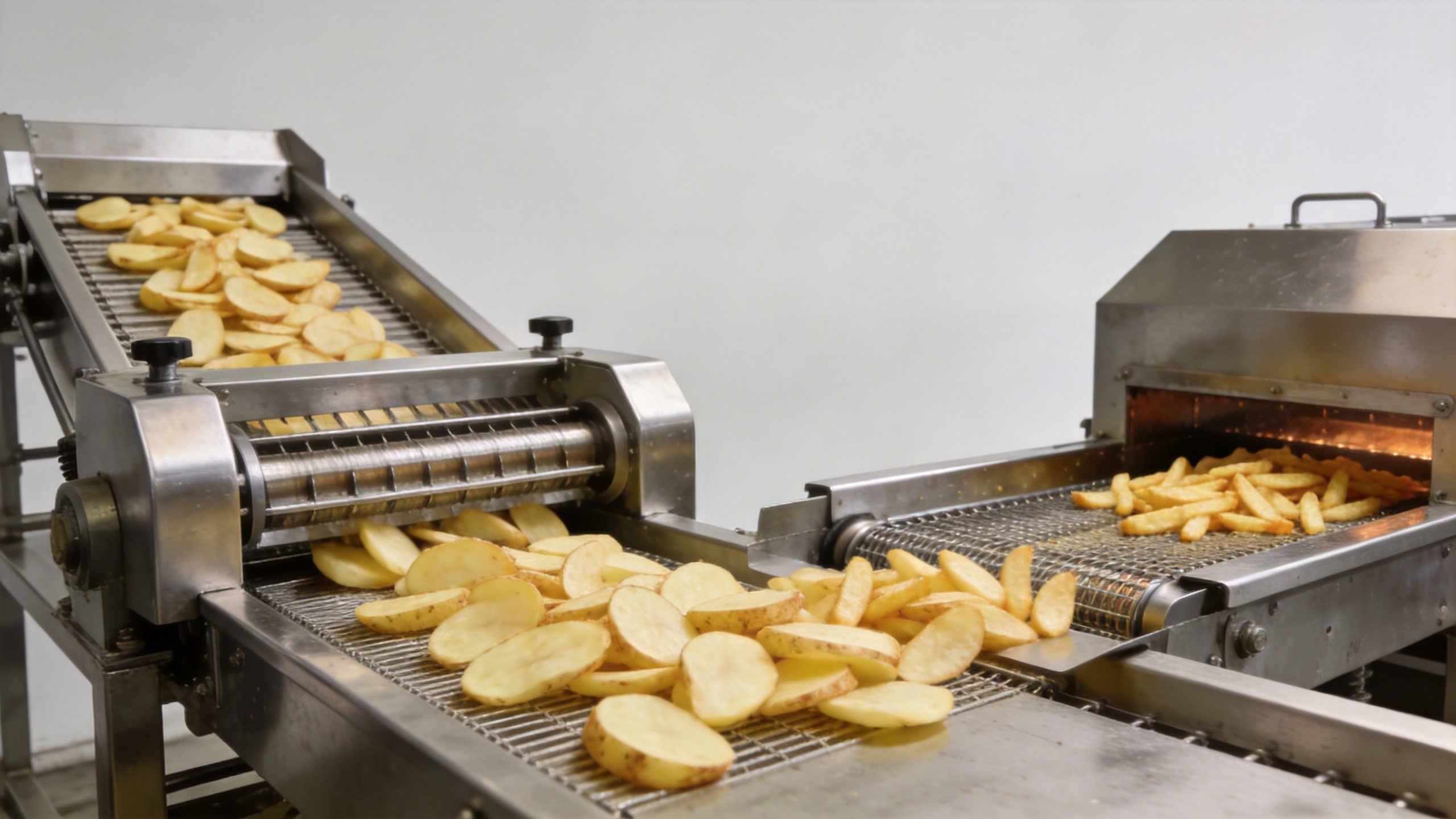
Cut quality depends on the condition and alignment of the cutting components. During configuration, ask how the machine changes from one thickness or cut style to another, which parts are wear items, and whether blade removal is straightforward for trained operators. A practical potato chip slicer setup makes the daily routine visible: inspect, clean, reassemble, verify the first cut, and release production.
Request a clear list of the supplied cutting components and the optional ones. It is better to record blade sizes and product formats in the purchase specification than to assume every cutter includes every cutting pattern. For export projects, also clarify spare-parts packing, replacement-blade identification, and the service documents supplied with the machine.
Build sanitation and safety checks into the configuration
In food processing, cleaning access is a configuration issue, not an afterthought. Review the food-contact areas, guard arrangement, drainage, removable components, and the steps needed to reach the cutting zone safely. The aim is to let the production team inspect and clean the equipment without creating unnecessary downtime or unsafe shortcuts.
During the buyer review, confirm the materials used in food-contact areas, the cleaning procedure recommended for the specific model, and the guarding/interlock arrangement. Do not rely on generic claims; request the model-specific documentation and confirm how the machine will be isolated before blade service.
Plan integration with the rest of the snack line
A potato chip slicer performs more predictably when its interfaces are agreed before installation. Review electrical requirements, available floor space, inlet and outlet heights, waste handling, water management, and the receiving equipment after slicing. If the line includes a washer before the cutter or a fryer after it, the handoff should be assessed with the actual product flow in mind.
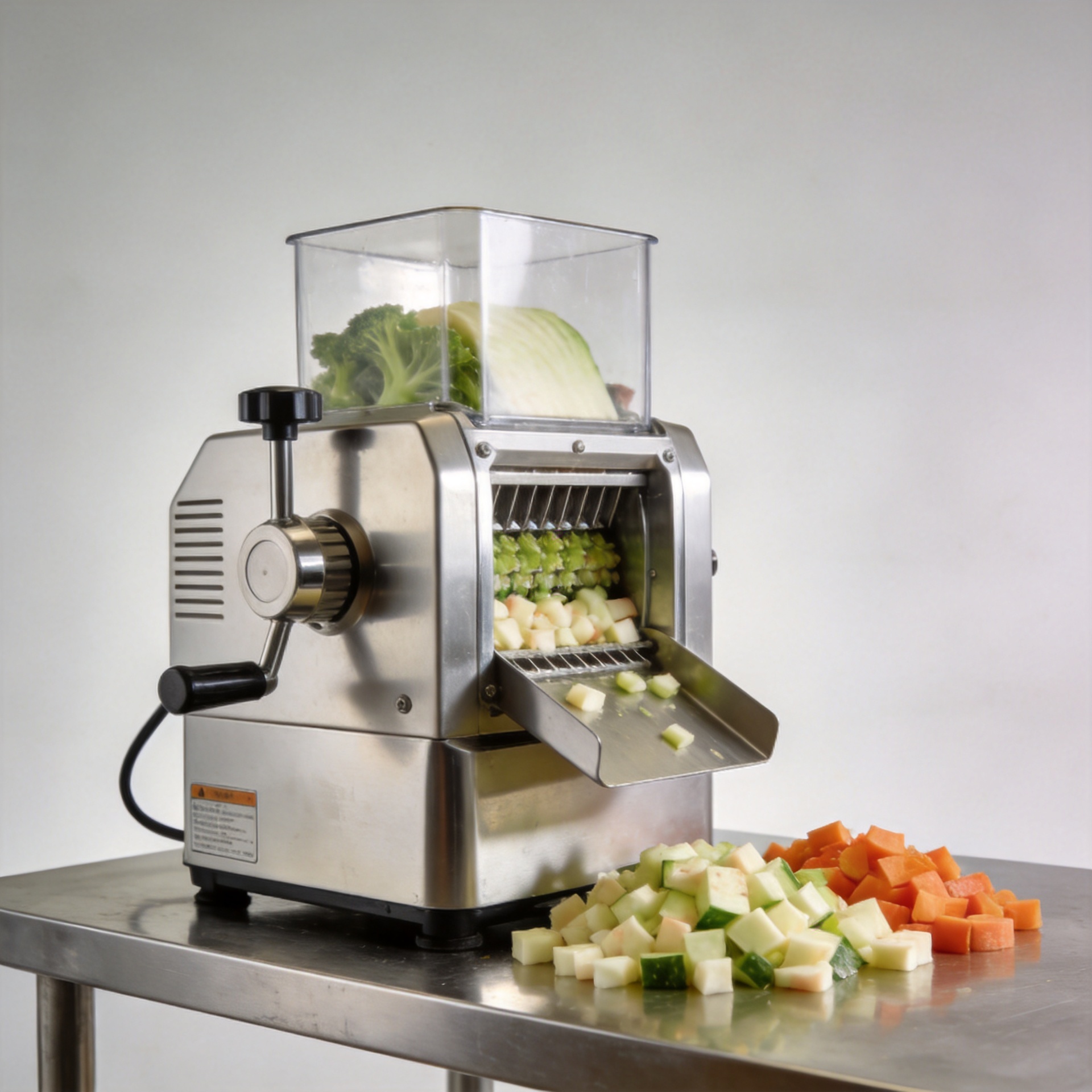
For buyers comparing a stand-alone cutter with a wider line solution, it can help to review a related commercial industrial electric vegetable cutter as a reference point for cutter-category integration. Confirm final suitability from the supplier’s model-specific specification, because a product title alone does not define throughput, blade range, or line interfaces.
A practical potato chip slicer configuration checklist
- State the potato variety, incoming size range, preparation condition, and target product format.
- Specify target slice thickness and the acceptable tolerance for the finished process.
- Set the line throughput target and identify the downstream bottleneck.
- Confirm the feed method, discharge direction, and transfer to the next machine.
- List supplied blades, optional blades, spare parts, and the changeover procedure.
- Review food-contact materials, access for cleaning, guards, and servicing steps.
- Verify power, floor layout, installation interfaces, and operator training needs.
- Request model-specific drawings and test information before finalizing the order.
Move from a slicer choice to a stable production setup
The right potato chip slicer is the one that supports the target chip profile and fits the rest of the production line without creating a cleaning, handling, or capacity mismatch. Begin with the product specification, validate the interfaces, and use documented machine details to close the remaining gaps. For snack producers, this turns cutter selection from a catalog comparison into a more reliable production-planning decision.