EN


Potato Cutter Machine for Fries: Key Specifications to Compare
Choosing a potato cutter machine for fries is less about finding the biggest motor or the longest feature list. It is about matching the machine to the potatoes you buy, the fry style you sell, and the pace of your preparation line. For a restaurant, central kitchen, snack producer, or food-service distributor, a well-matched cutter can make prep more consistent and easier to manage. A poorly matched unit can create bottlenecks, uneven pieces, difficult cleaning, and avoidable waste.
This guide looks at the specifications that matter when comparing a commercial potato cutter machine. It follows a procurement-first approach: define the required output, then assess cutting configuration, capacity, build, sanitation, and support before making a decision.
Start with the finished fry, not the machine
Before comparing suppliers, write down the product format your operation needs. Straight fries, thicker steak-cut fries, diced potato, crinkle cuts, and spiral products can require different cutting mechanisms or attachments. The most useful question is simple: what consistent shape and size must reach the fryer or the next process?
Cut size affects more than presentation. It influences how pieces cook, how they pack, and how the finished portion looks. Commercial listings often show blade options such as 1/4 inch, 3/8 inch, and 1/2 inch. These are common market examples rather than a universal requirement. Ask the supplier which blade grids are available for the exact potato cutter machine model, how quickly they can be changed, and whether replacement parts are stocked.
Specification checklist for fry output
- Required fry width and whether one or several sizes are needed
- Maximum potato diameter and recommended preparation before loading
- Supported shapes: sticks, dices, slices, wedges, crinkle cuts, or other formats
- Blade material, grid construction, and replacement procedure
- How the machine controls breakage and irregular pieces
If your menu changes by season or customer segment, a cutter with practical blade interchangeability may be more valuable than a unit optimized for one fixed size.
Compare manual and electric operation by real prep volume
The manual-versus-electric decision should be based on workflow, not on an automatic assumption that electric is the right fit for every operation. A manual cutter can suit a smaller kitchen with short prep windows and one stable fry format. It may be simple to position and operate, provided staff can load potatoes safely and maintain a repeatable rhythm.
An electric potato cutter machine is usually worth evaluating when prep is frequent, volume is higher, or labor consistency is a concern. Electric models can reduce repeated manual pushing and support a more continuous preparation process. Still, buyers should ask for realistic capacity information: kilograms per hour, pieces per minute, or another clearly defined measure. Capacity claims only make sense when the test conditions are stated, including potato size, cut format, loading method, and operator workflow.
| Buying question | Why it matters | What to verify |
|---|---|---|
| Daily prep volume | Determines whether labor or machine speed is the constraint | Capacity under your intended cut size and loading conditions |
| Peak-hour preparation | Shows whether batch prep will delay cooking or packing | Loading, cutting, discharge, and cleaning time as one cycle |
| Power availability | Electric equipment must fit the installation site | Voltage, frequency, plug type, and electrical protection requirements |
| Operator skill | Controls output consistency and safe use | Training needs, guards, start/stop controls, and cleaning instructions |
Evaluate the cutting path and product handling
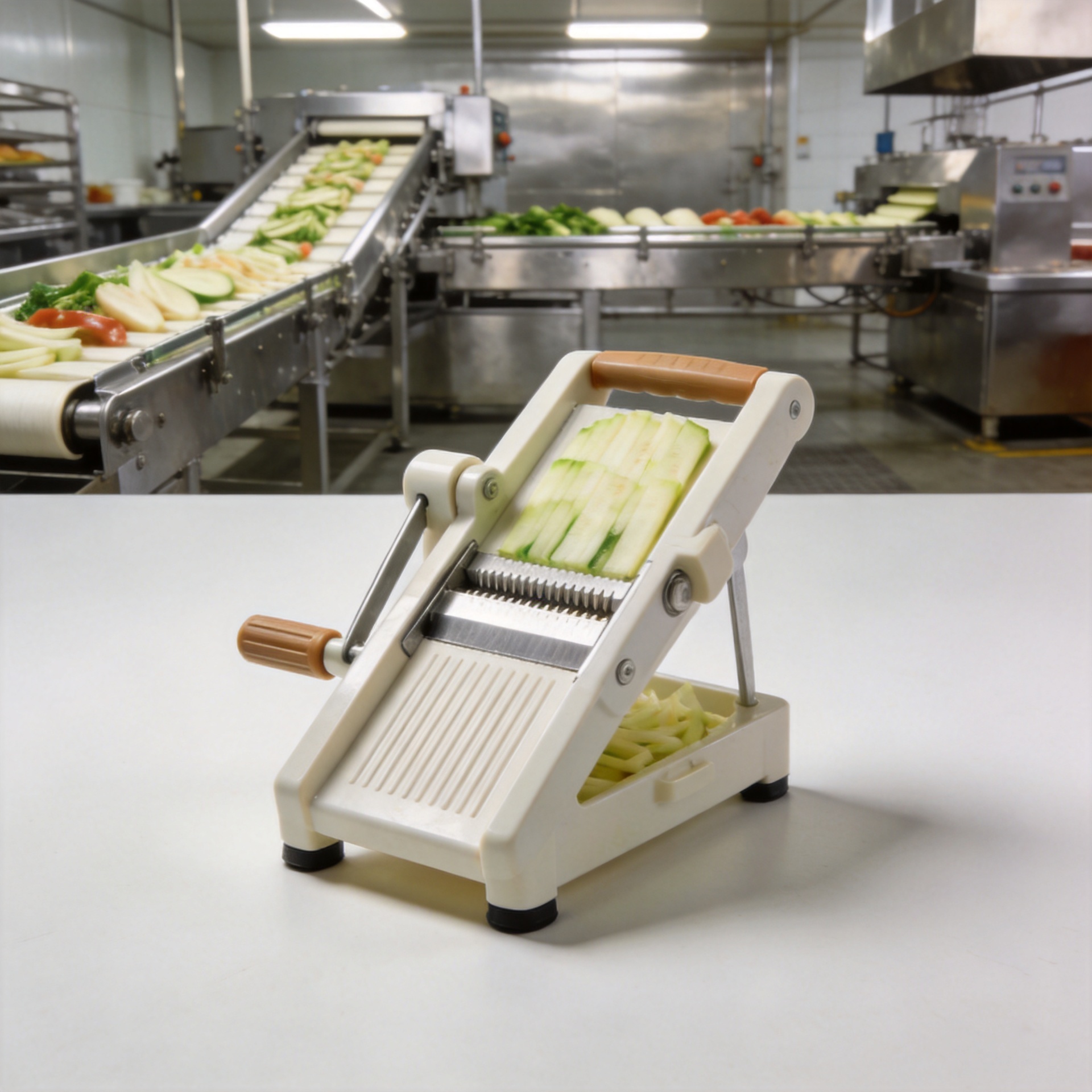
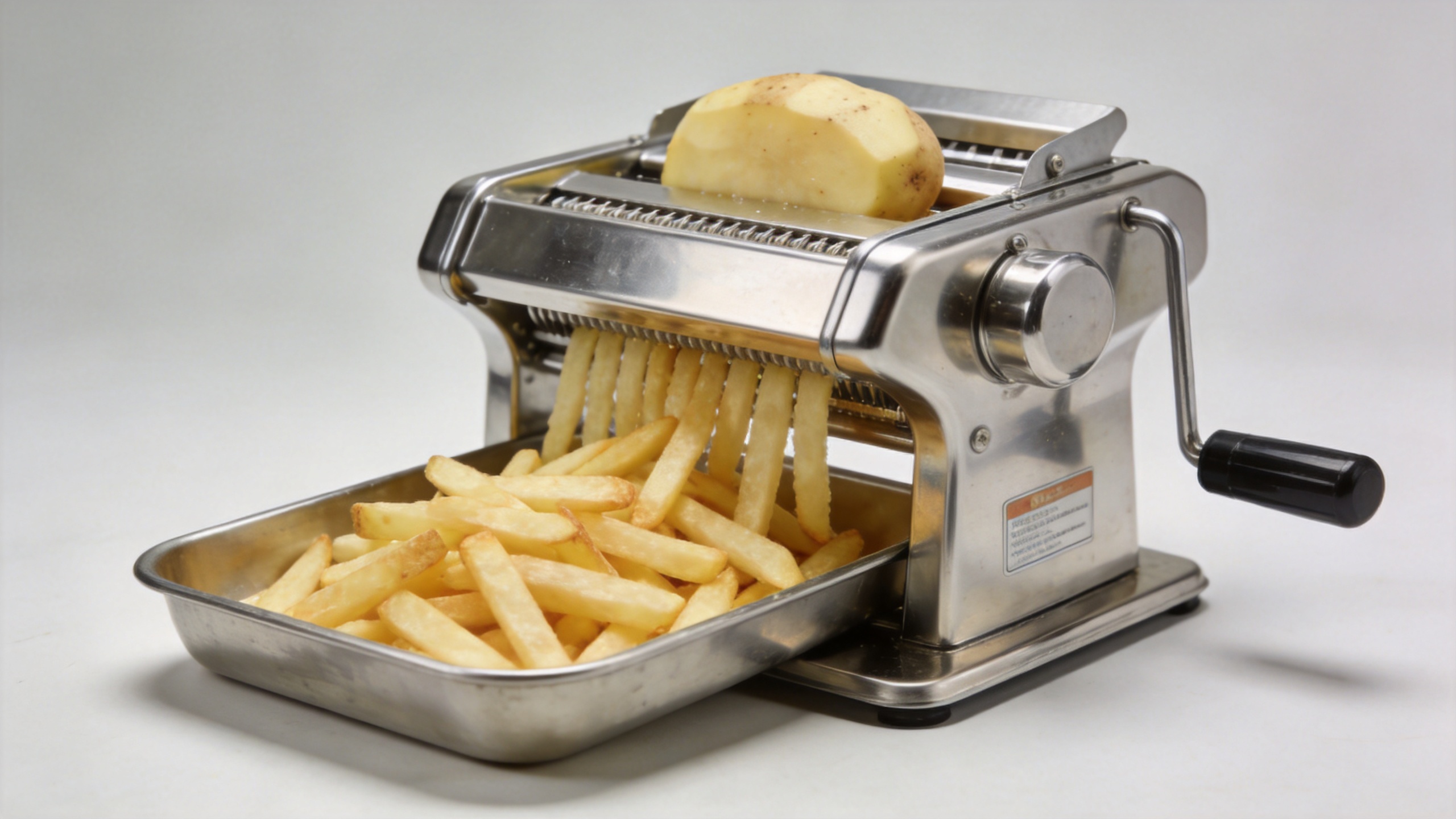
For fries, the cutting path should move potatoes through the machine with as little unnecessary handling as possible. Look at the feed opening, pusher or drive arrangement, blade area, discharge direction, and collection method. A compact machine may fit a small workbench, but it still needs enough clearance for loading and for a receiving tray or conveyor.
Ask for a demonstration using potatoes similar to those your operation purchases. Potato variety, size variation, temperature, and surface condition can all affect cutting behavior. A useful supplier discussion covers what happens when potatoes are oversized, irregular, or softer than normal. This is more informative than judging the machine from a catalog photo alone.
Build quality and sanitation deserve equal attention
A commercial potato cutter machine should be reviewed as a food-contact work tool, not simply as a cutting device. Stainless steel food-contact areas are commonly requested because they can support routine cleaning, but the full design matters. Check whether the blade area is accessible, whether food debris can collect in corners, and whether components can be removed without turning sanitation into a long maintenance task.
Also compare the parts that experience repeated force: the frame, handles or drive components, blade mounts, fasteners, feet, and guards. Ask which parts are consumable, how they are identified, and how long replacement lead times normally are. For export buyers, confirm the spare-parts list, packing method, operating manual, and remote technical support process before placing an order.
Questions for the supplier
- Which components contact food, and what materials are used?
- How is the blade removed, cleaned, reinstalled, and aligned?
- Which wear parts should be ordered with the machine?
- What installation information is required for an electric model?
- Can the supplier provide an operating video or acceptance test for the selected configuration?
Turn specifications into a purchase comparison
Instead of comparing only prices, create a one-page comparison sheet for each candidate machine. List the fry format, blade options, operating method, capacity basis, power requirement, overall dimensions, cleaning steps, included accessories, spare parts, warranty terms, and delivery scope. This turns a vague purchase discussion into a practical decision record.
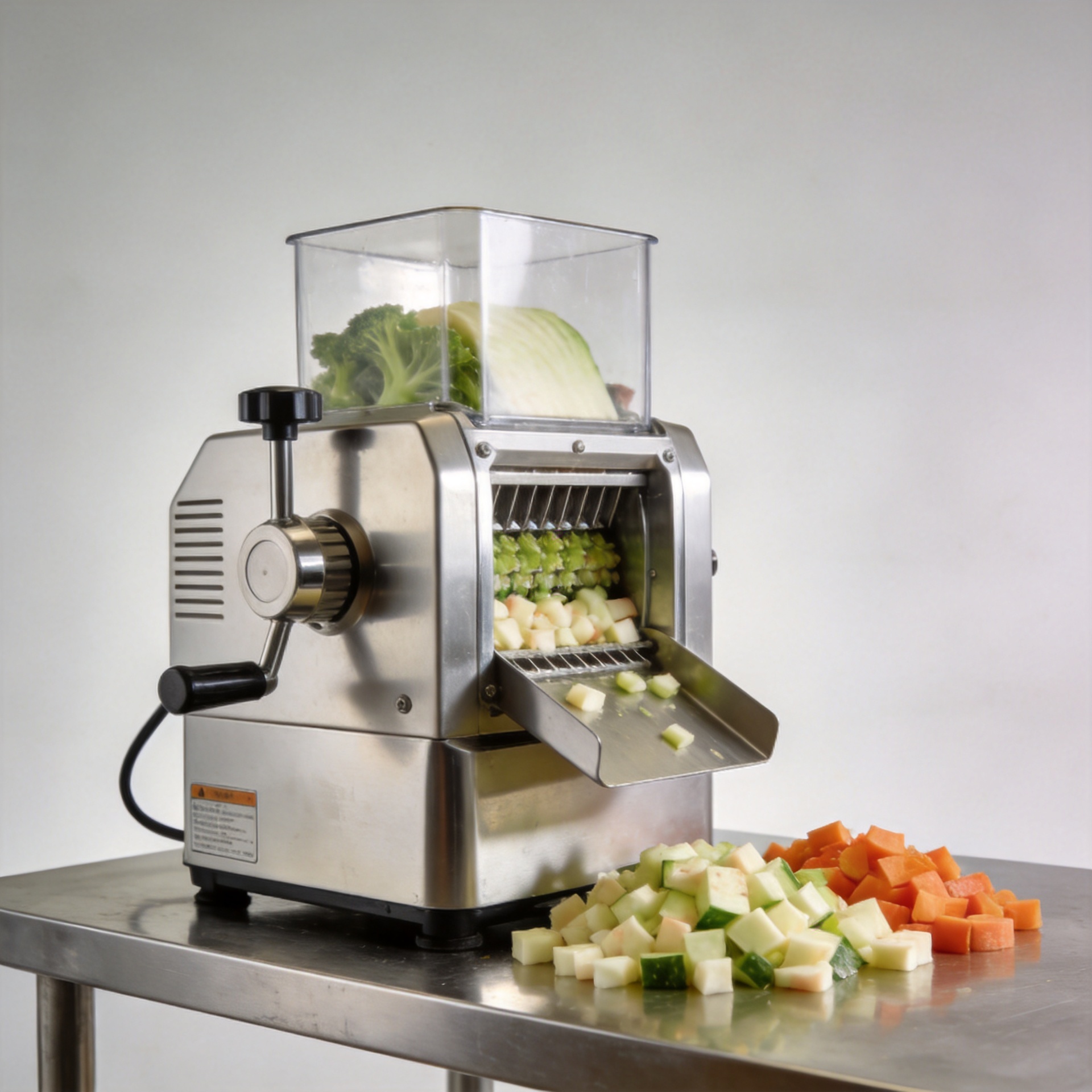
For buyers seeking a commercial vegetable-cutting solution, review the product configuration and request confirmation of the options that fit your process. One available reference is the Commercial Industrial Electric Vegetable Cutter Dicing Machine for Potato Fruit & Green Onion Motor As Core Component. Confirm cut format, power configuration, and final technical details directly against your order requirements rather than relying on a general product title.
How to test a potato cutter machine before ordering
Before approving a purchase, ask the supplier to test the potato cutter machine with the fry size you intend to sell. A useful test shows loading, cutting, discharge, and cleanup rather than only a short close-up of the blades. For an electric potato cutter machine, request the power specification and a video that shows normal operation with whole, prepared potatoes.
Use the test to check whether the potato cutter machine accepts the potato sizes your buyers or kitchen normally source. Note the number of irregular pieces, the amount of trimming required, and whether staff can remove the blade grid safely for sanitation. If the potato cutter machine will serve a central kitchen, compare the test output against one full production batch rather than a small demonstration run.
A clear acceptance list also helps avoid specification gaps. It should state the selected blade size, electrical configuration, included accessories, spare blades, packing requirements, and the documents supplied with the potato cutter machine. This turns a general quotation into a configuration that can be checked before shipment.
Final recommendation
The right potato cutter machine for fries delivers the output your menu needs at a pace your staff can sustain. Begin with cut format and potato size, then compare manual or electric operation, measurable throughput, cleaning access, food-contact construction, and spare-part support. A structured comparison makes it easier to choose equipment that supports consistent fries today and leaves room for future menu or volume changes.