EN


Potato Cutter Machine Selection for Fries and Prepared Food Lines
A potato cutter is not simply a prep machine when it sits inside a fries or prepared-food line. It is the point where raw-potato variation becomes a defined product geometry. Strip width, cross-section consistency, cut surface condition, and the way product leaves the machine all influence blanching, frying, freezing, seasoning, and packing. For procurement teams, the right choice starts with the finished product and works backward through the line.
This guide uses a line-engineering perspective for processors comparing commercial vegetable cutter solutions. The objective is not to select the largest machine; it is to specify a potato cutter that produces the required cut reliably, fits the actual operating rhythm, and can be cleaned and maintained without creating a hidden bottleneck.
Start with the Finished Fries or Prepared Product
Define the target cut before comparing potato cutter frames, motors, or quoted capacity. A straight-cut fry, crinkle cut, diced potato ingredient, or mixed prepared-vegetable product places different demands on the cutting head and the downstream process. Document the target strip width, thickness, length tolerance, acceptable fines, and the potato varieties or size range expected in normal production.
As a market reference, industrial cutting equipment may offer interchangeable cutting arrangements across a broad range; one search result cites 3 mm to 20 mm. That is not a universal equipment specification. It is a reminder to request an application-specific cutting trial rather than treating a catalogue range as proof that every head will perform equally on your potatoes.
Uniformity matters because downstream stages process surface area, not just kilograms. If strips vary widely, thinner pieces can overcook while thicker pieces need more time. Uneven cuts also complicate settings for blanching, frying, cooling, freezing, and seasoning. Put cut-size distribution and breakage limits in the acceptance criteria, not only a nominal blade dimension.
Match Capacity to the Whole Line, Not a Nameplate Number
The potato cutter should be sized against the slowest sustainable stage in the line. Map the planned hourly input from washing and peeling, then compare it with cutter feeding, discharge, blanching, frying or cooking, cooling, and packaging. Include normal stops for inspection, blade changes, sanitation, and product changeover. A machine that appears oversized on paper may still create surges if its discharge is not synchronized with the conveyor or buffer that follows it.
Ask potato cutter suppliers to state what material condition supports the quoted throughput: whole or pre-cut potatoes, typical diameter range, peeled or unpeeled input, target shape, and expected reject or fines rate. A useful factory trial runs representative raw material long enough to observe stable feeding, not only a short demonstration with ideal potatoes.
| Line question | What to verify with the potato cutter | Why it matters |
|---|---|---|
| Upstream flow | Feed hopper dimensions, infeed conveyor height, potato size range | Reduces bridging, manual intervention, and inconsistent loading. |
| Cutting output | Required strip geometry, fines level, change-part availability | Protects product consistency across batches. |
| Downstream transfer | Discharge direction, conveyor interface, buffer capacity | Prevents pile-up and damage before thermal processing. |
| Operating time | Cleaning, inspection, blade-service, and changeover time | Shows the usable capacity rather than a peak figure. |
Evaluate the Cutting System and Blade-Service Plan
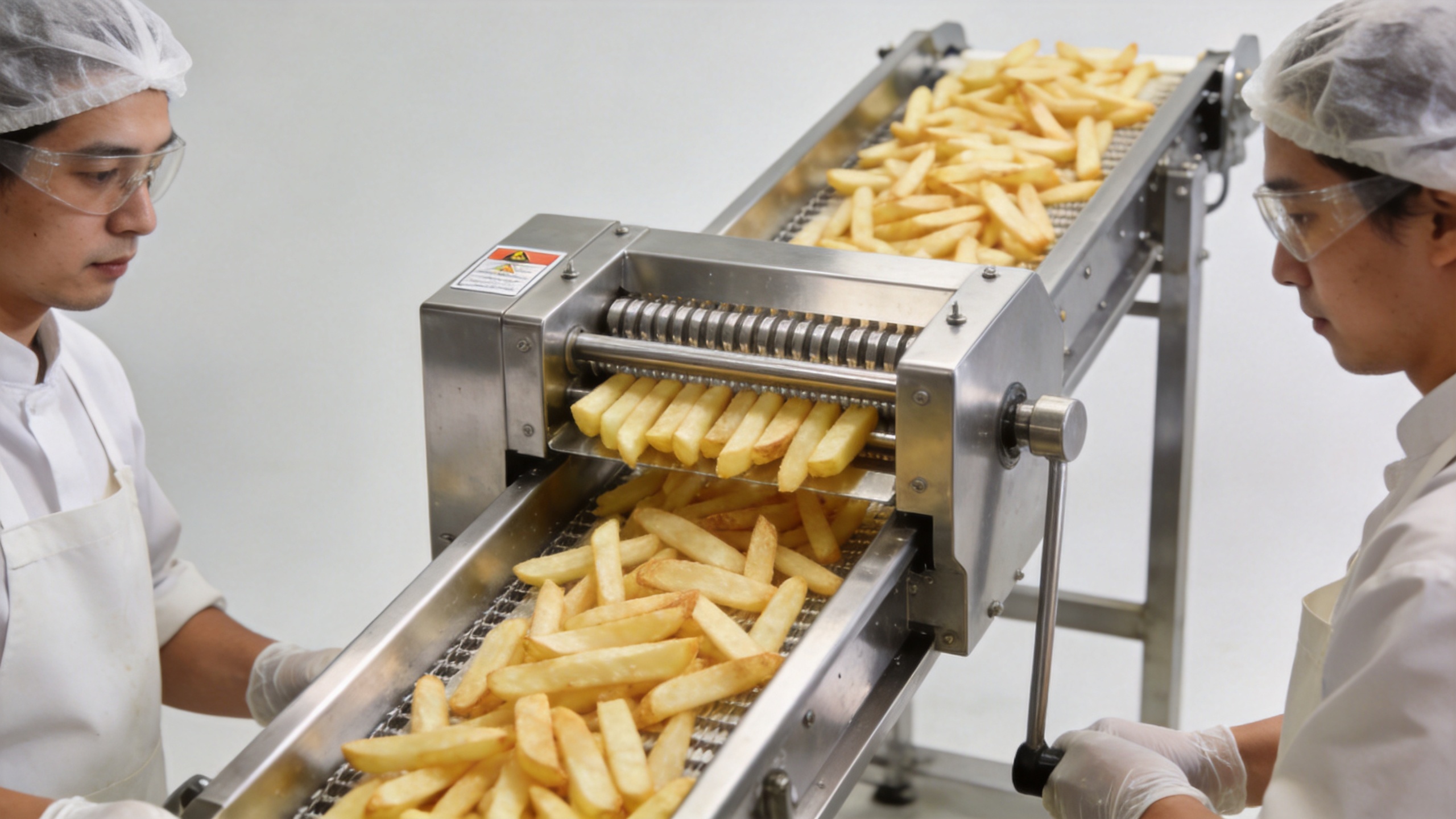
For a processor, potato cutter blade selection is a production-control issue. Confirm which assemblies are available for your product formats, how they are identified, and how quickly an operator can change them safely. The supplier should explain the recommended inspection interval, sharpening or replacement route, and which spare parts should be held on site.
Inconsistent strips often point to a practical issue rather than a mysterious process fault: dull blades, worn components, or a feed path that is no longer aligned. Build those checks into the operating standard. During evaluation, inspect sample cuts after a run, looking for fractures, feathered edges, excessive small pieces, and variation between the first and last part of the trial.
The potato cutter cutting chamber also needs to suit the product mix. If one line processes fries today and prepared vegetable strips tomorrow, verify the approved materials, allowable product shapes, cleaning steps, and performance limits for each application. Do not assume a multi-purpose vegetable cutter will deliver the same result for every raw material without the correct head, feed condition, and operating setup.
Design for Hygiene, Cleaning, and Safe Access
Potato cutter uptime depends on sanitation as much as rated capacity. Review all food-contact surfaces, drainage points, blade guards, and access panels during a physical inspection. Operators should be able to reach areas where starch and small fragments collect without unsafe disassembly or improvised tools. Clarify which parts can be removed for washing, how they are reinstalled, and how settings are verified after reassembly.
Request the cleaning procedure as part of the quotation package. It should cover isolation, blade handling, wash-down limitations, inspection points, and restart checks. For export projects, also confirm the documentation language, remote commissioning support, operating manual, and spare-parts plan. These are practical safeguards for teams that may not have immediate local service support.
Confirm Line Integration Before You Place an Order
A good potato cutter selection process ends with an interface review. Share the layout, elevation, desired product flow, utility conditions, and downstream equipment details. Then obtain a clear responsibility list for infeed, discharge, guards, controls, and start-stop logic. Where automation is involved, define signal handoffs and the behavior during an upstream or downstream stop.
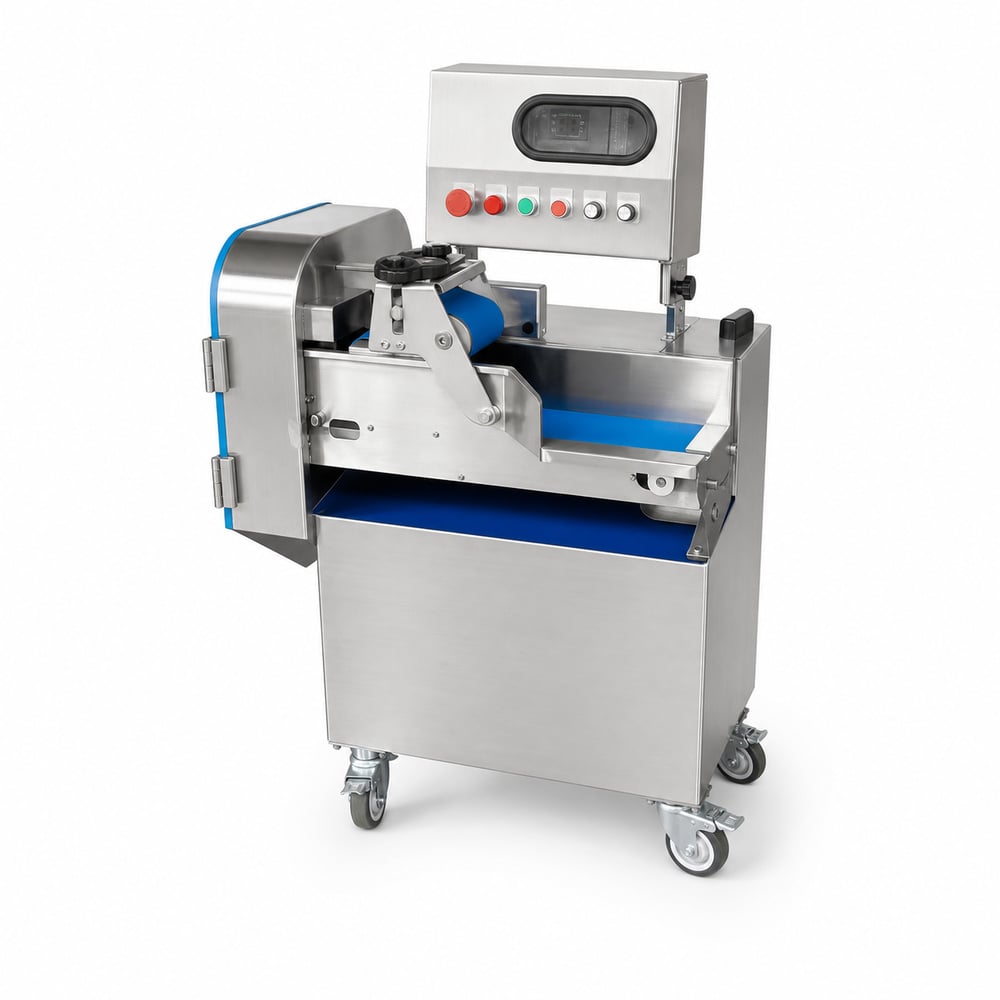
For buyers seeking a product-level starting point, Hongle Machinery lists a commercial industrial electric vegetable cutter dicing machine. Use the confirmed product page as a discussion reference, then verify the final configuration, cutting head, capacity, and integration details against your specific line requirements.
Potato Cutter Questions Buyers Should Settle Early
What should a potato cutter trial include?
A meaningful potato cutter trial uses the potato size range, variety, and finished strip specification expected in production. Ask to inspect output for strip uniformity, breakage, fines, and the condition of the cut surface. The trial should also show how the potato cutter is fed, how it discharges to the next conveyor, and what happens during normal stop-and-restart conditions. A short test with ideal raw material is useful, but it should not replace a representative production check.
How do I compare two potato cutter quotations?
Compare each potato cutter against the same written requirement: target product geometry, sustained hourly flow, feed condition, change parts, cleaning access, safety guards, controls, installation boundary, spare parts, and service support. Do not compare only a motor rating or a headline output. A lower-cost potato cutter can become more expensive if it requires frequent manual sorting, produces excess fines, or cannot keep pace with the following process.
When is a commercial vegetable cutter suitable?
A commercial vegetable cutter can be suitable when its approved product range, cutting head, capacity, and hygiene design match the intended fries or prepared-food duty. Buyers should confirm that the potato cutter configuration is designed for the required raw-potato condition and that the supplier can explain the changeover process for other vegetables. The selection should be based on documented application fit rather than the general label of a multi-purpose machine.
Which potato cutter documents matter at handover?
Before shipment, request the potato cutter layout and interface drawing, operating manual, cleaning procedure, electrical information, spare-parts list, blade-service guidance, and agreed acceptance record. These documents help maintenance, production, and quality teams use the potato cutter consistently after commissioning. They also make it easier to plan remote technical support when the equipment is installed in an export market.
A Practical Potato Cutter Procurement Checklist
- Define finished-product geometry and acceptable variation before requesting quotations.
- Provide representative potatoes and run a documented cutting trial.
- Compare sustained line capacity, including cleaning and blade-service time.
- Check the complete infeed and discharge interface, not only the machine footprint.
- Confirm blade assemblies, inspection intervals, spare parts, and changeover procedure.
- Review hygienic access, cleaning instructions, guarding, and operator safety.
- Agree on acceptance samples, installation scope, training, and after-sales support.
For fries and prepared foods, select a potato cutter that converts your real raw material into the intended shape at a stable rate while remaining practical to clean, inspect, and integrate. By treating cut quality, line balance, serviceability, and hygiene as one decision, processors can reduce avoidable variation before it reaches the fryer, freezer, or packer.