EN
EN


Potato Dicer for Food Processing: Matching Cut Size to Product Output
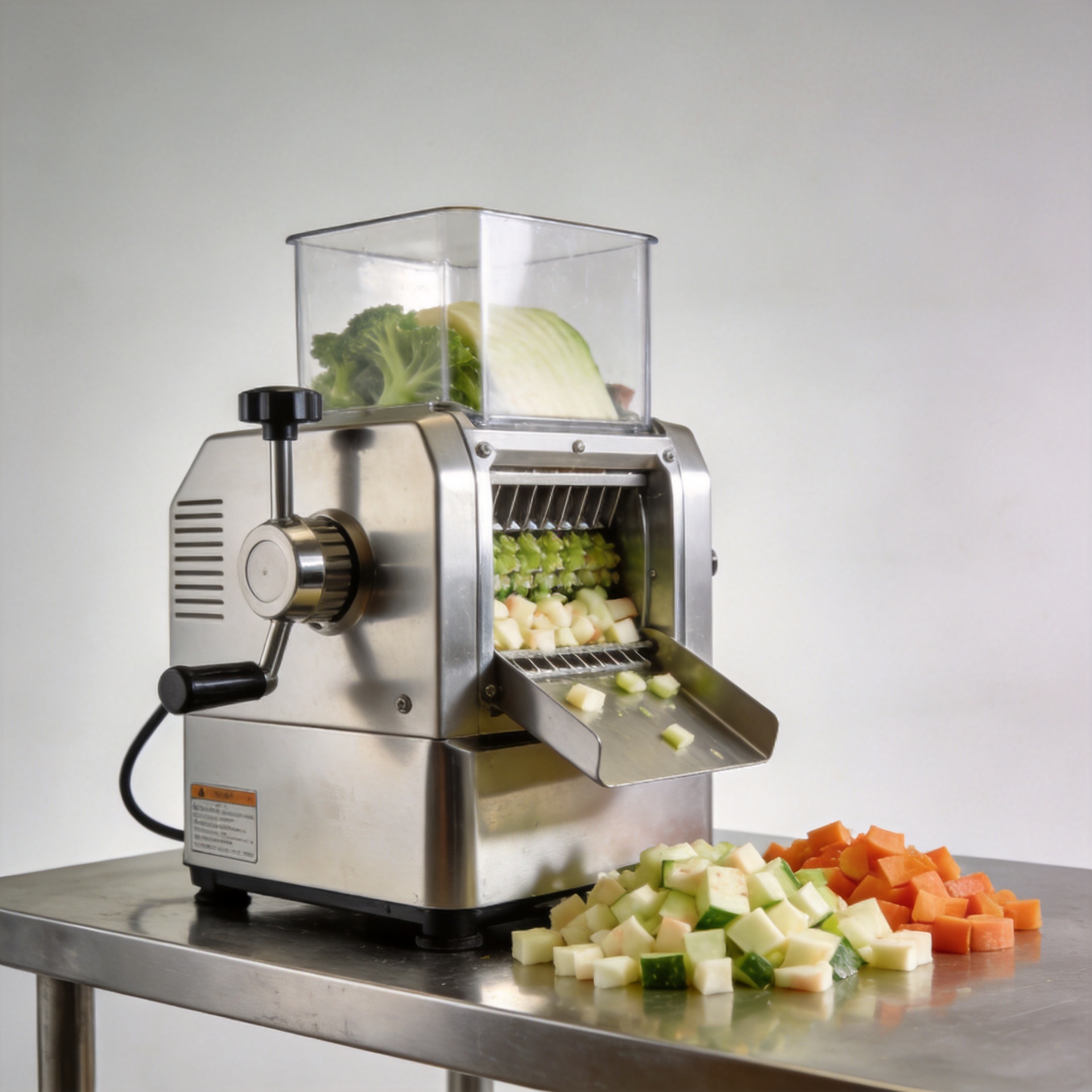
Choosing a potato dicer is not simply a matter of asking for the smallest or fastest machine. For a food processor, the useful question is whether the dice size, potato preparation, discharge flow, and downstream process can work as one system. A machine can produce neat cubes in a demonstration and still create poor usable output when the product is too soft, the feed is inconsistent, or the cut does not suit blanching, frying, freezing, or packing.
From a B2B procurement perspective, the specification sheet is only the starting point. An appropriate potato dicer choice is one that delivers the required product format at a stable, verifiable rate under the conditions of your line. This guide gives food manufacturers a practical way to make that match before placing an order. When comparing a potato dicer, use the same product sample, cut specification, and operating assumptions for every supplier discussion.
Start with the finished potato product, not the machine rating
Define the saleable output before comparing equipment. A potato dicer for soup vegetables, a frozen mixed-vegetable line, a salad ingredient operation, and a snack-preparation line may all require cubes, but their acceptable size range, tolerance for fines, and output rhythm are different.
| Finished-product requirement | What to define first | Why it affects the potato dicer |
|---|---|---|
| Uniform diced ingredient | Target cube dimension and visual consistency | Determines the cutting assembly and the acceptable level of irregular pieces. |
| Blanched or frozen product | How cube size affects heat transfer and downstream dwell time | Cut size must remain consistent so later processing is easier to control. |
| Fresh-packed potato cubes | Surface condition, breakage allowance, and pack weight | Gentle handling and a clean cut can matter as much as nominal throughput. |
| Multi-product line | How often the required cut changes | Changeover practicality may be more valuable than selecting one maximum-capacity setup. |
A useful purchasing brief states the cube size or sizes, raw-potato condition, planned daily volume, operating hours, downstream equipment, and acceptable trim or fines. If any of those are unclear, the quoted capacity of a potato dicer is only a preliminary comparison point. The purchasing brief should travel with the potato dicer inquiry, trial request, and final acceptance document so the benchmark does not change between quotation and commissioning.
Match cut size to the product process
Cut size is a production decision, not a cosmetic preference. Smaller cubes create more pieces per kilogram and more cutting events, while larger cubes can change how product moves through washing, blanching, cooking, freezing, or packaging. The right choice begins with a finished-product sample and a defined allowable size range.
Use a tolerance, not one nominal number
Ask the production team to state the target dimension plus the permitted variation. Then ask the supplier how the cutting configuration is selected, how wear affects the result, and what a representative sample looks like after normal handling rather than immediately at the discharge point. This prevents a common mistake: approving a single nominal cut size without agreeing on what counts as usable product. Your potato dicer trial should measure that usable portion, not merely show that cubes can be formed.
Consider potato condition before fixing the grid
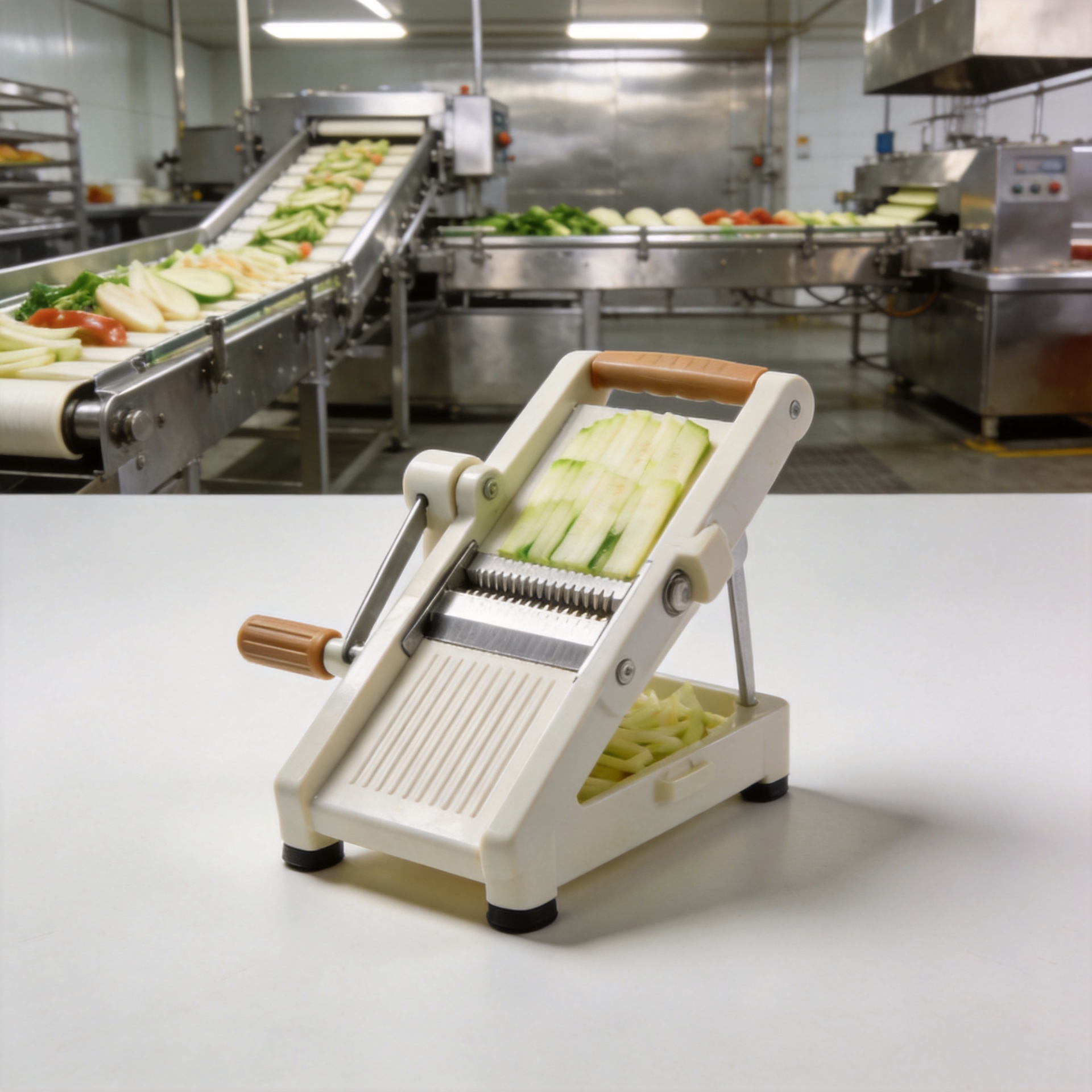
Potato variety, maturity, temperature, storage condition, peel removal, and pre-cut shape all influence the result. Firm, consistently prepared potatoes normally feed more predictably than mixed raw material. If your inbound potatoes vary substantially, use that fact in the acceptance plan. A potato dicer should be evaluated with realistic product, not only ideal test pieces. This is where an industrial vegetable slicer or pre-cutting station may improve feed consistency before the potatoes reach the potato dicer.
Buyers sometimes assume that a more customized configuration is automatically safer. In many cases, a standard cutting arrangement that fits the real product range is easier to support, clean, and replace. Custom work is sensible when the finished product truly requires it, but it should follow a written sample-and-acceptance process.
Convert throughput into usable product output
Capacity figures are useful only when everyone means the same thing. A supplier may state an input rate, while the production manager needs the quantity of saleable cubes arriving at the next process. The difference can include trimming, irregular pieces, stoppages, changeovers, inspection, and raw-material variation.
Use this planning relationship:
Required usable output per hour = planned finished-product volume ÷ actual operating hours.
Then work backward. Add a realistic allowance for planned sanitation, loading, changeover, and quality checks. Discuss whether the quoted potato dicer capacity is based on a specific potato size, a particular cube dimension, continuous feed, or ideal machine availability. High-capacity potato-cutting equipment exists across a wide range of line designs, so a headline number should not substitute for a product trial. A potato dicer with a smaller quoted rating can be the better production choice if its actual usable output is more stable through the intended shift.
For example, a line that needs a stable output during one shift may be better served by a machine with controllable feed and comfortable operating margin than by a maximum rating that may be reached only under highly controlled preparation. If volume fluctuates strongly during the week, calculate utilization rather than selecting purely on peak-hour demand.
Evaluate the feed path and downstream handoff
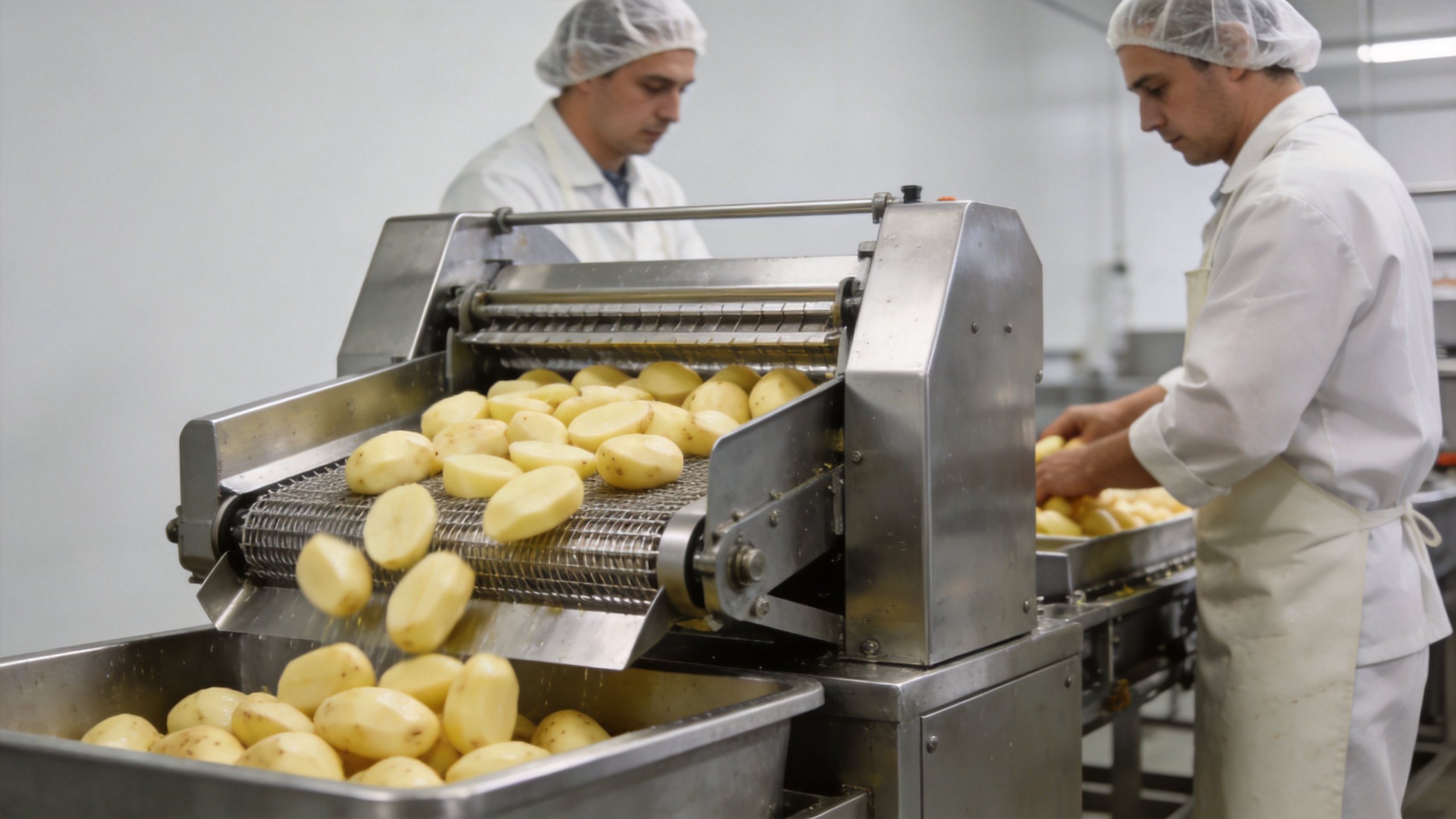
The dicing head does not operate in isolation. An industrial vegetable slicer or preparation stage can influence the shape and consistency of material presented to the potato dicer. Before ordering, map the path from receiving to packing:
- How are potatoes washed, peeled, inspected, and sized before cutting?
- Does the feed opening accept the actual product shape without forcing operators to over-trim?
- Can the discharge transfer product without excessive drop height, accumulation, or breakage?
- Do the next-stage belt, blancher, fryer, freezer, or packer have capacity for the dice output?
- Where will operators inspect cube consistency and remove off-spec product?
This systems view is especially important when one line handles potatoes alongside fruit, green onion, or other vegetables. Product changeover should include not only the cutter setup but also cleaning access, allergen or recipe controls where relevant, and a documented restart check.
Make sanitation and serviceability part of the selection
Food-contact equipment should be evaluated for cleanability, access, durable surfaces, and the ability to inspect areas where product can collect. These are operational requirements, not just a material checklist. Ask to see the cleaning sequence, the removable cutting parts, the tools needed, and the time required before the next production run. A potato dicer that is straightforward to inspect and reassemble can protect usable output by making routine sanitation less disruptive to the schedule.
Also clarify the commercial side of uptime: spare cutting components, recommended replacement intervals, remote troubleshooting, operating instructions, and commissioning support. Zhengzhou HongLe Machinery Equipment Co., Ltd. focuses on food-processing machinery and provides technical support, operating guidance, and spare-parts coordination for overseas customers. For a relevant product reference, review the Commercial Industrial Electric Vegetable Cutter Dicing Machine for Potato, Fruit & Green Onion alongside your own cut-size and output brief.
A practical potato dicer acceptance checklist
- Provide real potatoes and the intended finished-product specification for a potato dicer sample run.
- Confirm the target cube size, permitted variation, and treatment of fines or irregular pieces.
- Record whether potato dicer capacity means feed rate or usable finished-product output.
- Check how potato dicer cut size, raw-material condition, and feed consistency change actual output.
- Review the interfaces with washing, peeling, conveying, blanching, freezing, and packing equipment.
- Document cleaning access, changeover steps, spare parts, training, and acceptance criteria before shipment.
Choose for stable output, not the biggest number
The right potato dicer is the one that turns your actual potatoes into the required cube format at a predictable rate, with manageable cleaning and changeover. Begin with the product specification, convert production targets into usable hourly output, and test the complete feed-to-discharge process. That approach gives your team a clearer basis for comparing equipment and reduces avoidable surprises after installation.