EN


Potato Dicing Machine vs French Fry Cutter: Choosing the Right Cut
For a potato-processing line, choosing between a potato dicing machine and an industrial french fry cutter is not simply a question of buying a different blade. The cut geometry affects product identity, blanching and frying behavior, packaging presentation, yield control, and the way downstream equipment has to be set up. A potato dicing machine produces defined cubes for products such as hash, soup ingredients, frozen mixes, and roasted-potato packs. A French-fry cutter produces long, parallel strips for frying, quick-service, and snack applications.
As an industrial equipment advisor, I would start with the finished specification rather than the catalog photo. That sounds obvious, yet it prevents a common purchasing mistake: selecting a versatile commercial vegetable cutter and only later discovering that the discharge, blade set, or downstream line cannot consistently support the intended cut. The right choice is the machine that holds the cut you need under your actual potato variety, throughput, cleaning, and labor conditions.
Start with the Finished Potato Product, Not the Machine Name
A potato dicing machine is designed around a three-dimensional result. The goal is a repeatable cube or near-cube with controlled length, width, and thickness. This makes it a natural fit where portion appearance and uniform cooking matter across products such as diced-potato fillings, vegetable mixes, breakfast potatoes, and prepared meals. The buyer should define the nominal cube size, acceptable variation, surface condition, and whether the cut must hold its form after blanching, freezing, or further cooking.
An industrial french fry cutter, by contrast, is chosen for a strip profile. The buyer needs to decide whether the product calls for shoestring, regular, medium, or thick-cut fries before discussing the machine configuration. Retail and foodservice cutter listings commonly reference sizes such as 1/4 inch, 3/8 inch, and 1/2 inch. These are useful market conventions, not a substitute for your own product specification. A thin strip may cook quickly and create more crisp surface; a thicker strip changes cooking time, bite, and portion appearance.
If your line sells both products, do not assume one cutter will automatically replace the other. A commercial vegetable cutter may accept interchangeable tooling, but the changeover time, cleaning procedure, product handling, and required consistency still need to be checked as a system.
How the Cutting Route Changes: Cubes vs. Strips
| Selection factor | Potato dicing machine | Industrial french fry cutter |
|---|---|---|
| Finished geometry | Cube or controlled diced pieces | Long, parallel strips |
| Typical product direction | Prepared foods, frozen vegetable blends, soup or filling ingredients | French fries, fried-potato products, foodservice portions |
| Key specification | All three cube dimensions and tolerance | Strip cross-section, length, and breakage tolerance |
| Blade discussion | Feed, slicing, and cross-cutting sequence must work together | Grid or knife arrangement must deliver the required strip size |
| Downstream concern | Gentle transfer to limit damaged corners and fines | Alignment, separation, frying behavior, and broken-strip removal |
The practical difference is important: a potato dicing machine needs a stable cutting sequence so that pieces leave the machine in a consistent volume. An industrial french fry cutter must maintain a stable strip cross-section while limiting breakage. In both cases, the raw potato condition matters. Size variation, potato firmness, surface moisture, and preparation quality can alter the actual result. This is why a sample run using your potatoes is more useful than a generic promise about output.
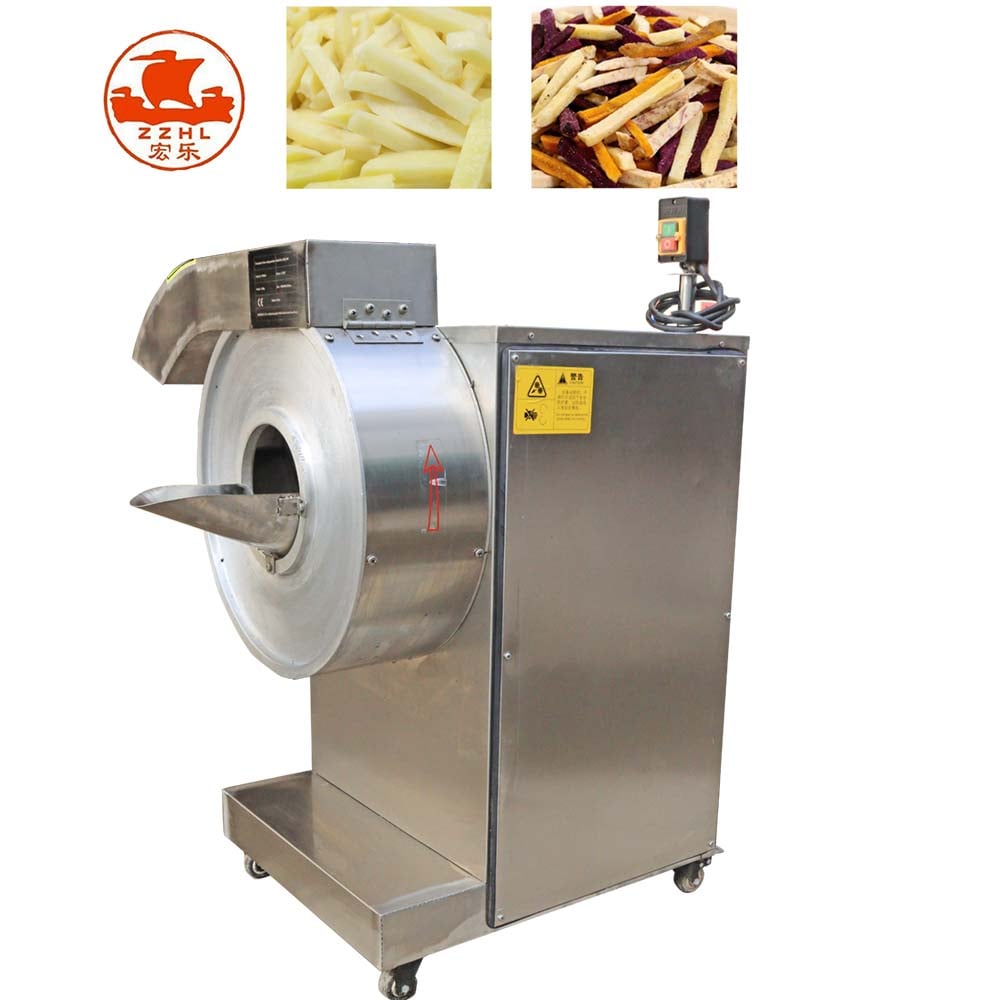 Cut geometry should be matched to the final potato product and downstream process.
Compare Blade Configuration Before Comparing Capacity
Capacity is visible on almost every specification sheet, but it should not be the first line of comparison. First ask which blade assembly produces the required cut, how it is changed, and how the supplier verifies the output after installation. For dicing, request the available cube sizes, the sequence of cutting actions, and the process for inspecting worn components. For fries, request the supported strip dimensions, the method for changing grids or knife sets, and the expected treatment of short pieces or fines.
It is tempting to treat a higher nominal capacity as the better option. A more accurate rule is that usable throughput must match your chosen cut, your raw-material preparation, and the next process step. If operators must slow the feed to preserve cube definition or reduce strip breakage, the production rate that matters is the stable rate, not the headline rate.
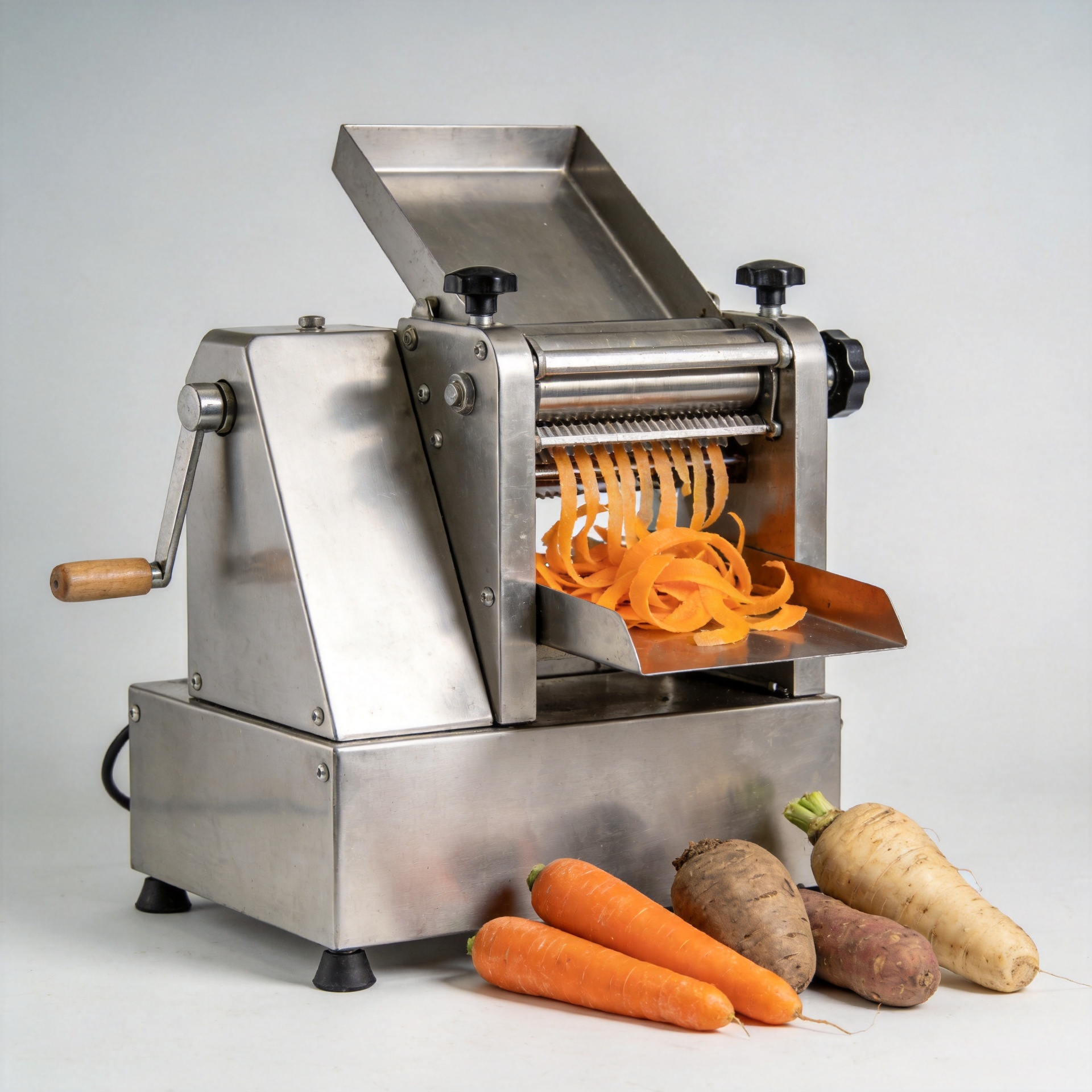
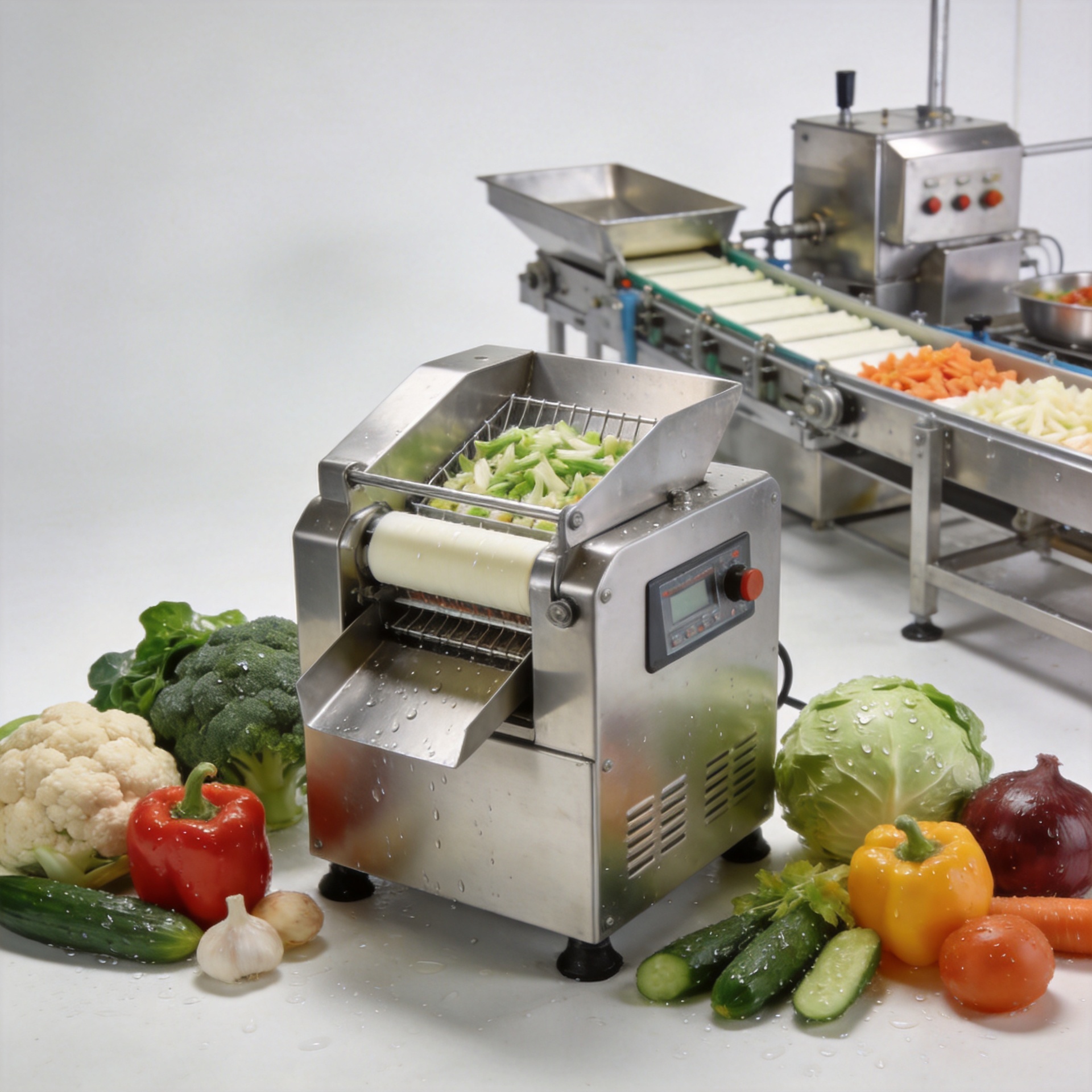
For projects needing a configurable vegetable-cutting platform, review the confirmed product page for the Commercial Industrial Electric Vegetable Cutter Dicing Machine for Potato Fruit & Green Onion. Treat the page as a starting point for a specification discussion; confirm the required cut, raw materials, and final configuration with the supplier before purchase.
Match the Cutter to the Rest of the Production Line
The cut is only one station in a commercial vegetable cutter line. Before choosing a potato dicing machine or an industrial french fry cutter, map the material flow: receiving, washing, peeling, inspection, cutting, rinsing or blanching where applicable, dewatering, cooking or freezing, and packaging. The cutter has to accept the potato condition delivered by upstream equipment and discharge product in a form that the next station can handle.
For diced products, corner damage and excessive fines can affect visual quality and pack uniformity. For fry products, strip length distribution and broken pieces can affect fryer loading, oil management, and the final portion. Ask where defects will be removed, how cut debris is handled, and whether the conveyor transition protects the product. These details often decide whether a technically correct cutter becomes an operationally efficient line.
Sanitation belongs in the same conversation. Compare food-contact surfaces, access to knives and grids, tool requirements for disassembly, drainage points, and the time needed to return the machine to service. For facilities serving several potato products, changeover validation is as important as the nominal list of cuts.
A Practical Selection Checklist for B2B Buyers
- Write the cut specification first. Define cube dimensions or strip cross-section, target length where relevant, tolerance, and acceptable fines.
- Describe the potato input. Share potato size range, variety behavior, peeled or unpeeled condition, and preparation steps.
- Confirm the downstream process. Identify blanching, frying, freezing, seasoning, or packaging steps that make cut consistency important.
- Request a configuration-level comparison. Compare tooling, changeover process, cleaning access, spare parts, and stable throughput—not only motor power or headline capacity.
- Use a sample test where possible. Inspect the actual cube or strip distribution with your raw material and agreed acceptance criteria.
- Plan serviceability. Confirm operator training, manuals, wear-part availability, and remote technical support for your market.
Which Option Is Right for Your Project?
Choose a potato dicing machine when your value proposition depends on consistent cube-shaped potato pieces and the downstream process is designed for diced material. Choose an industrial french fry cutter when your product is defined by long strips and your production line is built around fry handling, cooking, and portioning. If the project needs several formats, assess a commercial vegetable cutter as a configurable solution—but only after checking whether each required tool set and changeover procedure meets your production plan.
A sound purchase decision is not “dicer versus fry cutter” in the abstract. It is a documented match between product specification, raw-potato condition, blade configuration, stable line throughput, sanitation routine, and after-sales support. When those items are confirmed before ordering, the chosen cut type is much more likely to remain consistent from trial production to routine operation.