EN


Potato Slicer for Crisps: Choosing Slice Thickness and Output
For a crisp producer, a potato slicer for crisps is not simply a cutting machine. It establishes the starting condition for frying time, colour consistency, breakage, oil management and the practical output of the whole line. Consumer search results often focus on hand slicers, but a commercial vegetable cutter must be judged differently: by repeatability, sanitation, changeover time and its fit with washing, frying and packaging.
As a B2B buyer, begin with the product specification rather than a catalog capacity figure. Decide what crisp you want to make, define the slice profile that supports it, then test whether the cutter, feed preparation and downstream equipment can sustain that requirement together.
Start with the crisp specification, not the machine brochure
The first question for a potato slicer for crisps is: what slice shape and finished texture does the product require? Flat, thin crisps need a consistent slice thickness so that pieces leave the fryer at a similar time. Thicker slices may suit a more substantial bite, while ripple or specialty cuts need the correct cutting head and a realistic capacity expectation.
Published processing references commonly place industrial crisp slices around the 1–1.75 mm range, while some production guidance uses a wider 1–2 mm working window. Treat those figures as a starting point, not a universal setting. Potato dry matter, reducing sugar, blanching practice, oil temperature and seasoning process all affect the final result. A sensible supplier discussion starts with sample potatoes and your target finished-crisp specification.
Why slice thickness controls more than appearance
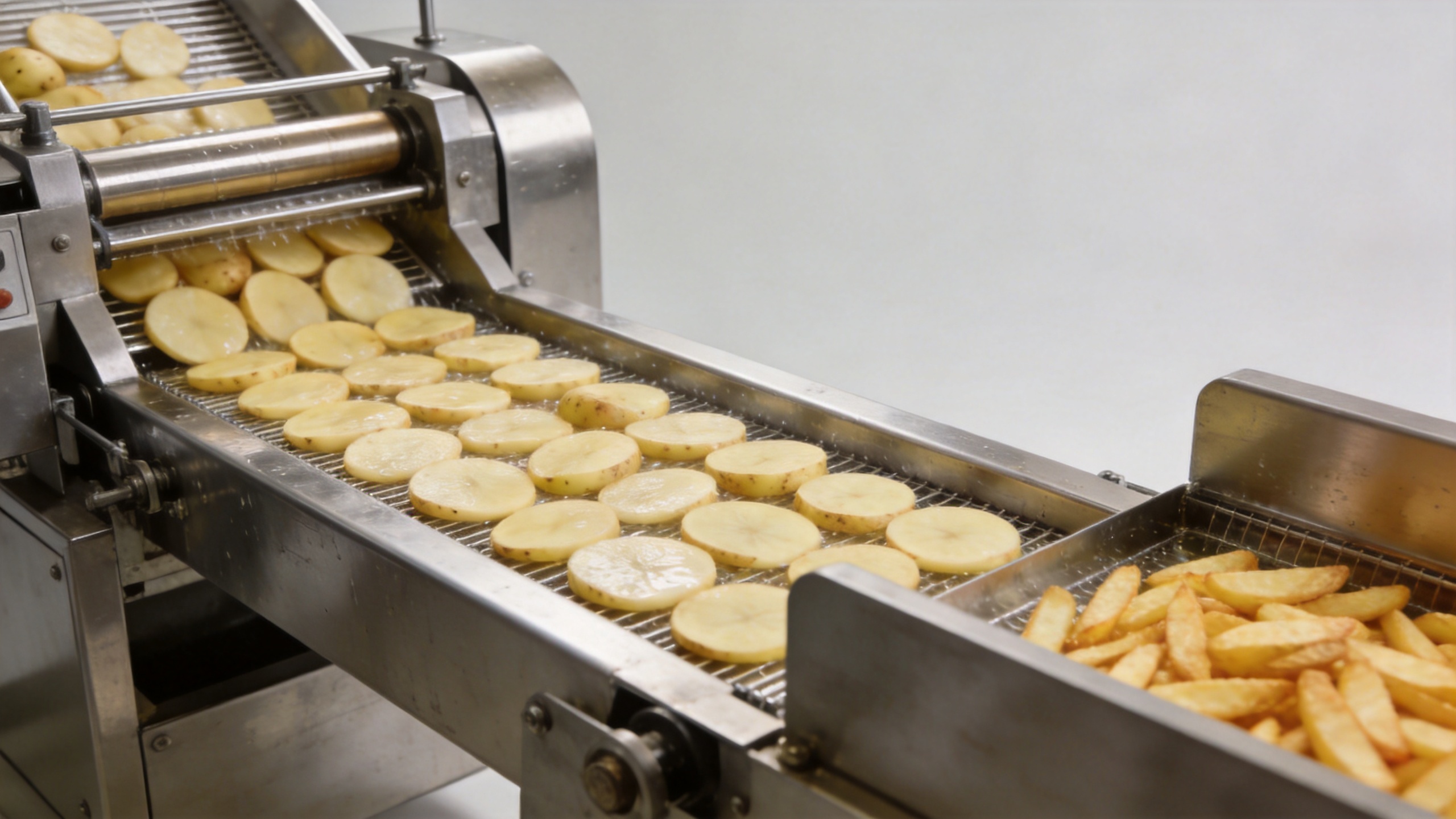
Uniform thickness is the bridge between a commercial cutter and stable frying. When slices vary too much, thin pieces can darken before thicker pieces lose enough moisture. The operator then has to choose between inconsistent colour, excess breakage, or a slower process. That is why the useful question is not only “what thickness can this potato slicer for crisps make?” but also “how consistently can it hold that thickness during a production run?”
| Decision point | What to inspect | Why it matters |
|---|---|---|
| Slice range | Available blade heads and stated adjustment method | Confirms the cutter can support your product format. |
| Uniformity | Sample slices from several potatoes and continuous running | Supports even frying and more consistent colour. |
| Slice handling | Discharge path, water flow and transfer to the next stage | Reduces clumping, damage and manual intervention. |
| Blade access | Removal, cleaning and replacement procedure | Helps protect hygiene and maintain cut quality. |
It is tempting to assume that a larger cutter automatically produces better output. That is not quite right. A higher-rated potato slicer for crisps can still be limited by potato washing, peeling, operator loading, water removal, fryer capacity or packaging speed. The practical choice matches the narrowest realistic constraint in the line.
Calculate usable output instead of relying on rated output
Commercial cutter output should be assessed as a system figure. Ask the supplier how capacity was measured: potato variety, feed condition, slice setting, run duration and whether cleaning or changeovers were included. Rated output is often measured under steady conditions. In daily production, batch changes, raw-material replenishment and routine cleaning reduce the amount of saleable slices that reach the fryer.
Build a simple line map before comparing models. Record the planned hourly input of prepared potatoes, the slicer’s tested output at your target thickness, the fryer’s usable loading rate, cooling capacity and packing speed. The lowest sustainable point—not the highest number on any single machine—should guide investment. If future growth is uncertain, avoid buying excess cutting capacity that downstream stations cannot use; however, leave space and utilities for a later upgrade where justified.
Compare cutter types against your production conditions
Different commercial vegetable cutter configurations suit different operations. A smaller batch-oriented unit may be appropriate for recipe development, seasonal lines or mixed vegetable processing. A dedicated continuous potato slicer for crisps is usually a better fit when a plant needs repeatable thin slices and predictable flow into a fryer. The right answer depends on product range, labour availability, cleaning frequency and planned operating hours.
- For a focused crisp line: prioritise stable thin-slice performance, hygienic water management and a discharge design that feeds the next operation cleanly.
- For a multiproduct kitchen or processor: check whether the same platform accepts appropriate slicing, dicing or shredding tools without creating excessive setup time.
- For export procurement: confirm voltage, documentation, spare-blade availability, packing method and remote commissioning support before purchase.
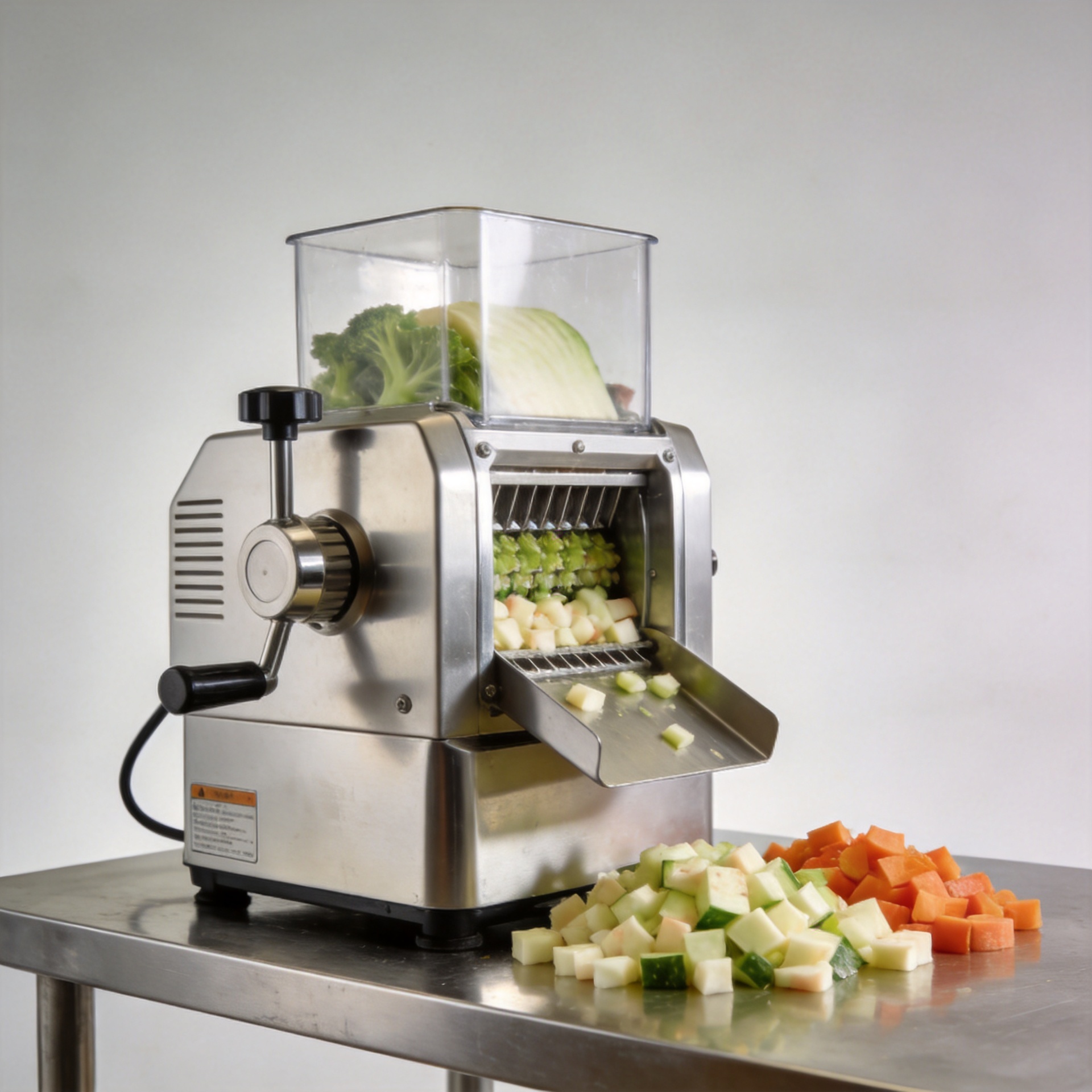
A relevant option to review is this Commercial Industrial Electric Vegetable Cutter Dicing Machine for Potato, Fruit & Green Onion. Its actual suitability for crisp slices should be confirmed against the required cutting configuration, sample result and line interface; the product title alone does not establish a specific slice thickness or production rate.
Run a meaningful acceptance test
Do not accept a potato slicer for crisps after a short demonstration with ideal potatoes. Request a test using representative raw material and the intended slice setting. Observe continuous running long enough to reveal feeding behaviour, slice breakage, residue buildup and cleaning effort. Compare samples from the beginning, middle and end of the run.
- Define the target slice thickness, shape and acceptable visual variation.
- Provide or agree on representative potato size, variety and preparation condition.
- Measure input weight and usable sliced output over a recorded time period.
- Inspect whether the discharge matches your wash, fry or transfer arrangement.
- Document blade type, spare-parts list, cleaning steps and operator training requirements.
This approach also protects against a common procurement mistake: evaluating the cutter in isolation. A slicer can look fast during a brief test but create delays when the transfer, fryer loading or cleaning routine is not ready for the same pace.
Build the purchase decision around total operating fit
For a consideration-stage purchase, compare more than purchase price. The practical cost of a potato slicer for crisps includes blade life, cleaning time, downtime for changeovers, spare-parts lead time, installation needs and the effort required to keep slice quality stable. Overseas buyers should also clarify packing protection, remote technical guidance and the documents needed for their market.
Zhengzhou HongLe Machinery Equipment Co., Ltd. supplies food-processing equipment for international markets and can support buyers with equipment-selection discussions and remote technical guidance. Share your potato type, desired crisp format, target hourly output, available utilities and downstream process so the conversation can focus on a workable cutter-and-line configuration rather than a generic capacity claim.
Final checklist for choosing a potato slicer for crisps
A reliable purchase starts with a clear specification: required thickness range, slice format, tested usable output, cleaning method, blade support and line compatibility. If those points are verified with your own material, the potato slicer for crisps becomes a controllable part of the production system rather than a source of variation at the fryer.
Choose the cutter that produces the repeatable slice your crisp process needs at the output your entire line can absorb. That is usually a more valuable result than choosing the machine with the largest headline number.