EN


Potato Slicer Machine: How to Match Blade Style to Product Output
Choosing a potato slicer machine starts with the product you intend to pack or serve—not with the motor size or the lowest quotation. A blade set that produces clean 1–2 mm slices can be useful for chips, while the same configuration is a poor fit for thick potato rounds, crinkle products, strips, or diced ingredients. For a commercial vegetable cutter, the practical question is simple: what finished shape, thickness, and consistency must the next process receive?
As a technical selection exercise, the blade is only one part of the decision. Potato variety, feed condition, desired output, wash-down routine, and the capacity of downstream frying, blanching, or packing equipment all affect the result. This guide gives procurement teams a neutral way to compare blade styles before selecting a potato slicer machine.
Start with the finished potato product
Write the required output on the purchase brief before comparing machines. “Potato processing” is too broad. Specify whether the product is a thin plain chip, a ridged chip, a thick round slice, a strip, a cube, or a mixed vegetable cut. Also note the acceptable thickness tolerance and whether one cutter must change between formats.
| Finished output | Blade or cutting configuration to assess | What to verify in a sample test |
|---|---|---|
| Thin plain chips | Plain slicing disc or rotary slicing blade | Uniform thickness, low breakage, smooth faces |
| Ridged chips | Crinkle slicing blade or profiled disc | Profile definition, slice integrity, cleaning access |
| Thick rounds or scallops | Adjustable or dedicated thicker slicing disc | Thickness repeatability and discharge without tearing |
| French-fry style strips | Strip-cut knife block or pusher/grid arrangement | Cross-section, long-strip yield, blockage risk |
| Cubes for frozen mixes or prepared foods | Slice-plus-crosscut or dicing grid configuration | Cube size, fines, grid cleaning, changeover time |
Available commercial equipment spans a wide range of slice settings. Industry examples include plain or crinkle potato slices around 0.8–3.2 mm, while some systems support thicker options. Those figures are useful for framing questions, not for assuming that every potato slicer machine delivers every thickness. Ask the supplier to demonstrate your required cut using your potatoes.
Choose the blade style by cut geometry
Plain slicing blades for flat, even slices
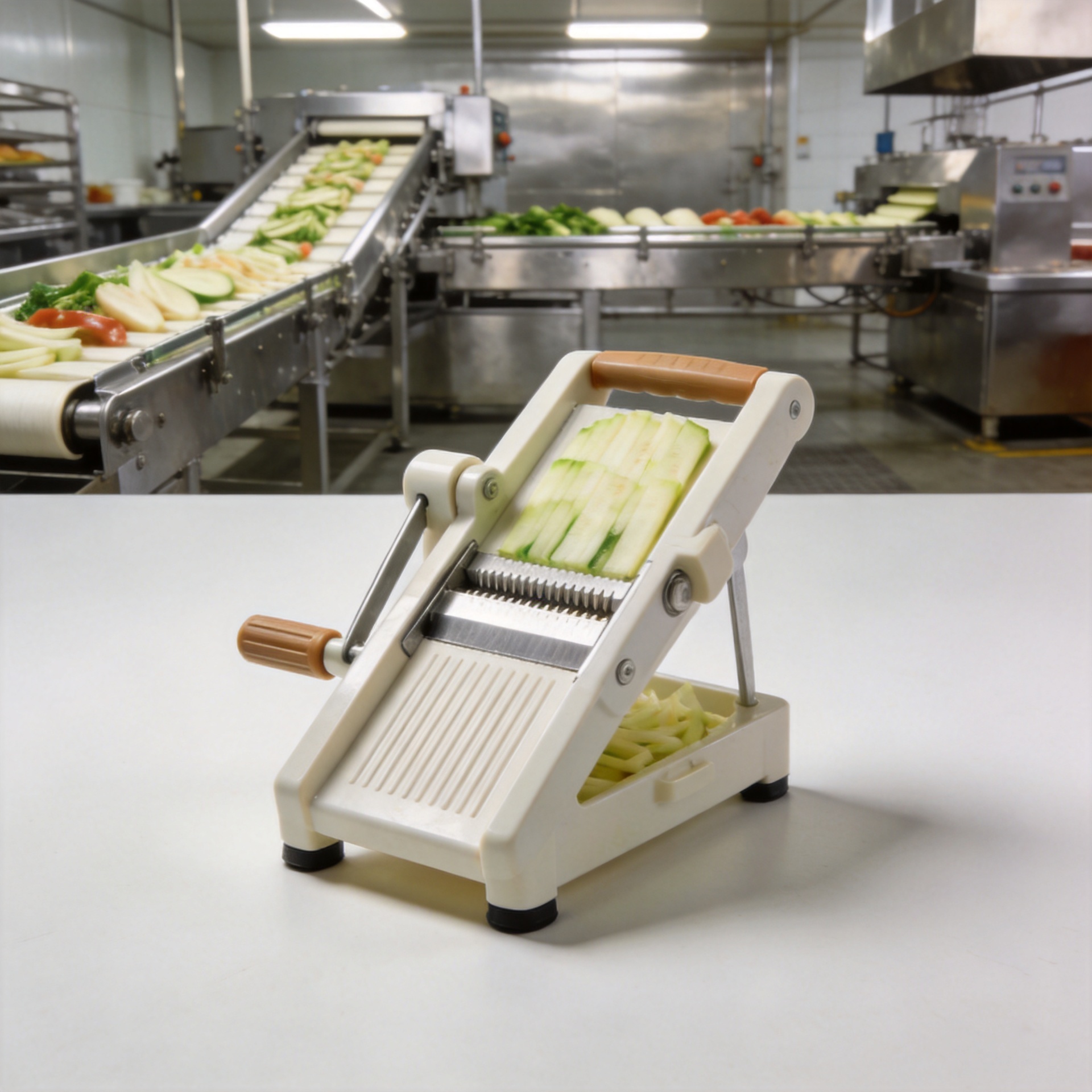
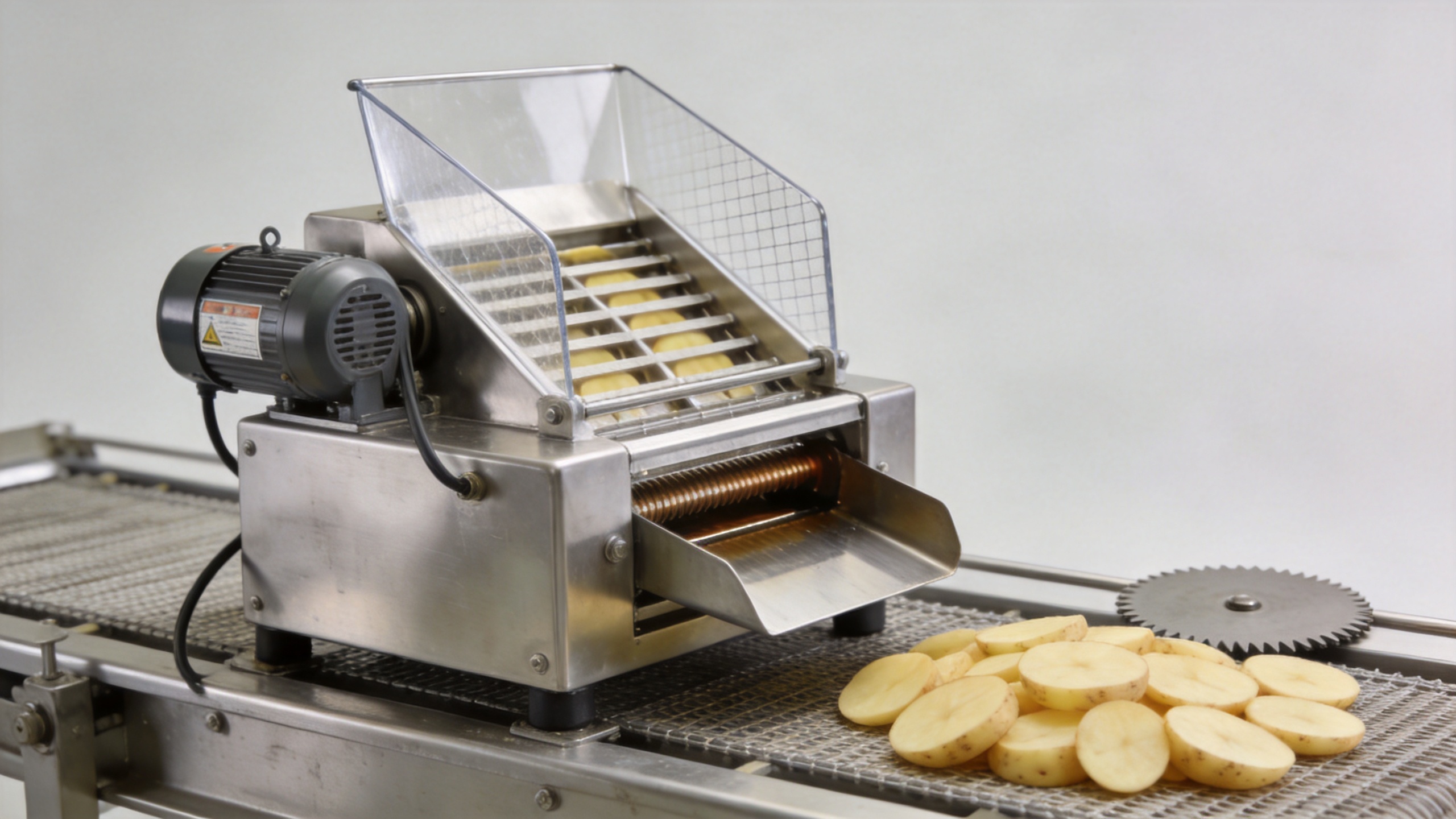
For standard chips, dehydration slices, or potato rounds, a plain blade disc is usually the starting point. The key is not simply sharpness. Buyers should check whether the machine holds a stable slice thickness across a full run and whether slices remain intact after discharge. A very thin target may raise the importance of feed control and potato firmness; a dull edge can compress rather than cleanly separate the potato.
Crinkle blades when surface texture is part of the product
A crinkle blade is a product-format choice, not a cosmetic add-on. It creates a ridged profile that changes the appearance and can influence how the product behaves in later cooking steps. Confirm the ridge profile, slice thickness, and how easily the profiled blade can be removed and cleaned. If crinkle output is occasional rather than daily, calculate the changeover and sanitation effort before specifying a dedicated cutter.
Strip cutters and grids for fries or cubes
A slicing disc alone does not produce consistent fries or dice. Strip and dicing outputs normally depend on knife blocks, grids, or a staged cut. For these configurations, inspect the relationship between the first cut and the crosscut: a weak first slice can create short pieces and fines before the product reaches the grid. Ask to see the rejected fraction after a continuous test, not only the pieces that look cleanest on a display tray.
Match thickness control to the downstream process
Thickness affects more than visual appearance. Thin chips require consistent cutting because variation can lead to uneven frying or drying. Thicker rounds may need a different residence time downstream. A sound rule is to establish a target thickness, acceptable variation, and test method with the production team before you purchase the potato slicer machine.
Some commercial listings describe rotary systems with adjustable ranges such as 1–5 mm, but adjustment range alone is not a performance guarantee. Ask four questions: Is adjustment continuous or limited to interchangeable discs? Does the setting remain stable during a run? Can operators repeat the setting after cleaning? Which potato size and condition were used for the quoted result?
Do not separate blade selection from potato condition
In real production, the same potato slicer machine can behave differently with potatoes that vary in size, firmness, temperature, or surface moisture. That is why a supplier demonstration should use representative raw material whenever possible. A configuration that looks excellent with a uniform demonstration batch may need different feeding or a different blade set when your incoming potatoes vary.
Include preparation in the evaluation: washing, peeling, maximum potato diameter, trimming, and feed orientation. If the feed opening is too small or the product is poorly aligned, operators may spend time pre-cutting potatoes and erase the expected efficiency gain. For a mixed fruit-and-vegetable line, verify that the blade and feed arrangement can be cleaned thoroughly before the next product.
Evaluate changeover, sanitation, and blade maintenance
For plants making more than one output, a blade system is only productive if it is practical to change and maintain. Request a clear list of standard and optional blade sets, replacement lead time, recommended sharpening or replacement practice, and the tools required for removal. A low initial machine price can become less attractive if blade changes require lengthy alignment or if spare parts are difficult to plan.
During acceptance, have the team watch a complete changeover: stop the machine, remove the blade, clean product-contact areas, fit the next configuration, and run a test batch. The same observation should cover safety guards and the procedure for clearing a blockage. These details often matter more to daily output than a single rated capacity number.
A practical purchase checklist for a potato slicer machine
- Define every finished output: plain slice, crinkle slice, thick round, strip, or dice.
- Set target thickness or cross-section and an acceptable tolerance.
- Send representative potatoes for a cutting trial where possible.
- Review the full cut stream, including fines, broken pieces, and off-size product.
- Confirm feed opening, continuous operating conditions, cleaning access, and blade changeover time.
- Request the blade-set list, consumable plan, and operating instructions with the quotation.
- Compare cutter throughput with the next process, rather than selecting capacity in isolation.
Where a commercial vegetable cutter fits
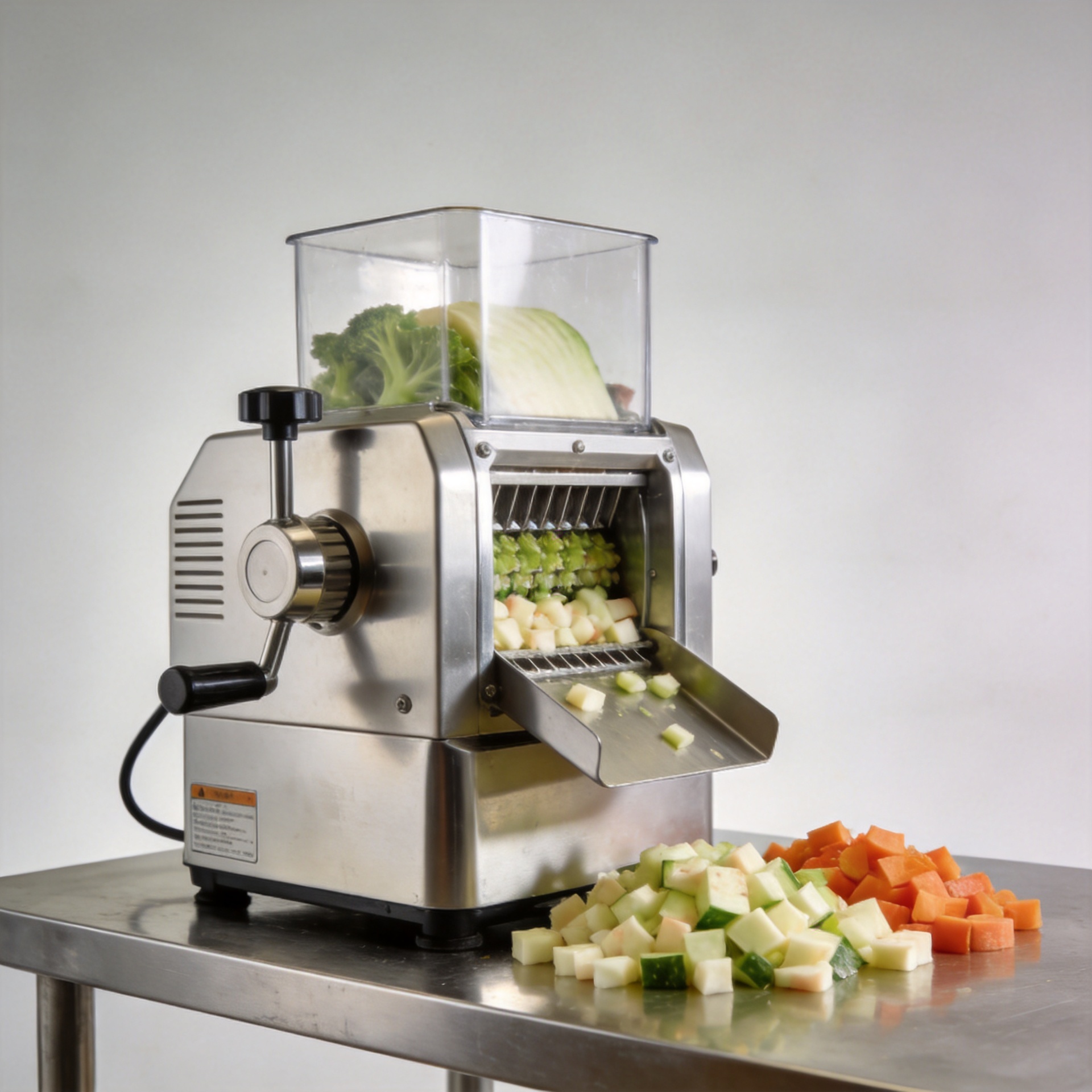
When a line needs flexibility across potato, fruit, and green-onion preparation, a multi-purpose cutter may be worth evaluating alongside a dedicated slicer. The relevant product should still be judged by the confirmed blade configuration and the results of a material test. For buyers comparing a broader format, review the available Commercial Industrial Electric Vegetable Cutter Dicing Machine for Potato, Fruit & Green Onion as a product category reference, then confirm the exact cutting set and output requirements with the supplier.
Potato slicer machine quotation worksheet
Use this compact worksheet when comparing suppliers. Each line turns the required finished product into a question that can be included in a quotation, test record, or factory-acceptance document.
- Potato slicer machine output: name the finished product format.
- Potato slicer machine blade: specify plain, crinkle, strip, or dicing geometry.
- Potato slicer machine thickness: state the target and tolerance.
- Potato slicer machine trial: use representative potatoes.
- Potato slicer machine feed: confirm maximum potato size.
- Potato slicer machine discharge: inspect broken pieces and fines.
- Potato slicer machine capacity: compare it with the next process.
- Potato slicer machine adjustment: confirm how settings are repeated.
- Potato slicer machine changeover: time each blade replacement.
- Potato slicer machine cleaning: review all product-contact areas.
- Potato slicer machine safety: verify guards and clearing procedures.
- Potato slicer machine blades: request a spare-parts list.
- Potato slicer machine maintenance: define sharpening or replacement practice.
- Potato slicer machine controls: confirm the operator training needed.
- Potato slicer machine installation: verify power and line interfaces.
- Potato slicer machine sample: retain output from a continuous test.
- Potato slicer machine acceptance: define cut quality before delivery.
- Potato slicer machine sanitation: confirm wash-down and allergen procedures.
- Potato slicer machine layout: allow safe access for cleaning and service.
Make the blade decision before the final quotation
The right potato slicer machine is the one that repeatedly produces the cut your process needs with manageable cleaning, maintenance, and changeover. Start with the finished product, translate it into a blade geometry and thickness requirement, then validate the result with actual potatoes. That approach gives purchasing and production teams a clearer basis for comparing commercial vegetable cutters—and reduces the chance of receiving a machine that is capable of cutting potatoes but unsuitable for your final product.