EN


Rotary Drum Washer vs Bubble Washer for Potatoes and Root Vegetables
For a potato processor, the first wash is not merely a cosmetic step. It determines how much soil reaches peeling, cutting, grading, and wastewater handling. The right choice between a rotary drum washer machine and a bubble washer depends on the crop’s soil load, skin condition, throughput target, and the next operation. This guide compares both systems for potatoes, carrots, sweet potatoes, cassava, taro, and similar root vegetables.
From an equipment-selection perspective, the useful question is not which washer is universally superior. It is which washing action removes the incoming contamination while keeping product damage, water management, and line integration within an acceptable range.
How the Two Washing Actions Differ
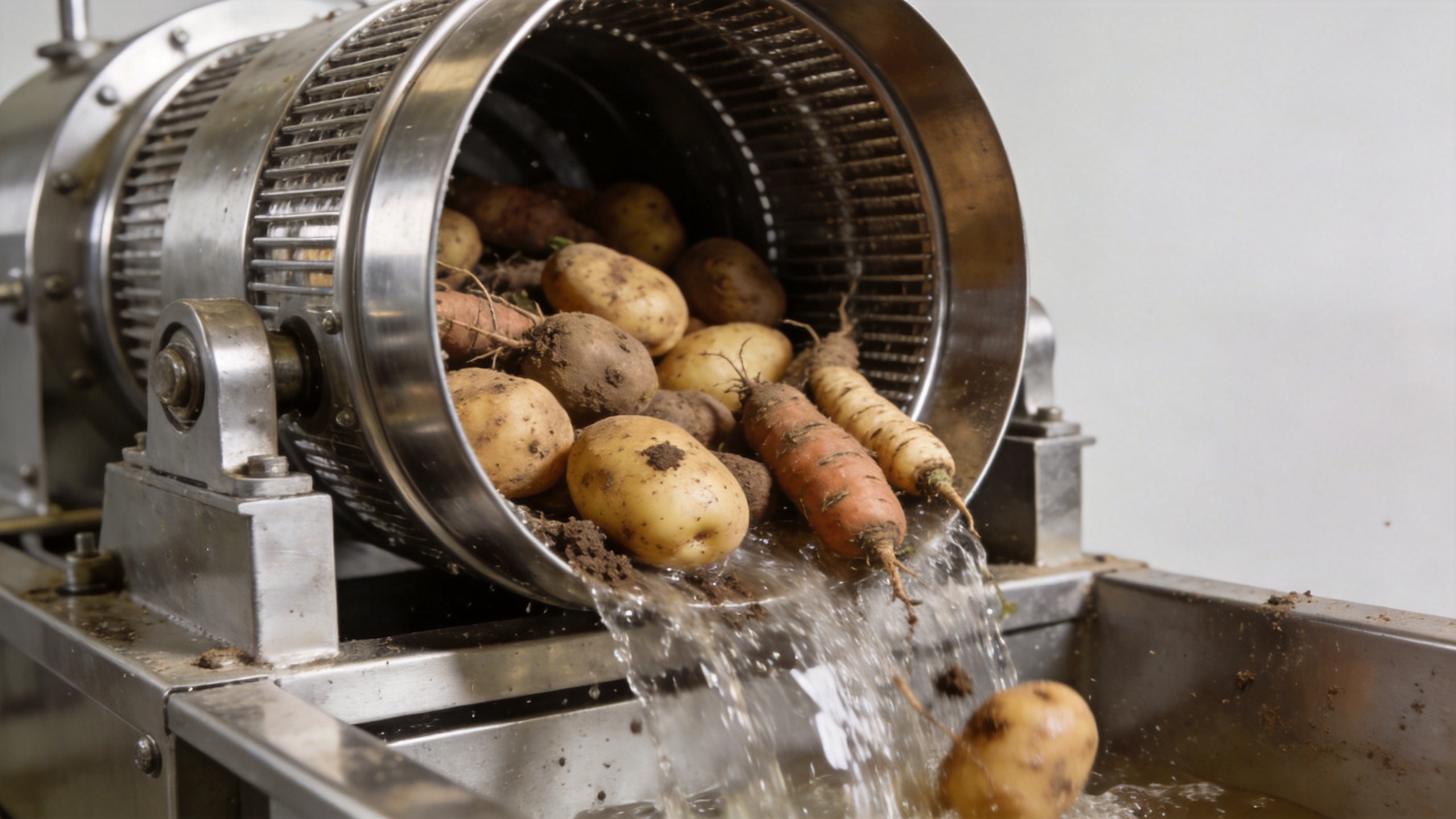
A rotary drum washer machine moves produce through a rotating, often perforated drum while water sprays or flows across the product. The combined tumbling, product-to-product contact, and water action loosen attached soil. This makes the format practical when incoming potatoes or root crops carry clods, field soil, or debris that needs mechanical agitation before later processing.
A bubble washer uses air agitation in a water tank to create an upward, circulating wash action. Produce is suspended and rolled by water movement rather than strongly tumbled against a drum surface. For cleaner or more delicate raw material, this gentler hydraulic action can be useful for lifting light soil, sand, leaves, and surface debris.
Both concepts can be part of a potato washing line. In some plants, a drum stage handles the heavy soil load first, while a bubble stage follows as a gentler rinse before inspection, peeling, or cutting.
Choose by Raw-Material Condition, Not by Machine Name
| Incoming condition | More suitable starting point | Why it matters |
|---|---|---|
| Potatoes with dried or compacted field soil | Rotary drum washer machine | Controlled tumbling and water contact help break up adherent soil before downstream equipment. |
| Roots with loose sand, light soil, or leafy residue | Bubble washer | Air-driven circulation can lift lighter contamination with lower mechanical contact. |
| Mixed soil loads across harvest periods | Drum washer followed by rinse stage | A staged layout lets the line address heavy soil first and refine cleanliness later. |
| Bruise-sensitive or irregular produce | Bubble washer, after trials | Gentler water movement may reduce impact, although transfer points still need attention. |
Crop sampling matters. A rotary drum washer machine that works well for firm, freshly harvested potatoes may need a different drum speed, residence time, or spray arrangement for long-stored potatoes with weaker skins. Likewise, a bubble washer should be tested with the actual product size range so that floating, settling, and discharge behavior are understood before a purchase decision.
Soil Removal Versus Product Handling
Drum washing provides more mechanical assistance, which is valuable when mud is the dominant issue. However, that same action must be adjusted for the commodity. Excessive tumbling, long retention, or poorly managed discharge transitions can increase scuffing or breakage. Procurement teams should ask how speed, water flow, and dwell time can be matched to the crop rather than assuming one fixed setting is suitable for every root vegetable.
Bubble washing shifts more of the cleaning task to water circulation and air agitation. It can be a sensible choice where the objective is to rinse lighter residue while preserving surface appearance. Its limitation is equally important: if the incoming load includes thick mud or stones, a bubble tank alone may not remove contamination consistently enough to protect later equipment.
One published root-vegetable washer study reported 90.2% to 95.5% cleaning efficiency under its tested conditions. That range is useful as a reminder that performance is conditional, not a universal equipment promise. Soil type, water turnover, crop geometry, loading rate, and operator setup all change the outcome.
Plan the Washer Around Peeling and Downstream Flow
For a line that includes abrasive, brush, steam, or knife peeling, the washer should reduce soil before the peeler without creating a product flow that is hard to meter. A rotary drum washer machine often fits naturally as an early de-soiling step because it combines conveying and agitation. Check the discharge height, transfer method, and whether stones or heavy debris need separate handling before the next machine.
A bubble washer may fit well before visual sorting, trimming, fresh-cut preparation, or a final rinse. The decision should also account for how product exits the tank: an abrupt lift or narrow transfer can undo the benefit of gentle washing. Confirm that the outlet conveyor, water drainage, and inspection station match the crop size and target throughput.
For a product-focused reference, the Commercial Nuts Vegetable and Fruit Rotary Drum Washer Cleaning Machine Potato Washing Machine is relevant when evaluating a drum-based position in a root-vegetable processing layout. For a water-agitation comparison point, review the Vegetable and Fruit High Efficiency Commercial Stainless Steel Disinfection Vortex Fruit Washing Machine alongside the actual crop-handling requirements.
Maintenance and Sanitation Questions for the RFQ
Washing performance is only one part of the investment. Potato-washing guidance commonly emphasizes cleanable, food-grade construction and sanitation procedures. During an RFQ, ask where soil settles, how screens and spray nozzles are accessed, and how quickly operators can inspect water-contact areas between production runs.
- What is the planned method for removing stones, sand, and settled soil?
- Which parts require routine access for cleaning, and can that access be performed safely?
- How are water flow, fresh-water addition, and discharge managed as soil load changes?
- Can drum speed, retention time, air intensity, or conveyor speed be adjusted for different crops?
- How will the washer connect to peeling, inspection, and drainage equipment without unnecessary drop points?
These questions also help distinguish a machine comparison from a line-design decision. A potato washing line needs sensible water circulation, drainage, access for cleaning, and a path for product movement—not simply a washer selected in isolation.
A Practical Selection Checklist
Specify a rotary drum washer machine when heavy adhered soil, a firm crop, and early-stage de-soiling are the central requirements. Specify a bubble washer when the material is already relatively clean, gentler product movement is important, or the washer is serving as a rinse and preparation stage. Consider both when seasonal raw-material variation makes a single washing action too limiting.
- Send representative crop samples or clearly document soil load, product size, and skin condition.
- Define the required output after washing: de-soiled, rinsed, ready for peeling, or ready for fresh-cut inspection.
- Map upstream receiving and downstream peeling or sorting before fixing equipment dimensions.
- Request evidence of access, drainage, and adjustment points for the proposed configuration.
- Evaluate water and labor handling across the whole potato washing line, not only at the wash chamber.
For root-vegetable processors, the strongest selection is usually the one that matches the crop condition and the next processing step. A rotary drum washer machine can provide the needed agitation for dirty potatoes, while a bubble washer can provide a gentler washing stage where product handling has priority. Reviewing both options against real incoming material gives procurement teams a clearer basis for specifying the line.