EN


Small Scale Peanut Butter Production: A Practical Start-Up Guide
Small scale peanut butter production can turn a familiar product into a disciplined food-processing business, but the first purchase should not be a grinder. Start with the product you intend to make, the batches you can sell consistently, and the food-safety controls your market requires. For a new food processor, the useful question is not “How large a machine can I buy?” but “What workflow can I clean, operate, verify, and repeat?”
This guide maps the journey from incoming peanuts to a sealed jar. It is written for entrepreneurs and small food processors who need a practical introduction before they commit to commercial peanut butter production equipment. The exact layout will depend on your recipe, local rules, labour availability, and planned output, so treat it as a planning framework rather than a fixed formula.
Begin With the Product and the Production Goal
Before designing small scale peanut butter production, define what the finished product must be. Will it be smooth or crunchy? Will it contain salt, sweetener, stabilizer, or other inclusions? What jar size, label format, and shelf-life target fit your route to market? These decisions determine more than the recipe: they affect the grinding arrangement, mixing time, filling method, cleaning routine, and packaging specification.
Set an initial production target in batches rather than relying only on a supplier’s headline capacity. A rated output is a reference, not a guarantee. Actual throughput can change with peanut condition, roast profile, desired texture, ingredient additions, operator routines, and the pace of downstream filling. If sales are uncertain or seasonal, a compact line with room for orderly expansion may be more useful than an oversized installation that sits idle.
Map the Core Process Before Choosing Machines
A basic commercial workflow generally moves through receiving and sorting, roasting, cooling, blanching or skin removal where required, peanut grinding, mixing or refining, filling, sealing, and packing. Drawing this flow on paper is surprisingly valuable. It reveals where product, people, containers, and cleaning tools may cross paths.
- Receive and inspect peanuts: establish acceptance checks for condition, storage, traceability, and foreign material.
- Roast and cool: develop a repeatable roast profile that supports flavour and the grinding behaviour you want.
- Prepare kernels: remove skins or split kernels if your product process calls for it, then keep the product protected from recontamination.
- Grind and refine: run peanut grinding in a way that delivers the texture, temperature control, and consistency required by the recipe.
- Mix, fill, and seal: add approved ingredients consistently, then package promptly using containers and closures suited to the product.
Some operations use more than one size-reduction stage to reach a smoother texture. That does not mean every new producer needs the same configuration. Trial batches and supplier discussions should determine whether a single pass, repeated pass, or staged arrangement is appropriate for your chosen product.
Build a Practical Peanut Grinding Station
Peanut grinding is the point where a simple ingredient becomes a spreadable product, so it deserves more attention than a capacity number. Consider how the grinder will be fed, how you will collect the paste, how temperature is managed, and how operators access contact parts for cleaning. Also look at the space needed for safe loading, maintenance, and movement of finished paste to the next step.
Plan a small test protocol before accepting equipment. Use your own or representative peanuts, process a realistic batch, and assess texture, repeatability, heat build-up, transfer losses, and clean-down time. Many first-time buyers assume that a larger rating automatically creates more value. A better way to think about it is to match the equipment to the slowest reliable step in the whole line, especially filling and packaging.
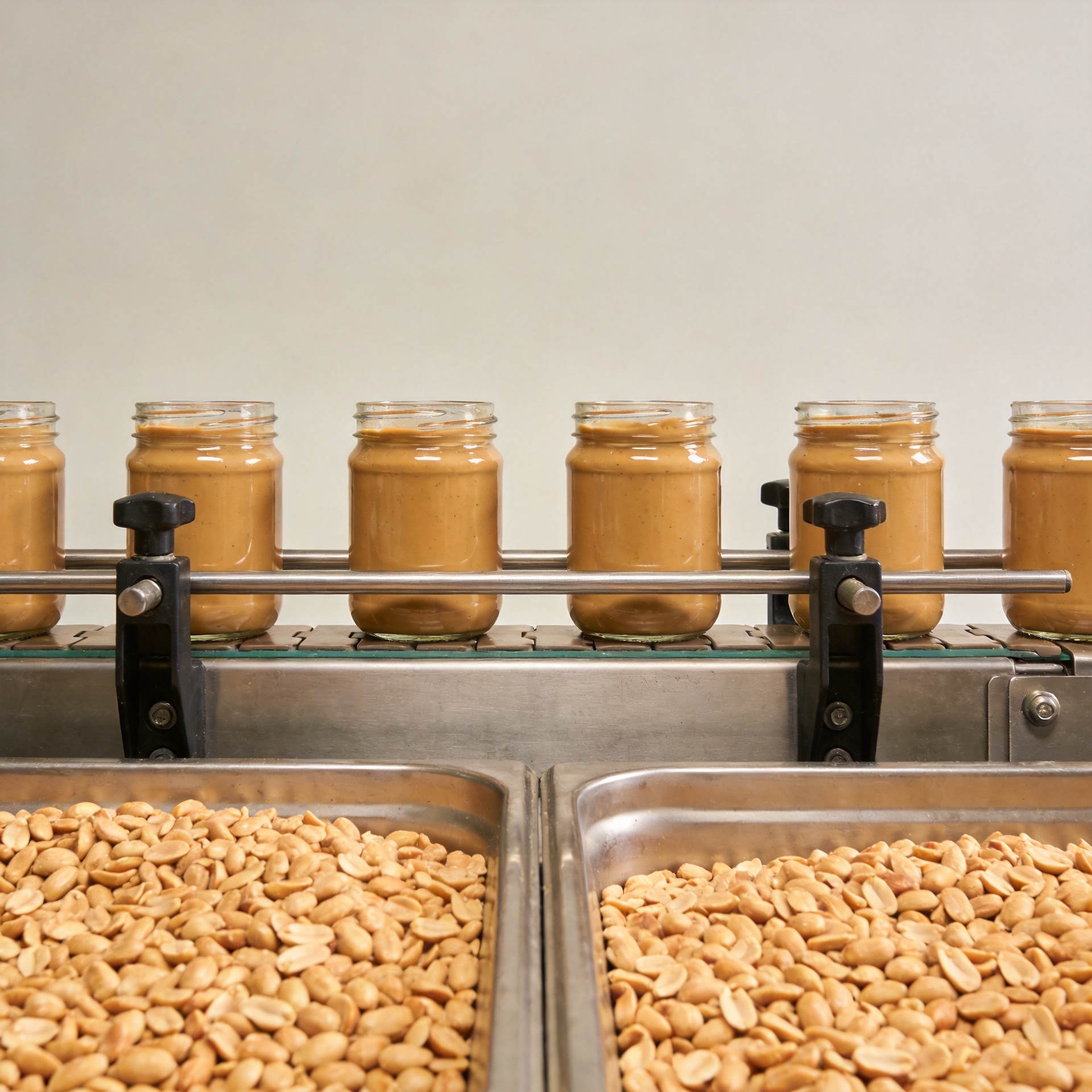
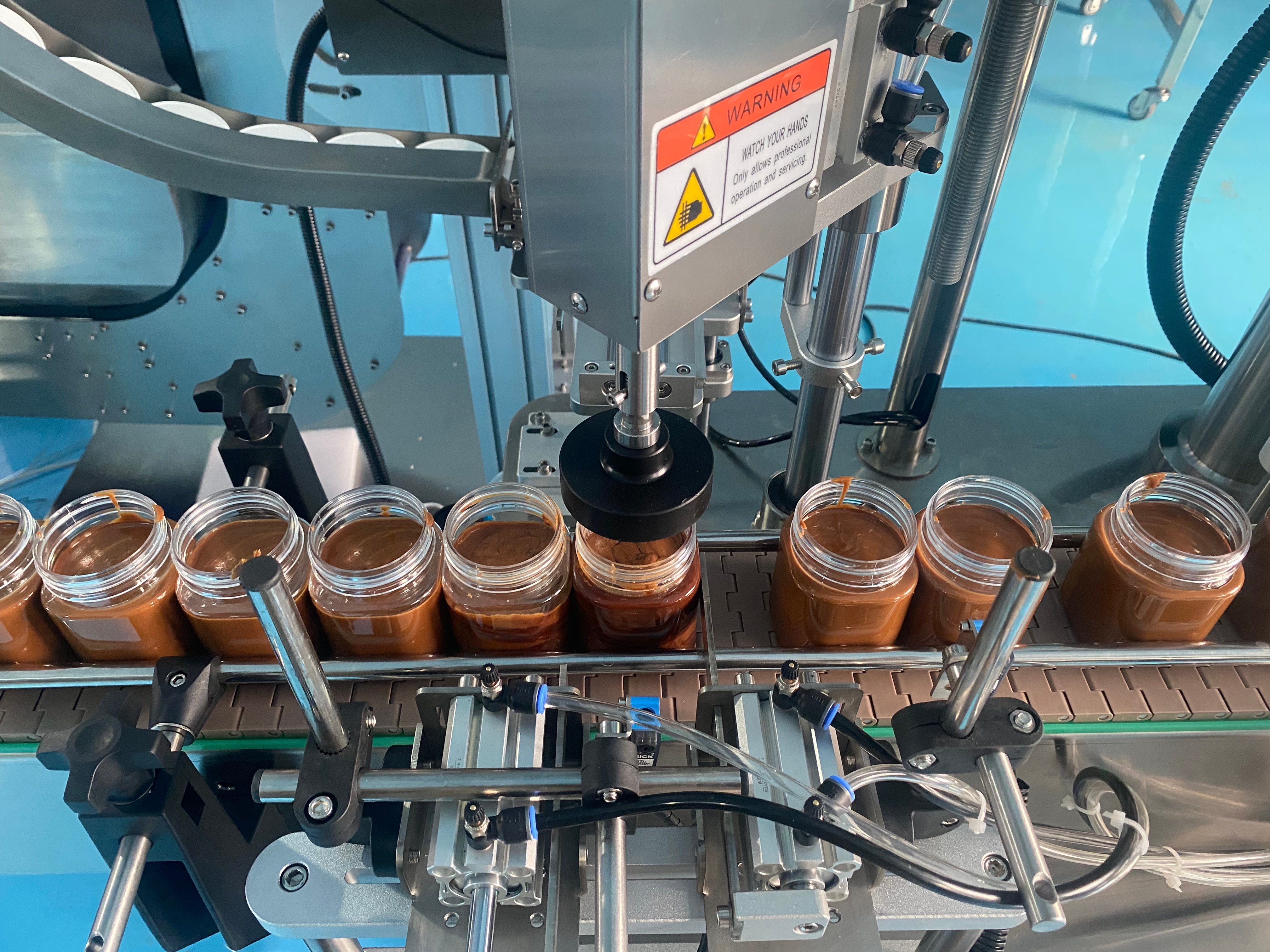 A clean peanut grinding station should be planned as part of the complete production flow.
Do Not Treat Food Safety as a Later Upgrade
Peanuts are a major allergen, so allergen management and accurate labeling belong in the first production plan. Food-safety guidance for human food emphasizes written procedures to control allergen cross-contact and ensure that allergens are properly labeled. Your local legal obligations may differ, but the management principle is widely relevant: know what enters the facility, keep process zones orderly, document cleaning, and ensure the label reflects the product.
For small scale peanut butter production, build practical controls around supplier approval, lot identification, cleaning schedules, employee hygiene, pest prevention, equipment inspection, and finished-product storage. Work with qualified food-safety and regulatory professionals in your target market to establish the controls, testing, and records your business needs. This is one area where a generic online checklist is not enough.
Design Filling and Packaging Around Your Real Market
A good paste can still fail commercially if it is difficult to fill, leaks in transit, or arrives with an unclear label. Choose containers, lids, seals, and carton protection that suit your sales channel. Start with a manageable range of pack sizes. Each extra format increases changeover work, packaging inventory, labeling checks, and the chance of avoidable mistakes.
Keep the packaging area close enough to the process for efficient transfer, but organized enough to avoid clutter. Confirm that the label has space for the product name, ingredient list, allergen declaration, net contents, lot information, storage instructions, and any market-specific requirements. If your product separates naturally, describe the handling expectation clearly and validate that the package and customer experience remain acceptable.
Create an Equipment List That Can Grow With You
Your first list may include a roaster, cooling or handling equipment, a grinder, a mixer or holding tank, a filling and sealing solution, scales, sanitation tools, and basic packing equipment. The final mix depends on the recipe and local operating requirements. Focus on interfaces: a strong grinder does not solve a bottleneck if paste transfer, filling, or cleaning is slow.
When you are ready to compare options, ask suppliers for a line layout, utility requirements, product-contact materials, operator and maintenance needs, cleaning access, and a test plan. For an example of a matched processing option, review the automatic peanut butter production machine for nut factories alongside your own workflow requirements. The product page is a starting point for discussion, not a substitute for validating the configuration against your recipe and site.
Run a Controlled Trial Before a Full Launch
Use a pilot run to prove the entire sequence, not only the peanut grinding result. Track incoming lot details, roast observations, batch weights, ingredient additions, fill weights, seal checks, cleaning time, and any delays. Review what the operators found difficult. The first trial often exposes small issues—an awkward transfer point, a container that fills slowly, or a cleaning task that needs a clearer procedure—before they become routine production problems.
Then decide what to standardize. Write simple work instructions, train people against them, and keep change records when the recipe, packaging, or process changes. In small scale peanut butter production, consistent execution is usually more valuable than adding complexity too early.
A Start-Up Checklist for the First Commercial Batches
- Define the product, recipe boundaries, pack size, and target batch size.
- Confirm peanut sourcing, receiving checks, storage, and lot traceability.
- Lay out the flow from roasting through peanut grinding, filling, and packing.
- Validate cleaning, allergen controls, labels, and records for your market.
- Trial the equipment using representative materials and packaging.
- Measure the complete line, then improve the actual bottleneck before expanding.
Conclusion: Start Simple, Validate Carefully, Then Scale
Small scale peanut butter production is more reliable when it begins as a connected system rather than a single-machine purchase. A clear product definition, a clean and traceable workflow, thoughtful peanut grinding, and packaging that suits the market give a new producer a practical base. Start with controlled batches, record what happens, and use the results to make the next equipment decision with confidence.