EN


Vacuum and Freeze Drying: A Process Planning Checklist for New Food Products
For a new snack, ingredient, or shelf-stable food line, vacuum drying vs freeze drying is not simply a comparison of two machines. It is a product-development decision that affects texture, aroma, rehydration, throughput, packaging, cleaning routines, and capital planning. Procurement teams get better answers when they define the product and validation requirements before requesting equipment quotations.
This checklist is designed for teams assessing low-moisture food processing options. It separates what each process does from what must be tested on the actual recipe, piece size, and intended market.
Start with the process difference
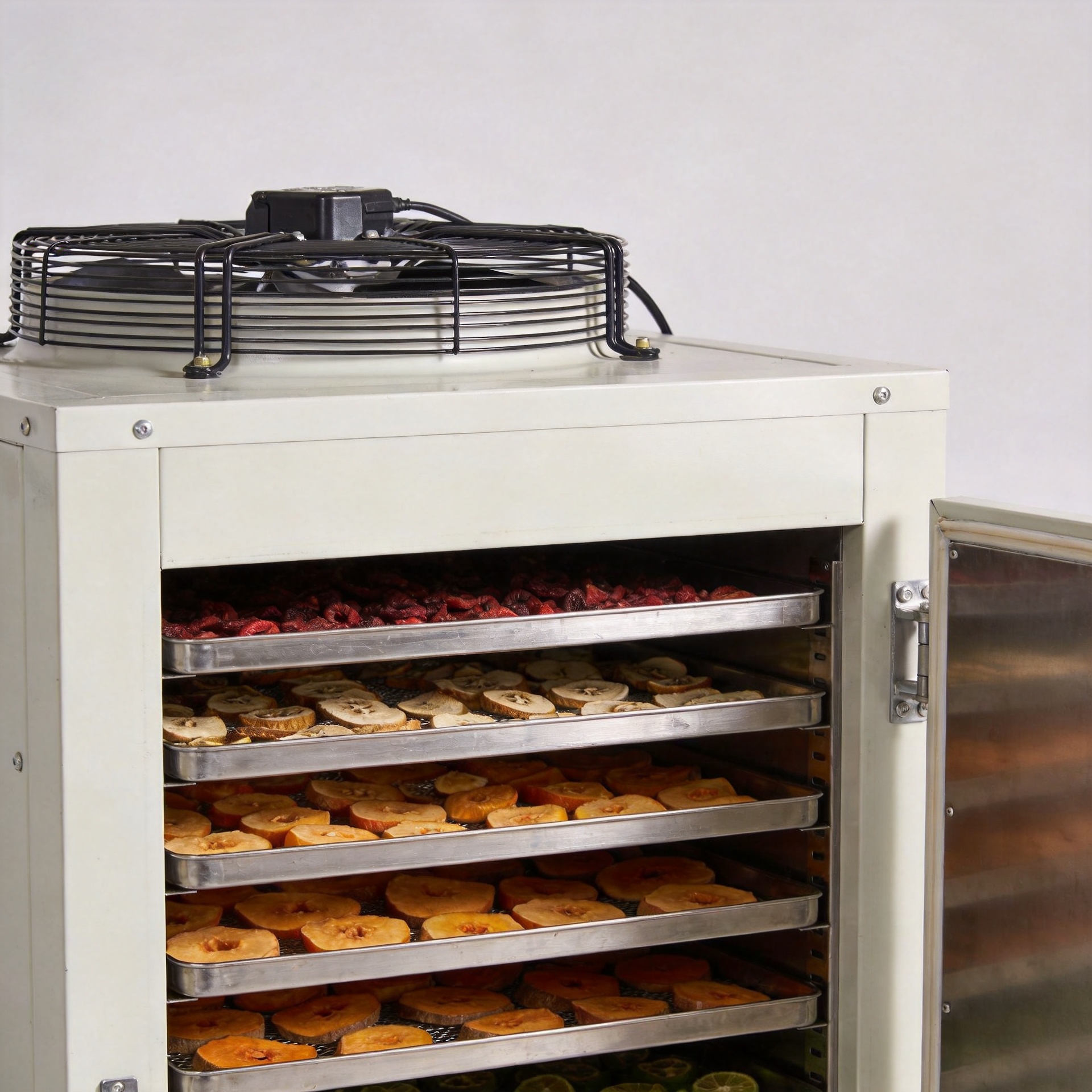
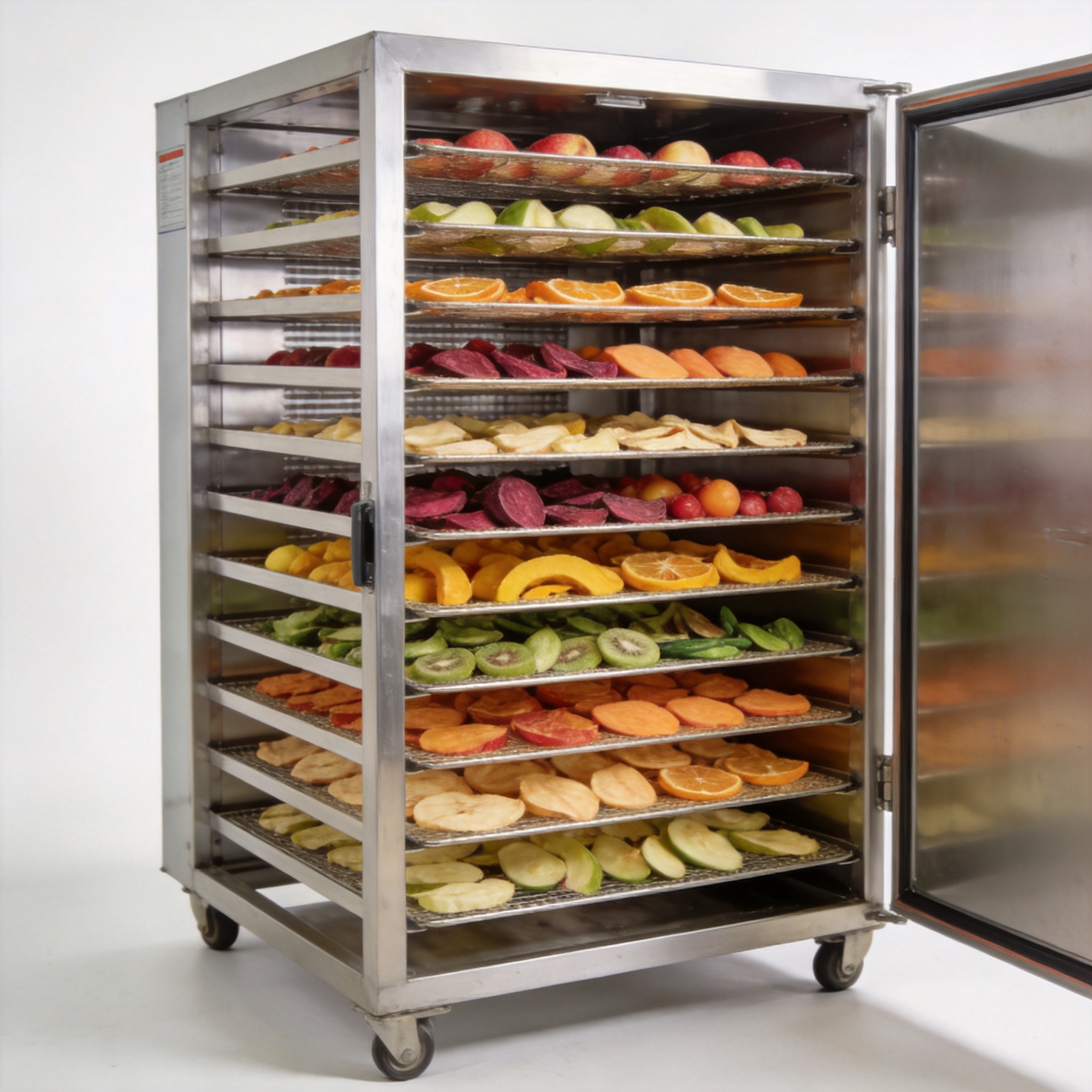
In a vacuum drying process, food is dried under reduced pressure, often with controlled heat. Lower pressure can support moisture removal at temperatures that may be gentler than atmospheric hot-air drying, but the product is not necessarily frozen first. The result can suit many fruit, vegetable, spice, and ingredient applications when the target is controlled moisture removal with a practical production flow.
Freeze drying adds a freezing stage before water is removed under vacuum by sublimation. That route can help retain an open structure and support rapid rehydration for suitable products. It also adds refrigeration, freeze control, chamber time, and a more demanding operating sequence. In a vacuum drying vs freeze drying review, the key question is not which process sounds more advanced; it is which process gives the desired product attributes at an acceptable operating model.
Match the technology to the food material
Begin with a representative product sample, not a broad category label. A berry half, vegetable slice, herb, seasoning paste, chili product, granule, and heat-sensitive inclusion each behave differently under vacuum and heat. Record initial solids, sugar or salt content, oil level, particle size, stickiness, bulk density, and fragility. These details influence heat transfer, bed depth, loading pattern, and whether the finished item will crack, shrink, clump, or retain a desired porous texture.
Use freeze drying when the commercial brief places a high value on shape retention, light structure, or rehydration behavior and the team accepts the added process stages. Consider vacuum drying when the product can meet its sensory, handling, and moisture targets without the frozen route and the business case favors a simpler continuous or batch workflow. This vacuum drying vs freeze drying decision should be confirmed with trials rather than product-category assumptions.
Compare the operating model before comparing quotations
| Planning question | Vacuum drying review | Freeze drying review |
|---|---|---|
| Water-removal path | Reduced-pressure drying with controlled heat | Freezing followed by vacuum sublimation |
| Product priority | Moisture control, workable texture, and production flow | Porous structure, rehydration, and delicate-product handling |
| Utilities to map | Vacuum, heat source, electrical load, cooling where applicable | Vacuum plus refrigeration/freezing capacity and condenser duty |
| Trial focus | Drying curve, shrinkage, sticking, unload behavior | Freeze profile, collapse risk, primary and secondary drying behavior |
| Packaging focus | Moisture pickup after discharge and storage stability | Protection of fragile, porous pieces from moisture and breakage |
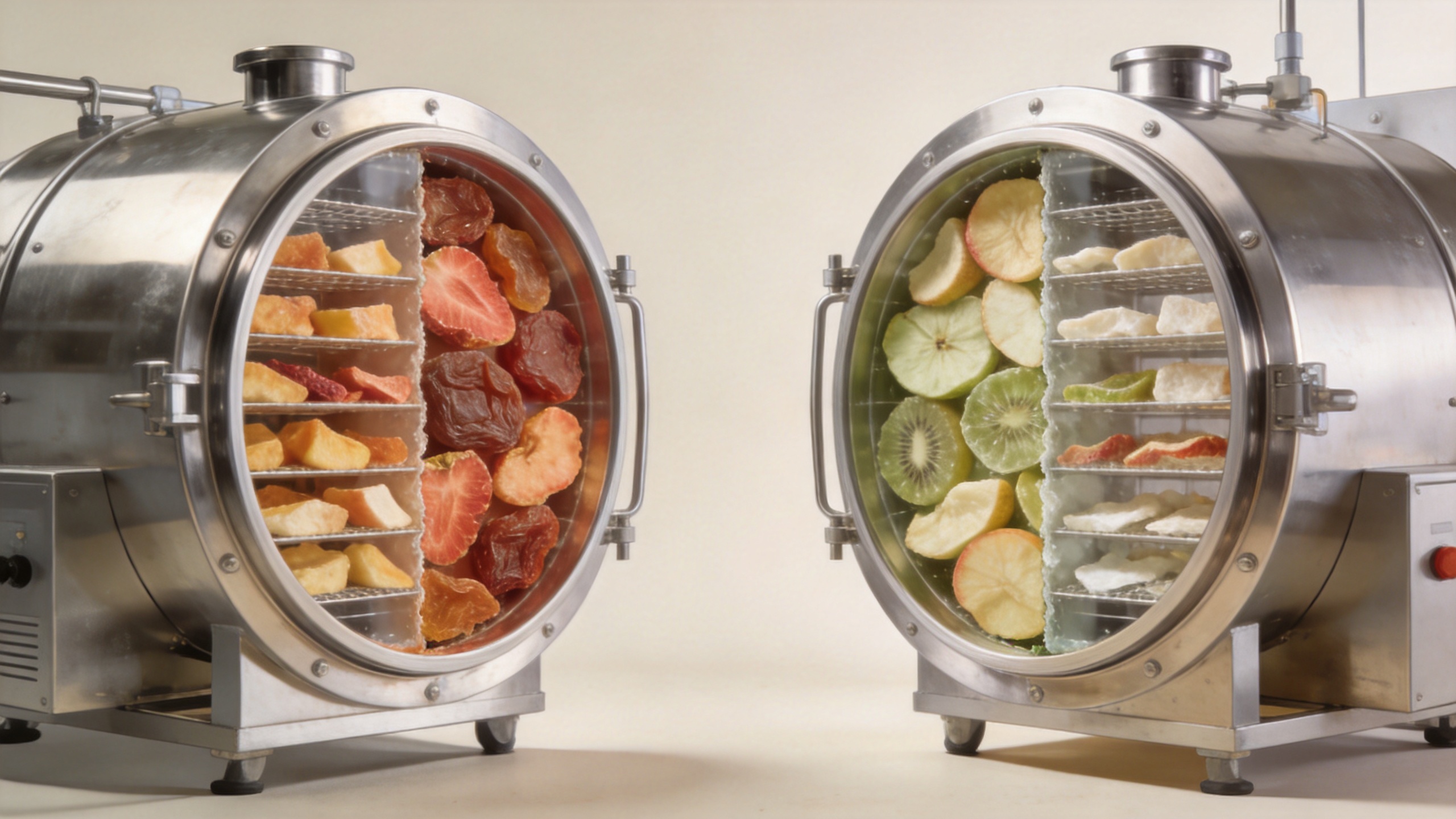
A vacuum drying machine should therefore be evaluated as part of a line: upstream cutting or preparation, loading, vacuum and heat control, discharge, cooling, inspection, and packaging. Ask suppliers to state their assumptions for product loading, starting moisture, target endpoint, batch time, and utility conditions. If any of those inputs are unknown, treat capacity figures as preliminary.
Put water activity and sanitation on the checklist
Final moisture percentage alone does not describe every stability risk. Water activity (aw) reflects how available water is in a food system, and it should be measured and maintained within the product’s validated specification. FDA technical guidance notes that water activity affects food stability and should be brought to a suitable level at the end of drying and maintained during storage. For the scope of its low-moisture ready-to-eat guidance, FDA describes low-moisture food as having aw of 0.85 or below.
Those references are process-planning signals, not a substitute for a product-specific hazard analysis, shelf-life study, or local regulatory review. Build sampling points into the project: incoming material, post-drying product, post-cooling product, and packed product after storage simulation. Also map where water can enter a dry processing area during cleaning, maintenance, or condensation events.
Request the right trial data
For a useful vacuum drying vs freeze drying comparison, ask for trial records rather than a single finished sample. A trial package should include:
- Product description, cut size, initial moisture, solids, and load weight.
- Time-temperature-pressure profile and the equipment configuration used.
- Final moisture and aw test method, sampling plan, and measurement results.
- Observations on color, aroma, shrinkage, breakage, stickiness, and rehydration where relevant.
- Cleaning access, changeover steps, and dry-out procedures.
- Expected batch frequency, operator actions, maintenance points, and spare-part planning.
This evidence creates a common basis for comparing energy use, labor, yield, and packaging loss. It also helps avoid treating a trial optimized for appearance as a production-ready process.
Turn the product brief into an equipment inquiry
Before contacting suppliers, prepare a one-page inquiry with the food type, hourly or batch demand, target finished format, initial and target moisture, expected aw specification, available utilities, installation footprint, cleaning method, and destination-market requirements. Specify whether you need a batch process, a repeatable loading method, or integration with upstream and downstream equipment.
For projects exploring vacuum-based food drying configurations, review the available details for the Automatic Industrial Microwave Drying System 220V Electric Vacuum Dryer for Chili Food Drying Equipment as a starting point for a discussion about product trials and line requirements. Confirm configuration suitability with the supplier against the actual product brief rather than assuming a listed unit fits every food.
Final decision checklist
- Define the customer-facing attributes that cannot be compromised: texture, color, flavor, shape, or rehydration.
- Document the target moisture and validated aw specification separately.
- Choose the trial material, cut size, loading pattern, and packaging format before comparing process results.
- Calculate capacity from verified loading and cycle data, not chamber volume alone.
- Map utilities, refrigeration needs, vacuum performance, floor space, discharge, and packaging interfaces.
- Review sanitation, access, condensate control, and post-cleaning dry-out as part of the equipment layout.
- Use the trial record to compare total operating implications—not only the equipment purchase price.
A disciplined vacuum drying vs freeze drying assessment turns a broad technology question into a product-specific plan. When process data, quality targets, and operating constraints are reviewed together, the chosen route is easier to validate and easier to scale.