EN


Vacuum Drying in Food Processing: Principles and Suitable Materials
For processors handling heat-sensitive ingredients, vacuum drying food processing offers a practical way to remove moisture without relying on the high air temperatures used in conventional hot-air drying. The value is not simply “drying at a lower temperature.” A well-designed process balances pressure, heat input, product thickness, loading depth, and endpoint moisture so the finished food remains stable while retaining an acceptable color, aroma, and texture.
From an equipment-manufacturing viewpoint, vacuum drying food processing should be treated as a process decision before it becomes a machine decision. The material, its initial water content, its sensitivity to oxygen and heat, and the desired final format all determine whether a vacuum dryer is a good fit.
How vacuum drying removes moisture
The core principle behind vacuum drying food processing is straightforward: reducing the surrounding pressure lowers the boiling point of water. Moisture can therefore evaporate at a lower product temperature than it would at atmospheric pressure. Heat may be delivered through contact surfaces, radiation, or—in some systems—microwave energy, while the generated vapor is removed from the drying chamber.
In practical vacuum drying food processing, the vacuum pump does not replace heat. It changes the conditions under which water can leave the product. Too little heat can slow the batch and create an uneven endpoint; too much heat can still damage a sugar-rich, thin, or delicate product. Process development should therefore establish a controlled relationship between chamber pressure, product temperature, heating rate, and drying time.
The reduced-oxygen environment can also be useful for materials that readily oxidize. However, vacuum drying food processing is not a guarantee of nutrient retention or a substitute for hygienic handling. Raw-material quality, pretreatment, slicing consistency, loading pattern, and packaging still influence the result.
Which food materials are suitable?
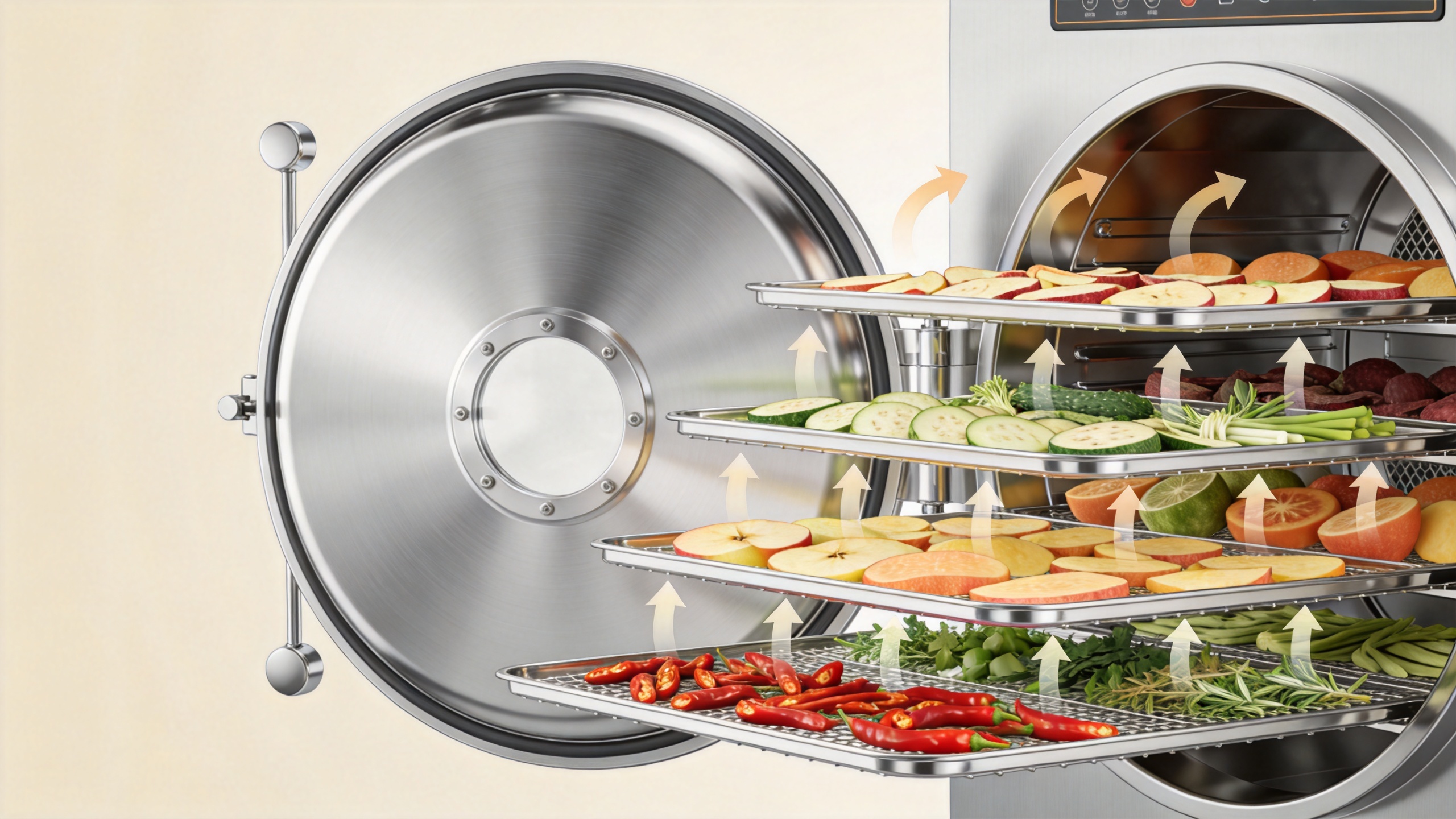
Vacuum drying food processing is often considered when a product has high value, is heat-sensitive, or needs better protection of appearance and flavor than a basic hot-air process can provide. Suitability should be confirmed through product trials rather than assumed from the material name alone.
Fruits and fruit ingredients
Apple slices, berries, mango, banana, jujube, and other fruit pieces are common candidates for vacuum drying food processing. These materials may benefit from lower-temperature moisture removal when browning, aroma loss, or surface hardening is a concern. Fruit puree, pomace, and particulate ingredients require special attention to layer thickness and sticking behavior because their sugar content can change heat transfer and release of moisture.
Vegetables, chili, and seasoning ingredients
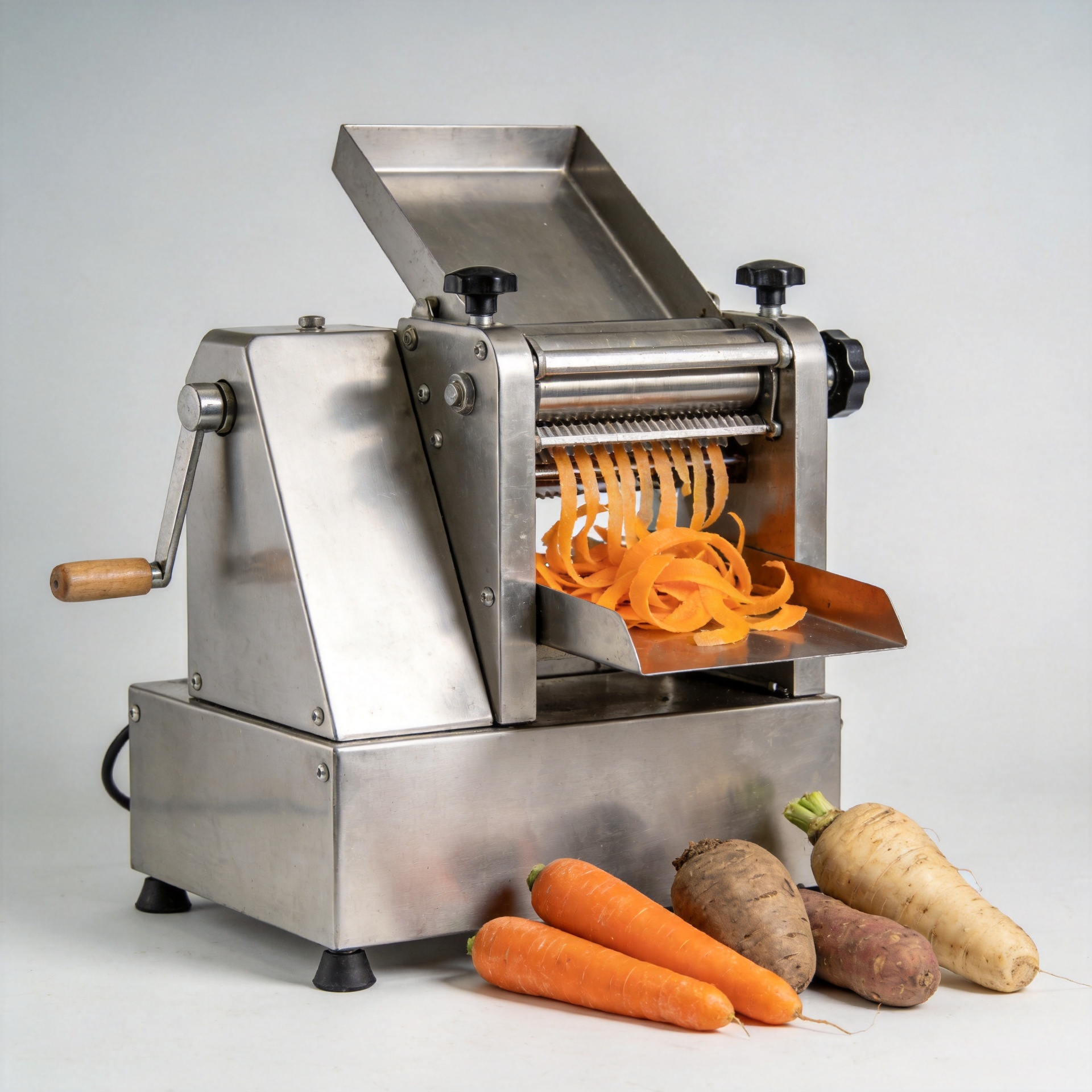
For vegetables and seasoning materials, vacuum drying food processing can be evaluated for garlic, tomato pieces, carrot, leafy ingredients, pepper, and chili. Uniform cutting matters: mixed particle sizes dry at different rates, making it harder to reach a consistent final moisture level. Washing, draining, blanching where appropriate, and controlled feeding are upstream steps that deserve the same attention as the dryer itself.
Herbs, teas, and plant-based materials
Herbs and aromatic plant materials are another relevant group for vacuum drying food processing. Their quality is often judged by color and aroma as well as moisture. Gentle handling and an evenly distributed bed can help reduce local overheating. The final target should be based on the product’s storage, packaging, and food-safety requirements rather than a generic drying-time target.
Vacuum drying versus microwave-vacuum drying
Standard vacuum drying food processing generally relies on controlled low-pressure conditions and external heat transfer. Microwave-vacuum systems add volumetric energy to accelerate moisture movement. That can be attractive for certain products, but it also increases the need for careful power control, load consistency, and monitoring of product temperature.
For a new line, do not assume that faster vacuum drying food processing is automatically better. A faster process may be appropriate only when the material tolerates the energy profile and the plant can control uniformity from batch to batch. Pilot testing should compare appearance, rehydration behavior where relevant, aroma, breakage, yield, and residual moisture—not drying time alone.
Processing checkpoints that protect quality
Successful vacuum drying food processing begins with consistent preparation. Sort incoming material, remove damaged pieces, and standardize cut size or particle distribution. For fruit and vegetables, select pretreatment based on the ingredient and the desired finished product; avoid applying a single treatment to every material.
- Loading: Keep bed depth and tray coverage consistent so heat and vapor removal are not blocked.
- Pressure and heat: Establish a recipe that avoids both stalled drying and excessive product temperature.
- Endpoint verification: Confirm final moisture or water activity with an appropriate quality-control method; chamber time is only a process indicator.
- Cooling and packing: Prevent the dried product from taking up moisture after discharge, especially in humid production environments.
These checkpoints make vacuum drying food processing more repeatable and help operators trace a quality deviation back to a specific process stage.
How to evaluate equipment for a food-drying project
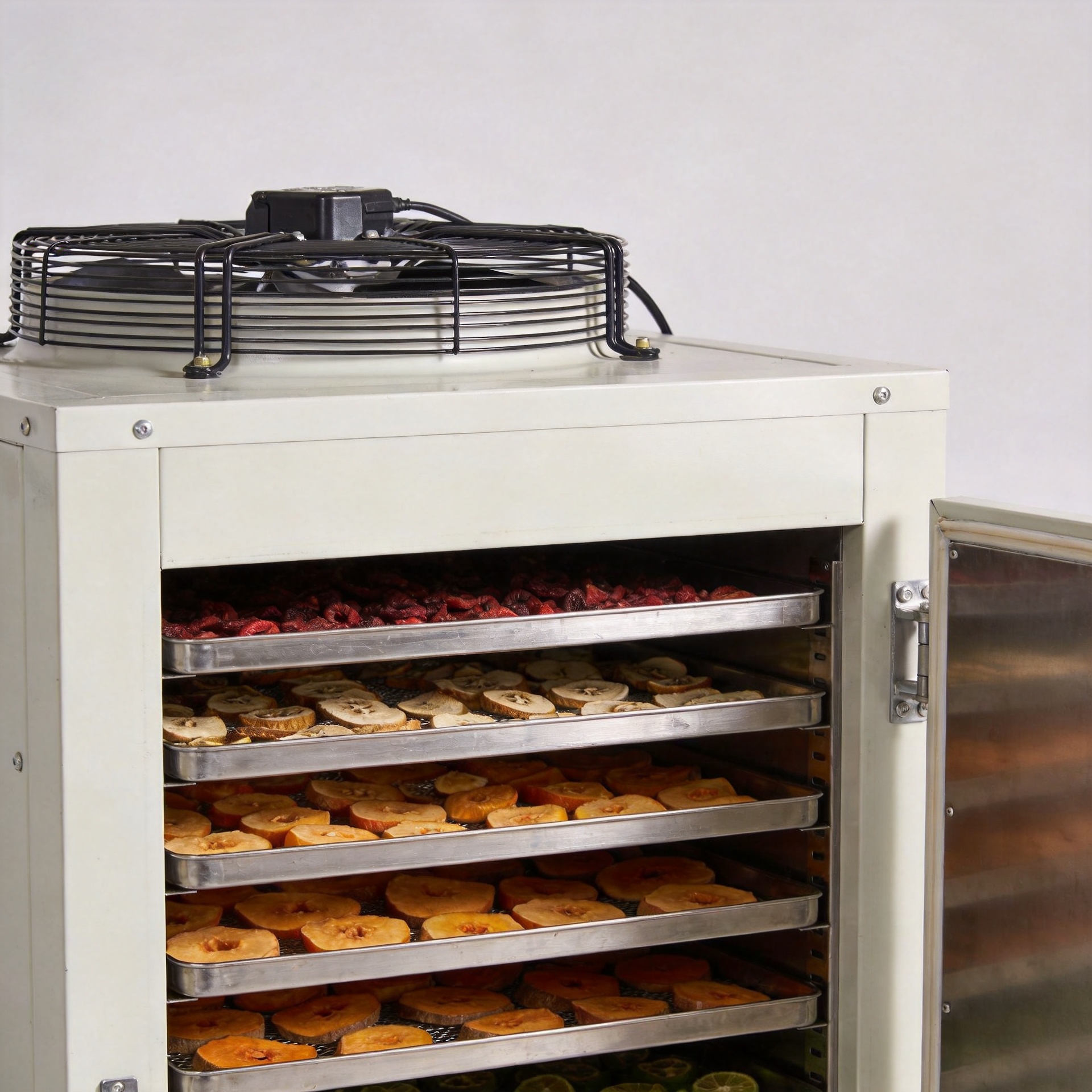
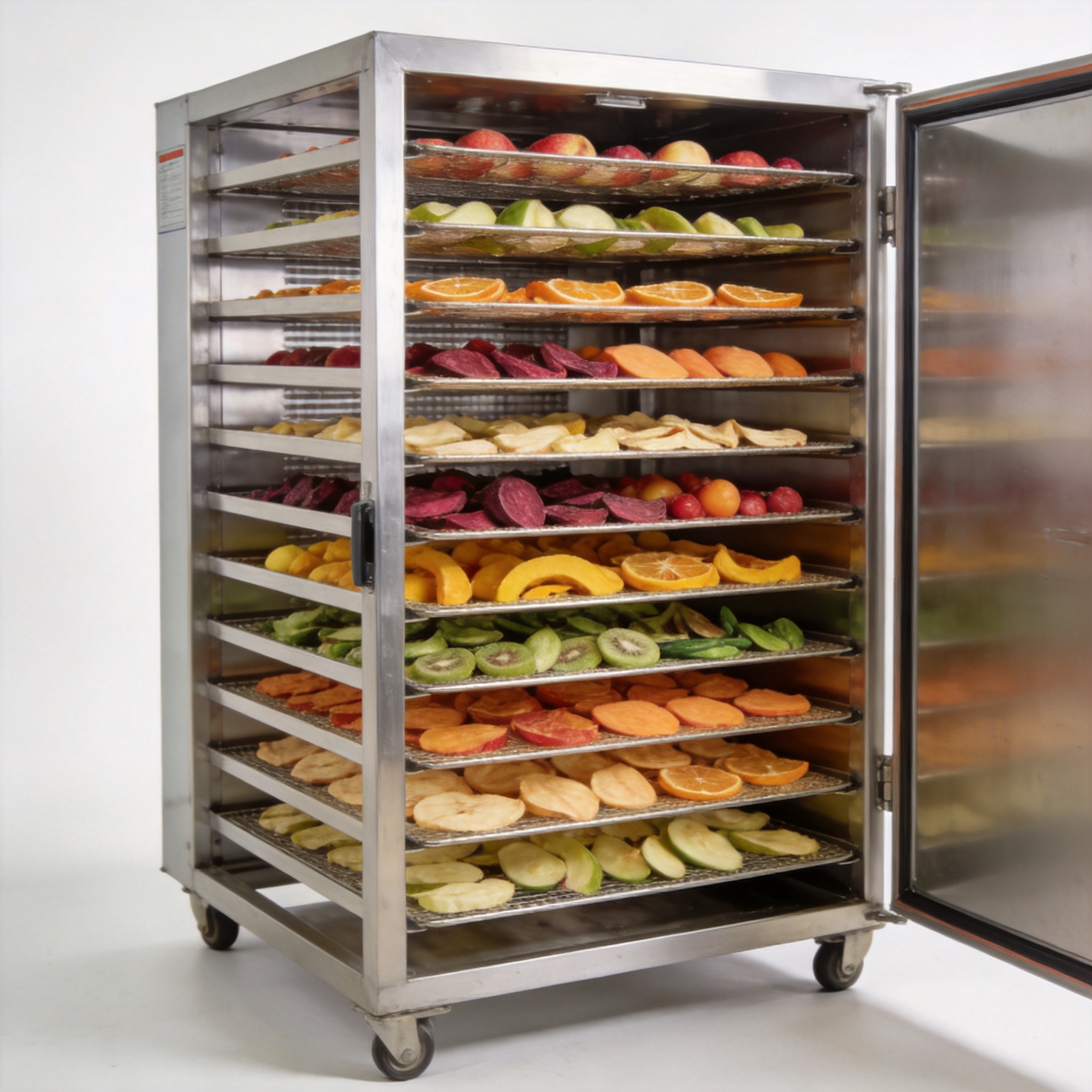
When evaluating equipment for vacuum drying food processing, start with the product and throughput target. Then review usable chamber volume, tray arrangement or conveying format, heating method, vacuum stability, vapor handling, cleanability, controls, and maintenance access. A supplier should be able to discuss the process window needed for your material instead of presenting a single universal setting.
For chili or similar food-drying applications, you can review the available Automatic Industrial Microwave Drying System 220V Electric Vacuum Dryer for Chili Food Drying Equipment as a starting point for a technical discussion. The final configuration should be matched to actual material trials, capacity expectations, site utilities, and the required finished-product standard.
Start with a material trial, not a preset recipe
The strongest case for vacuum drying food processing is a material-specific one. Fruits, vegetables, herbs, chili, and other plant-based ingredients may all be candidates, but each reacts differently to heat, reduced pressure, and handling. A small trial can define the practical operating range and clarify whether standard vacuum drying, microwave-vacuum drying, or another dehydration route is most appropriate for the product.
With that evidence in hand, vacuum drying food processing becomes a controlled manufacturing step: one that supports shelf-life goals while giving the production team a clearer route to consistent quality.