EN


Vegetable Dehydration Machine: Planning a Reliable Processing Step
A dehydration machine for vegetables is not simply a hot-air box placed at the end of a line. It is the processing step that turns washed, cut produce into a stable ingredient with predictable color, texture, and storage behavior. For a processor, reliability begins before the dryer starts: raw-material consistency, cut geometry, surface-water control, airflow, endpoint checks, and packaging all need to work as one system.
As an equipment adviser, I would assess a dehydration machine for vegetables by asking how it fits the full process—not only by comparing a nameplate capacity. Buyers often assume that a larger machine automatically brings better output. That is not quite accurate: useful output depends on the vegetable, feed moisture, slice thickness, bed loading, and the conditions needed at discharge.
Start with the vegetable and the required finished product
Planning should begin with a written product brief. List the vegetable varieties, incoming condition, batch size, desired cut, target appearance, intended use, and expected storage route. Leafy material, diced roots, onion slices, and mixed vegetable pieces do not release water at the same rate. A line designed around one product may need different loading and drying profiles for another.
Define measurable acceptance criteria before choosing equipment. These commonly include finished moisture, water activity, color, breakage level, odor, and rehydration behavior. Moisture and water activity are related but are not interchangeable. FDA guidance explains that water activity affects food stability, and it should be controlled and maintained during storage. Your own product specification and applicable local food rules should determine the validated release target.
Build a stable process before sizing the dehydration machine for vegetables
A dependable line normally follows a sequence: receiving, sorting, washing, cutting, optional blanching or pre-treatment, draining, drying, cooling, inspection, and packaging. Every upstream variation reaches the dryer. If pieces are uneven, if free water remains after washing, or if loads are piled too deeply, one part of the batch may finish early while another part remains wet.
Controlled heat releases moisture and moving air removes that moisture from the product surface. Extension guidance for food drying often cites around 60°C / 140°F as a useful general reference for fruits and vegetables, but it is not a universal commercial setpoint. For an industrial dehydration machine for vegetables, validate temperature, air velocity, residence time, and loading for each product and cut size. The goal is repeatable drying, not the highest possible heat.
- Prepare consistently: standardize cutting and remove damaged or excessively wet material.
- Control the feed: specify kilograms per tray, belt area, or batch rather than filling by visual judgment.
- Separate the drying zones: use a practical profile for early surface-moisture removal and later equalization where the equipment design supports it.
- Verify the endpoint: sample from multiple positions, not only from the easiest-to-reach area.
Choose equipment around airflow, loading, and cleanability
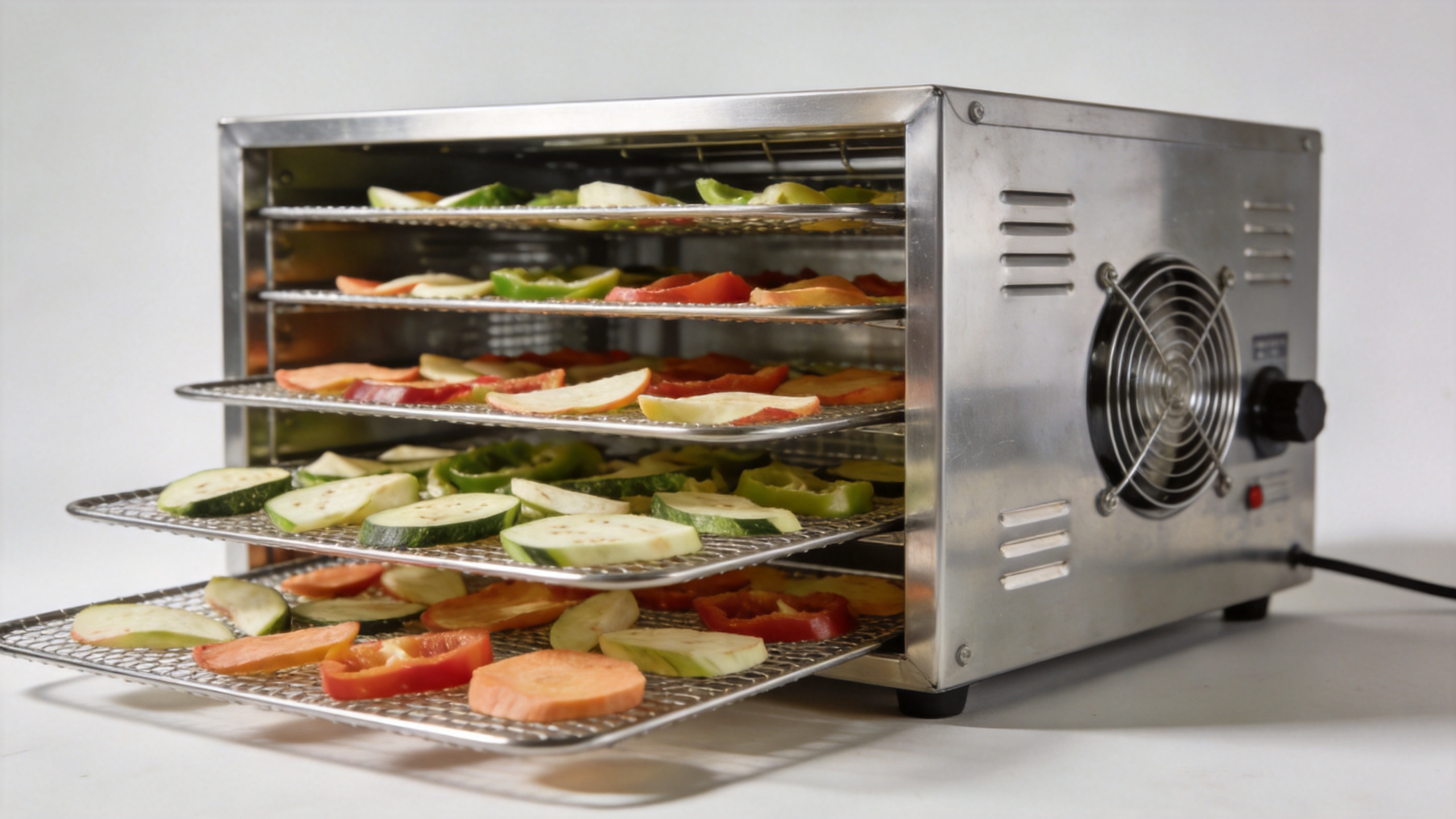
When comparing a dehydration machine for vegetables, look beyond total chamber volume. Ask how air passes through the product, how operators load and unload material, how the system handles moisture-laden exhaust, and how easily food-contact areas can be cleaned. These details influence both labor planning and batch consistency.
| Planning question | Why it matters | What to confirm |
|---|---|---|
| What is the product format? | Slice thickness and piece shape affect resistance to airflow and drying time. | Trial material, cutting specification, and loading method. |
| How is air distributed? | Uneven airflow can create wet zones and overdried edges. | Airflow path, tray or belt layout, and adjustment options. |
| How is capacity stated? | Fresh-feed capacity and finished-product output are different measures. | Product-specific basis, residence time, and expected yield assumptions. |
| How is hygiene managed? | Residual product and moisture complicate sanitation and changeover. | Access doors, drainage, surfaces, and cleaning workflow. |
| How will quality be checked? | Stable output needs objective release criteria. | Sampling plan, moisture or aw method, and record format. |
Plan the trial as a production decision, not a showroom demonstration
A useful test run uses representative raw vegetables and the intended cut size. It should capture feed weight, loading density, temperature settings, drying duration, discharge weight, sampling results, and observations about color or breakage. You might ask: why can two machines with similar specifications deliver different results? The answer is often not a single component; it is the interaction of airflow, product depth, preparation, and operating discipline.
Use the trial to establish a small operating window rather than one ideal number. For example, record what changes when the incoming vegetables are wetter, when the slice is slightly thicker, or when a tray position is changed. This gives operators a practical basis for adjustment and makes later scale-up more controlled.
Operating questions for a dehydration machine for vegetables
Before approving a dehydration machine for vegetables, convert the product brief into questions that production, quality, and maintenance teams can answer together. A dehydration machine for vegetables should be assessed against the exact vegetable cuts, feed condition, and release specification the plant intends to use.
- Can the dehydration machine for vegetables keep airflow consistent across the loaded area?
- Can the dehydration machine for vegetables accommodate the planned loading depth without creating wet pockets?
- Does the dehydration machine for vegetables provide controls that operators can document and repeat between batches?
- Can the dehydration machine for vegetables be cleaned and inspected within the planned changeover window?
- Does the dehydration machine for vegetables fit the available utilities, exhaust arrangement, and material flow?
- Can a dehydration machine for vegetables be trialed with representative raw material before the final configuration is approved?
A suitable dehydration machine for vegetables is therefore not defined by one capacity figure. A dehydration machine for vegetables becomes reliable when the stated capacity is verified under the same preparation, loading, and endpoint-control conditions used in normal production. During supplier discussions, ask for the assumptions behind every throughput estimate for the dehydration machine for vegetables.
For daily management, give the dehydration machine for vegetables a clear operating record: incoming condition, cut size, load weight, process settings, discharge checks, and packaging status. This record makes a dehydration machine for vegetables easier to troubleshoot when quality varies. It also helps a processor distinguish a raw-material change from an equipment-setting change.
When planning expansion, review whether the dehydration machine for vegetables can support the actual product mix rather than only the easiest product. If a dehydration machine for vegetables will handle several vegetables, establish validated recipes and sampling plans for each one. That discipline keeps the dehydration machine for vegetables aligned with the finished-product requirement as volumes grow.
Connect drying to cooling and packaging
The process is not finished when product leaves the dryer. Warm dried vegetables can pick up moisture if they are packaged before cooling and equilibration are managed. Plan a clean, protected cooling stage, defined hold times where needed, and packaging compatible with the product’s verified storage requirement. Keep moisture-control records linked to lot identification so that deviations can be investigated instead of guessed at later.
For processors evaluating an integrated food-machinery supplier, it can be useful to review a confirmed equipment option such as this industrial drying vegetable dryer and fruit drier machine. The product page should be a starting point for a technical conversation; final configuration should follow your product trials, capacity target, site utilities, and food-safety plan.
A practical procurement checklist
- Document vegetable types, annual seasonality, cut formats, and target finished-product requirements.
- Map upstream washing, draining, cutting, and any pre-treatment steps.
- Set capacity on a product-specific fresh-feed basis and verify the expected finished yield.
- Request airflow, loading, cleaning, energy, and control details relevant to your plant.
- Run trials with representative material and define moisture or water-activity release checks.
- Plan cooling, packaging, sanitation, training, spare parts, and operating records before commissioning.
A well-planned dehydration machine for vegetables supports a stable process because it is matched to the product and the controls around it. Start with the finished-product specification, validate the operating window with real material, and treat the dryer as one coordinated part of the processing line.