EN


Vegetable Dryer Machine Cost Factors for Food Processing Plants
For a food processor, the price shown on a vegetable dryer quotation is only one part of the investment. A useful budget separates the machine itself from utilities, material handling, controls, installation, and the operating cost that follows commissioning. This matters because vegetables can arrive with very high moisture content, so two plants processing the same hourly feed weight may need very different drying capacity, residence time, and energy input.
As a B2B buyer, start with the finished-product specification rather than a target purchase price. Required output moisture, product appearance, throughput, labor model, and available utilities determine which configuration is appropriate. The following framework helps procurement teams compare proposals on the same scope.
1. Throughput and moisture removal set the base vegetable dryer size
The first vegetable dryer cost driver is not simply kilograms per hour. It is how much water the vegetable dryer must remove in each production hour. Fresh leafy vegetables, roots, slices, and diced products differ in initial moisture, bulk density, cut size, and airflow resistance. A line sized for a thin, evenly cut product may be unsuitable for thicker or mixed loads.
Ask vegetable dryer suppliers to state the design basis in writing: incoming moisture range, target final condition, hourly wet feed, expected dry output, batch or continuous operation, and assumed operating hours. This makes it easier to see whether two quotations describe the same duty. Larger chambers, more trays or belt area, stronger circulation fans, and longer drying paths generally raise the vegetable dryer cost, but undersizing can create bottlenecks and inconsistent quality.
2. Vegetable dryer energy design changes both CAPEX and OPEX
Electric resistance heating, hot-air systems, gas-fired heat sources, dehumidification, and heat-pump designs have different upfront costs and utility profiles. Drying is inherently energy-intensive because heat evaporates water while airflow carries moisture away. Therefore, the lowest machine price is not automatically the lowest lifecycle cost.
Heat-pump or heat-recovery configurations can require a higher initial investment, yet may be worth evaluating where electricity pricing, annual operating hours, or product value support the case. Instead of accepting a generic savings claim, request the supplier’s assumptions for ambient conditions, inlet and outlet temperatures, batch duration, fan load, heater load, and expected energy per production run. Compare these assumptions against your local utility tariffs and production schedule.
3. Food-contact materials and hygiene requirements affect vegetable dryer configuration
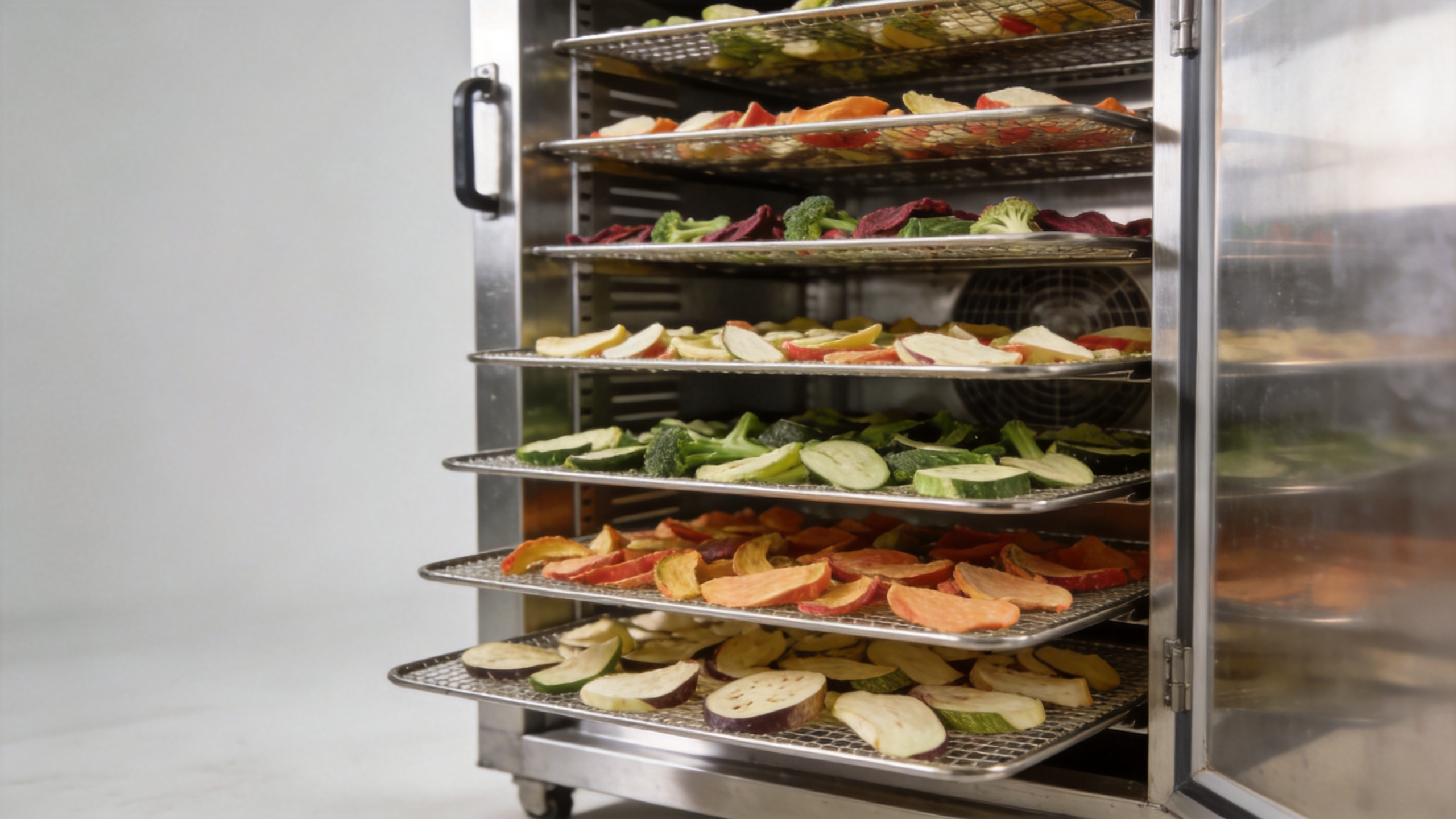
Food plants may need different grades of stainless steel, weld finishing, drainage, access doors, removable trays, cleanable ducting, and insulation thickness. These details influence fabrication cost, but they also affect cleaning time, corrosion resistance, and the ability to maintain a repeatable process.
Quality targets matter as well. Water activity and final moisture are important controls for dried-food stability, so a project may require better sensors, programmable recipes, data logging, or product sampling procedures. Buyers should avoid paying for features they will not use, but they should not omit controls that are necessary for their required finished-product standard or customer audit process.
4. Vegetable dryer automation and handling scope can create larger cost differences
A basic vegetable dryer may be manually loaded and unloaded; a larger vegetable dryer project may need coordinated handling. A higher-capacity project can include washing, cutting, blanching, dewatering, conveyors, tray loading, discharge, cooling, inspection, and packaging interfaces. Each addition changes the total project cost, floor-space need, labor requirement, and commissioning scope.
When comparing quotations, identify what is included before and after the dryer. A low-priced machine-only offer may exclude the dewatering stage needed to reduce drying time, or the cooling and handling steps needed to protect finished product quality. For plants planning broader processing capacity, a supplier that can discuss the equipment as part of a line can help clarify interfaces without assuming features that are not in the final order.
5. Vegetable dryer utilities, installation, and site conditions need separate budgets
Electrical capacity, gas supply where applicable, ventilation, drainage, compressed air, water, foundations, lifting access, and local installation labor are frequently outside the ex-works vegetable dryer price. Long duct runs, limited ceiling height, humid climates, or a difficult product flow layout can increase project cost even when the vegetable dryer itself is unchanged.
Prepare a site-information package before requesting final pricing: layout drawings, available power and voltage, utility locations, preferred installation date, product samples or test data, and local compliance requirements. This reduces late-stage changes and lets the supplier define responsibility for freight, commissioning, operator training, remote support, and spare parts.
6. Vegetable dryer customization, export delivery, and service level affect the quotation
Custom vegetable dryer tray dimensions, chamber size, controls language, voltage, branding, safety guarding, or integration with existing equipment can add engineering and lead-time cost. International projects also need a clear view of packing, shipping terms, destination handling, and technical support after arrival.
For a relevant vegetable dryer equipment starting point, buyers can review the Industrial Drying Vegetable Dryer Fruit Drier Machine Dehydrator Automatic and discuss the actual product, capacity target, and site conditions with the supplier. The product page should be treated as a starting point for scoping, not as a substitute for a duty-specific proposal.
How to compare vegetable dryer quotations fairly
A complete vegetable dryer comparison uses the same product data, capacity basis, and utility assumptions for every offer.
- Use one product and throughput design basis for every vegetable dryer supplier.
- List the vegetable dryer heating method, installed power, estimated run time, and utility assumptions separately.
- Confirm vegetable dryer food-contact materials, controls, sensors, and cleaning access.
- Mark vegetable dryer upstream and downstream handling equipment as included or excluded.
- Separate vegetable dryer equipment price, freight, installation, commissioning, training, and spare parts.
- Request a vegetable dryer acceptance basis: product sample, target condition, test method, and capacity criteria.
Conclusion: manage total cost, not only the machine price
The total cost of a vegetable dryer is shaped by moisture-removal duty, drying technology, hygiene design, automation, site utilities, and support scope. A disciplined specification makes the comparison more transparent and helps prevent unplanned expenditure after delivery. For decision-stage purchasing, a suitable option is the configuration that meets the required product outcome and operating plan with clearly defined assumptions—not simply the lowest quoted equipment price.
Before issuing a purchase order, run the same product sample through the proposed vegetable dryer process whenever possible. A practical vegetable dryer trial can confirm air distribution, drying time, handling method, and the control settings needed for the desired product condition. Record the trial assumptions in the vegetable dryer quotation so the commercial scope and technical basis remain aligned. This approach gives the procurement team a clearer vegetable dryer budget and a more reliable basis for supplier selection.