EN


Vegetable Dryer vs Freeze Dryer: Choosing a Process for Food Products
Choosing between a vegetable dryer and a freeze dryer is not simply a question of which machine removes more water. It is a product-positioning, capacity, utility, packaging, and quality-control decision. For processors handling vegetables, herbs, mushroom slices, fruit pieces, or ingredient inclusions, the right process starts with the finished product customers expect to open, cook, snack on, or rehydrate.
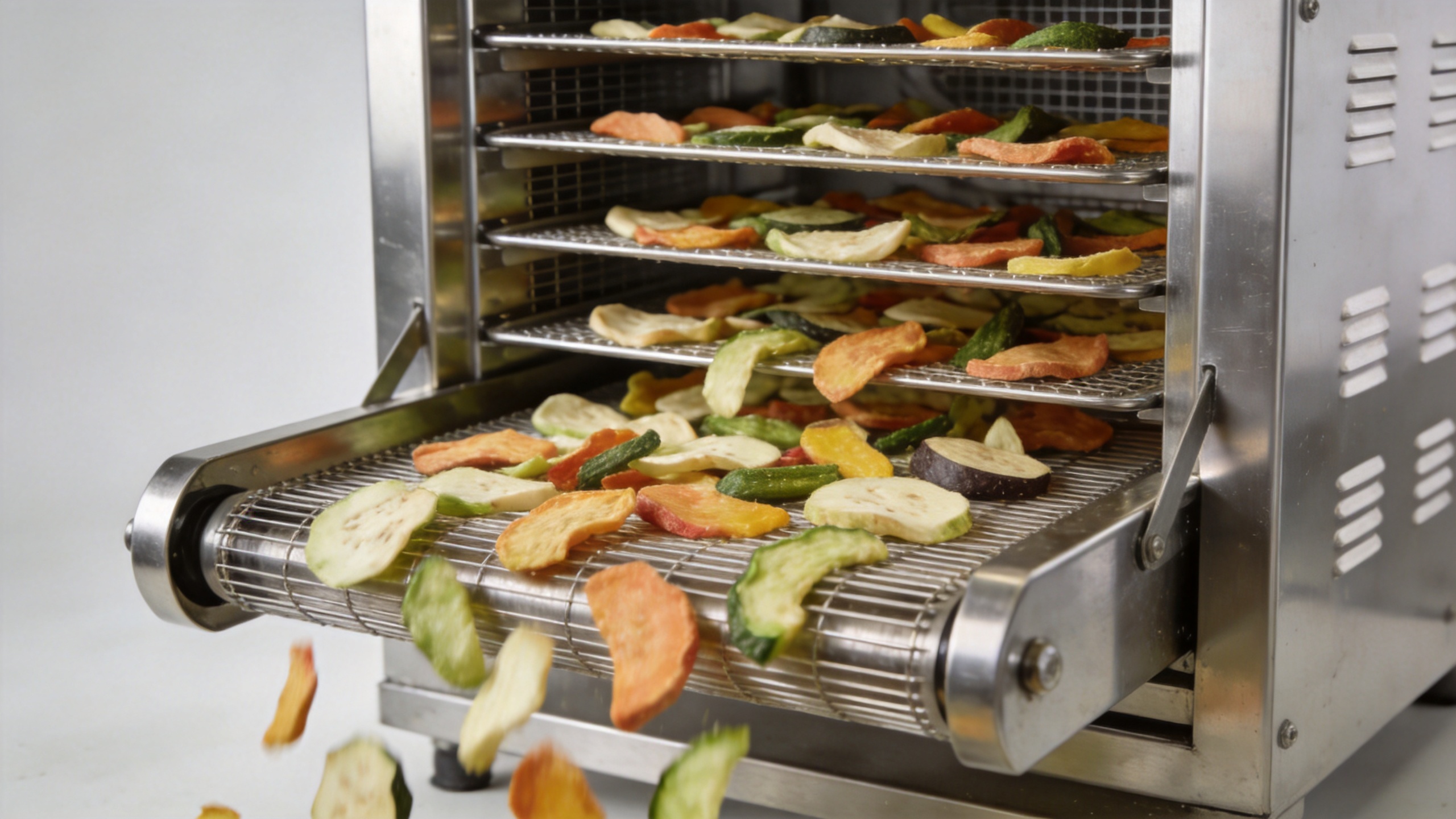
A conventional vegetable dryer uses controlled heated air to move moisture from the product. Freeze drying freezes the food first and then removes ice under vacuum by sublimation. Both can support shelf-stable food production when the final moisture, water activity, packaging, and storage conditions are validated for the specific recipe. The practical question is: which process most closely matches your target quality and operating model?
Start With the Product Goal, Not the Machine Label
A vegetable dryer is usually a strong fit when the finished food will be used as a cooking ingredient, seasoning component, soup mix, powder feedstock, or economical snack. In these applications, buyers often prioritize dependable throughput, manageable operating cost, and consistent removal of moisture over a highly porous, premium-looking structure.
Freeze drying is often considered when shape retention, rapid rehydration, color, and a light crisp texture are central to the value proposition. This does not mean every premium product needs a freeze dryer. Dense vegetables, high-volume ingredient lines, and products that will be ground after drying may gain little commercial value from the additional process complexity. Define the target appearance, texture, rehydration behavior, nutrient-positioning claims, and selling price before comparing equipment.
How the Two Processes Change the Food
| Decision factor | Vegetable dryer / hot-air drying | Freeze drying |
|---|---|---|
| Moisture removal | Evaporates water with controlled heated airflow. | Removes frozen water under vacuum through sublimation. |
| Typical product character | More compact, sometimes firmer or more shrunken. | More porous and light, often designed for fast rehydration. |
| Production fit | Common for scalable ingredient and everyday dried-food lines. | Common for higher-value products where appearance and texture carry a premium. |
| Planning emphasis | Air distribution, temperature profile, loading pattern, and residence time. | Freezing, vacuum performance, condenser capacity, cycle time, and energy planning. |
Neither route is automatically “better.” A vegetable dryer can produce an excellent product when slice thickness, pretreatment, loading, airflow, temperature, and endpoint control are matched to the material. A freeze dryer can preserve desirable structure, but it requires a more demanding cycle and a business case that supports it. Research on fruit and vegetable drying consistently treats quality retention and energy use as a trade-off rather than a one-size-fits-all result.
Compare Quality Through the Customer’s Use Case
Ask what happens after the package is opened. If dried carrot, onion, garlic, leafy vegetables, or mushroom will enter a sauce, soup, seasoning blend, or instant meal, a vegetable dryer may deliver the right balance of functionality and cost. If the product must look close to its original form, dissolve or rehydrate quickly, and justify premium retail positioning, freeze drying may be worth investigating.
Do not make decisions from color alone. Run pilot batches and compare yield, bulk density, breakage, rehydration time, sensory results, microbial controls, water activity, and packaged shelf-life behavior. Water activity is especially important: drying removes water, but the product must also stay within its validated stability range after cooling and packing. Hygroscopic products can lose their intended texture if the barrier package and sealing process are not designed around the final product.
Plan Equipment Around the Whole Line
For a vegetable dryer, upstream washing, cutting, blanching or other product-specific pretreatment, dewatering, and even loading all affect drying uniformity. Downstream cooling, grading, metal detection, and moisture-resistant packaging are equally important. A line should be specified by incoming product condition, kilograms per hour, target output, shift pattern, and cleaning requirements—not by cabinet size alone.
Freeze-drying projects require the same line-level thinking, with additional attention to freezer loading, vacuum integrity, condenser capacity, cycle scheduling, and the way long cycles affect daily output. The comparison should include utilities, labor, floor space, maintenance access, spare parts, validation work, and packaging. A smaller freeze dryer with a long cycle may not meet a launch volume, while an oversized hot-air vegetable dryer may create avoidable energy and loading losses.
When reviewing conventional equipment, it is useful to examine an actual product configuration rather than relying on generic claims. For example, Hongle Machinery lists an Industrial Drying Vegetable Dryer Fruit Drier Machine Dehydrator Automatic for processors evaluating a conventional drying route. Confirm the final configuration, material compatibility, capacity, utility demand, and controls directly with the supplier for your product.
A Practical Selection Checklist
- Classify the end product: ingredient, powder, snack, garnish, instant-meal inclusion, or premium retail item.
- Set measurable quality targets: moisture, water activity, color range, breakage tolerance, rehydration, and shelf-life.
- Model throughput: calculate input mass, yield, batch or continuous cycle time, and daily output.
- Compare total operating conditions: energy, utilities, labor, cleaning, maintenance, and packaging—not purchase price alone.
- Validate with pilot material: use the real vegetable variety, cut size, pretreatment, and package before committing.
Vegetable Dryer Commissioning Questions for a New Line
Before ordering a vegetable dryer, turn the product brief into a test plan. A vegetable dryer supplier needs representative raw material, not only a daily capacity target. The vegetable dryer trial should document cut geometry, loading depth, airflow direction, temperature stages, drying time, final moisture, water activity, yield, and breakage. These records make it easier to compare one vegetable dryer configuration with another.
During commissioning, use the same acceptance criteria for every vegetable dryer batch. Check whether the vegetable dryer produces uniform material from the center and edges of trays or the full belt width. Check cooling time before packing, because a stable vegetable dryer result can still pick up moisture during handling. For products with seasonal variation, repeat the vegetable dryer trial with different lots and realistic peak-season loading.
For procurement teams, the vegetable dryer quote should separate equipment output from line output. Ask how the vegetable dryer is fed, unloaded, cleaned, inspected, and integrated with packaging. Confirm available electrical supply, heat source, ventilation, and floor drainage. A well-specified vegetable dryer project also defines spare-parts coverage, operator training, and the measurements used to release each production batch.
These questions do not rule out freeze drying. They ensure that the conventional vegetable dryer option is assessed with the same discipline as a vacuum system. When actual trials show that the vegetable dryer meets texture, stability, and cost targets, it may be the most commercially suitable route. When it does not, the trial data clarifies exactly why a freeze-drying investment may be justified.
Make the Process Choice Fit the Commercial Plan
A vegetable dryer is often the more practical first choice for broad food-processing applications that need stable, repeatable dried ingredients at useful production volumes. Freeze drying becomes compelling when the market rewards superior visual structure, light texture, and rehydration performance enough to cover longer cycles and more complex equipment planning.
A sound decision is evidence-based. Test the actual product, verify safety and stability targets, calculate output from the complete line, and choose the drying process that supports the food you intend to sell—not just the technology that sounds most advanced.