EN


Vegetable Slicer and Dicer: What Food Factories Should Compare
Choosing a vegetable slicer and dicer is not simply a capacity decision. For a food factory, the right machine must deliver the intended cut across real incoming material, fit the sanitation routine, and remain practical when product plans change. A machine that looks efficient during a short demonstration can create yield loss, rework, or lengthy changeovers when it meets mixed potato sizes, wet onions, firm carrots, or seasonal variation.
As a technical adviser evaluating processing equipment, I start with the production conditions rather than a catalogue figure: first define the cut requirement, then compare the machine configuration, and finally test whether the result fits the line. This approach makes a vegetable slicer and dicer comparison more useful for factories making prepared vegetables, frozen ingredients, soups, sauces, or food-service packs.
1. Start with the finished cut, not the machine headline
The first comparison point for a vegetable slicer and dicer is the finished piece: slice thickness, dice size, strip dimensions, edge quality, and the amount of fines or broken material that downstream equipment can tolerate. “Dicing” is not one specification. A salsa line, a dehydrated-vegetable line, and a French-fry preparation line may all use diced or cut vegetables, but they can require different geometry and different acceptance limits.
Ask each supplier to show samples made from your own raw materials and define the sampling method in advance. Check cut dimensions at the beginning and end of a run, not only the strongest sample. A vegetable slicer and dicer should also be evaluated with the expected range of raw-material sizes, temperatures, moisture levels, and firmness. If your monthly volume is stable, a dedicated configuration can make sense; if varieties and sizes change frequently, flexibility may matter more than maximum output.
2. Compare the cutting system and changeover work
Knife and disc design influence the final shape, so a vegetable slicer and dicer should be compared as a cutting system rather than as a motor with a feed hopper. Clarify which tools produce slices, shreds, strips, cubes, or specialty cuts, and what must be changed between formats. Ask whether the change requires a trained technician, whether settings are repeatable, and how the factory can verify the first acceptable pieces after restart.
Many first-time buyers spend most of their time comparing purchase price. On the next purchase, they often find that knife replacement, setup time, and service response have a greater effect on total ownership cost. For a vegetable slicer and dicer, document the consumable parts, recommended inspection points, sharpening or replacement approach, and the availability of spare tooling before making a final comparison.
3. Match the machine to the actual product range
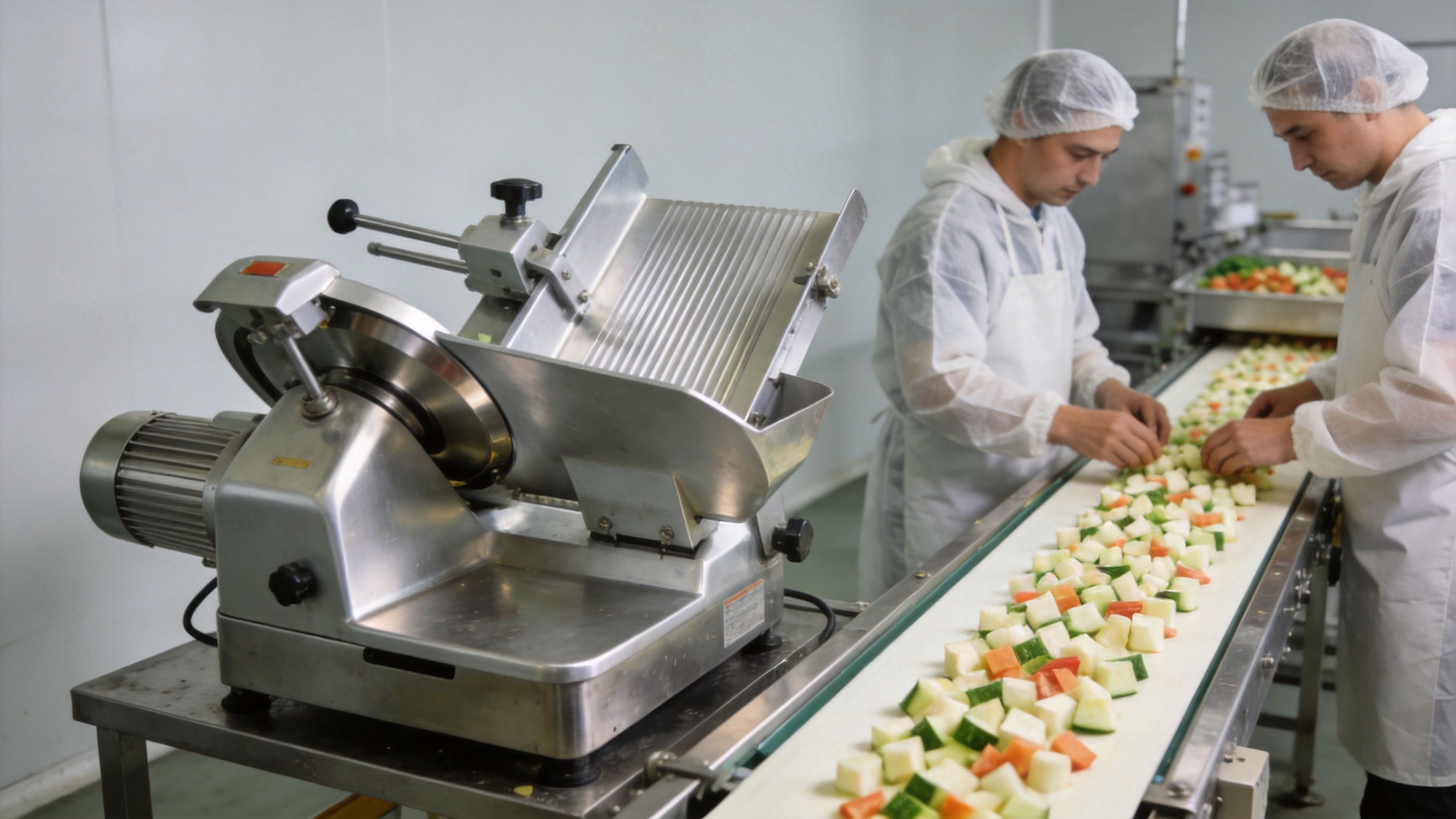
A vegetable slicer and dicer should be assessed against the factory’s full product list, not only the easiest vegetable. Build a trial matrix that includes your common materials and the most difficult ones: soft or wet products, fibrous products, irregular shapes, and raw materials near the lower or upper size limit. Record the feed preparation required, cut consistency, waste, and whether pieces bridge, jam, or need manual orientation.
This matters because industrial cutting equipment may be used across fruits and vegetables, but one tooling arrangement will not automatically suit every application. The practical question is not “Can the machine cut it?” but “Can this vegetable slicer and dicer cut it repeatedly at the quality level the next process requires?” Align the answer with washing, blanching, drying, frying, freezing, packing, or other downstream steps.
4. Treat cleanability as a production criterion
For food factories, cleanability is as important as cut quality. When comparing a vegetable slicer and dicer, inspect product-contact surfaces, seams, guards, drainage paths, removable parts, and access to the cutting zone. Hygienic-design guidance for food machinery emphasizes that cleanable equipment supports control of microbiological, chemical, and physical hazards. That does not prove that any particular machine is certified; it means the buyer should convert sanitation needs into inspection questions.
Ask for a realistic cleaning sequence: who removes which parts, which tools are required, where product residue can collect, and how reassembly errors are prevented. Time the procedure during a trial if possible. A vegetable slicer and dicer with a slightly higher initial price may be the better choice when it reduces cleaning time or makes routine verification easier. Conversely, do not assume a smooth-looking exterior proves that the internal cutting area is easy to inspect.
5. Compare line integration and operating stability
A vegetable slicer and dicer operates inside a system. Compare infeed height, discharge direction, available floor space, electrical requirements, guarding, operator access, and the ability to coordinate with washers, conveyors, sorting stations, or packaging equipment. Also ask how the machine handles normal interruptions: an empty feed, a product change, a brief stop, or a cleaning break.
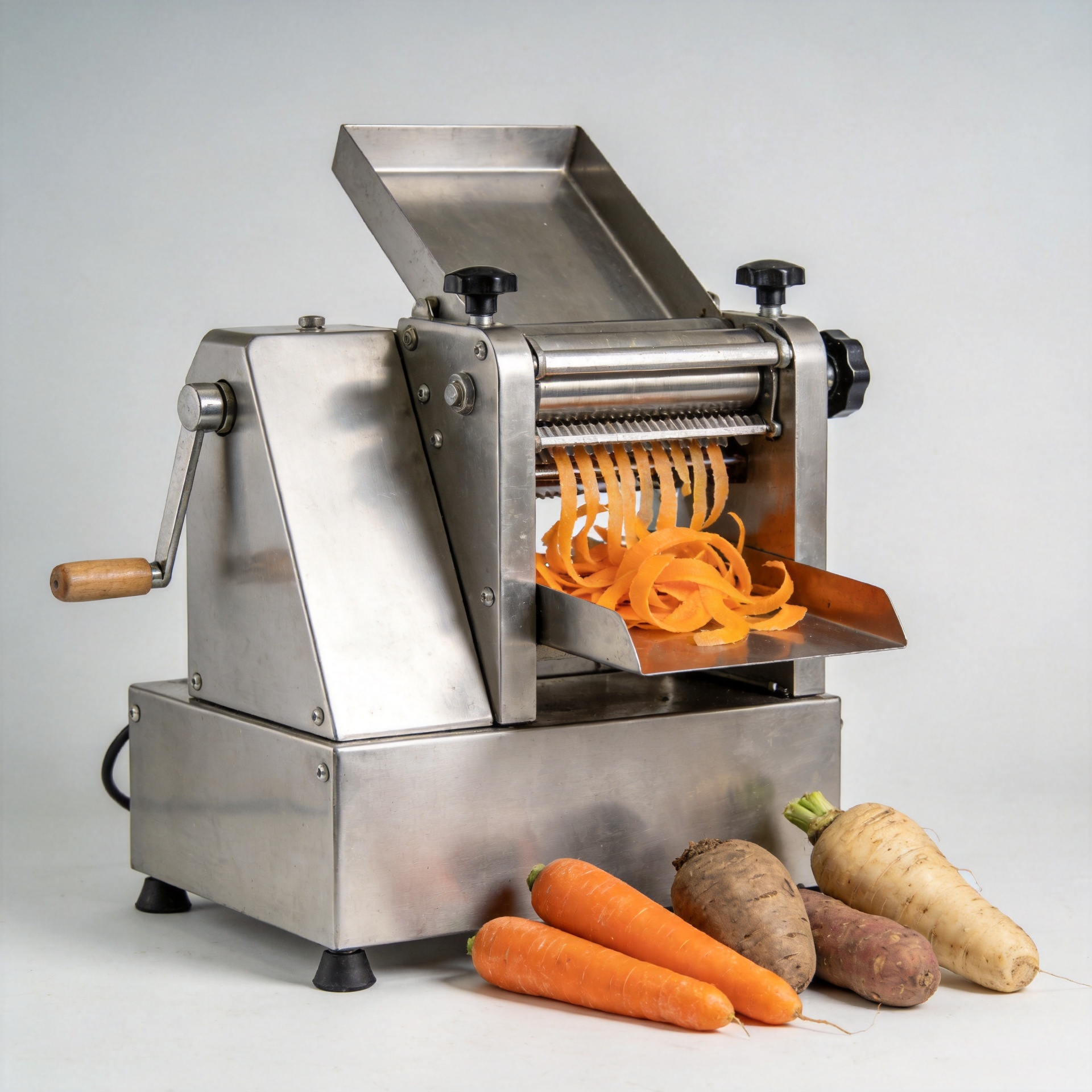
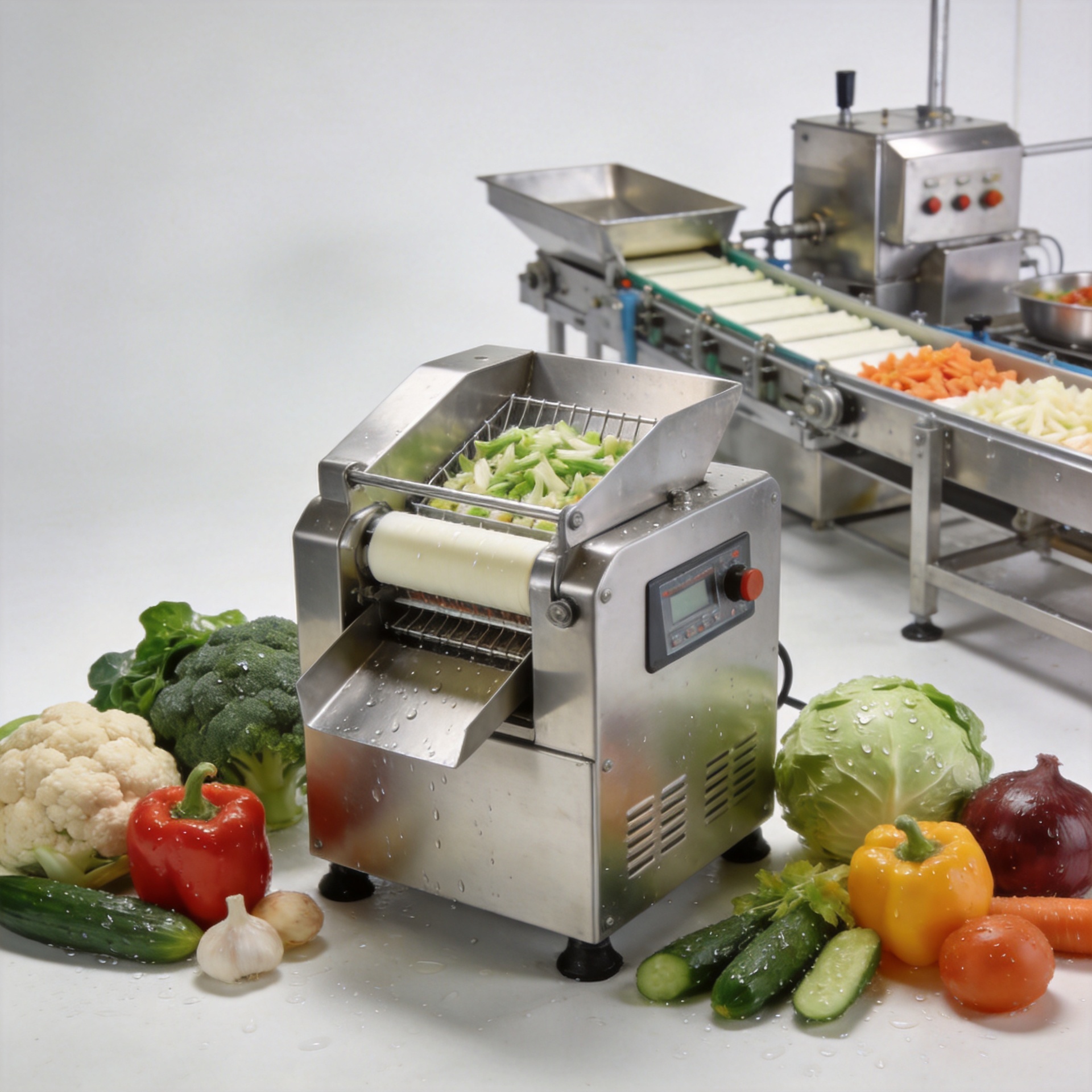
For an initial equipment review, the Commercial Industrial Electric Vegetable Cutter Dicing Machine for Potato Fruit & Green Onion Motor As Core Component can be discussed with the supplier using the same trial questions. The link is a starting point for a product conversation, not evidence of unverified throughput, certification, or suitability for every vegetable.
6. Use a factory comparison scorecard
A simple scorecard prevents a vegetable slicer and dicer decision from being driven by a single specification. Score each candidate after a live trial, using the same materials and acceptance criteria.
| Comparison area | What to verify | Why it matters |
|---|---|---|
| Cut result | Dimensions, uniformity, fines, damaged pieces | Protects downstream yield and visual quality |
| Tooling | Available cuts, change time, spare-part plan | Determines format flexibility and maintenance load |
| Raw-material fit | Firmness, shape, moisture, size range | Tests real operating conditions |
| Hygiene | Access, removable parts, residue points, cleaning sequence | Supports sanitation control and labor planning |
| Line fit | Infeed, discharge, guards, utility and layout needs | Reduces integration surprises |
The appropriate vegetable slicer and dicer is therefore the one that meets a documented product-and-process requirement, not necessarily the one with the broadest claim. Use a structured trial, retain the sample records, and compare suppliers on the work your operators will actually perform. That is how a food factory turns a vegetable slicer and dicer purchase into a more dependable processing decision.