EN


What Is a Continuous Belt Coffee Roaster and When Is It Used?
A continuous belt coffee roaster is commercial equipment designed to move product through a roasting zone in an ongoing flow rather than processing one closed batch at a time. For a buyer planning regular output, the central question is not whether a belt system looks more automated. It is whether the incoming material, required production rhythm, quality checks, and downstream handling can support continuous work.
That distinction matters because the broad coffee roaster market includes home machines, small batch equipment, and commercial systems. A continuous belt model sits in a different conversation: material moves forward, operators monitor a process window, and the line is planned around repeatable throughput. It can be relevant for coffee beans, but confirmed product information should be checked before assuming that a particular machine is intended for a specific bean, recipe, or capacity.
How a Continuous Belt Coffee Roaster Works
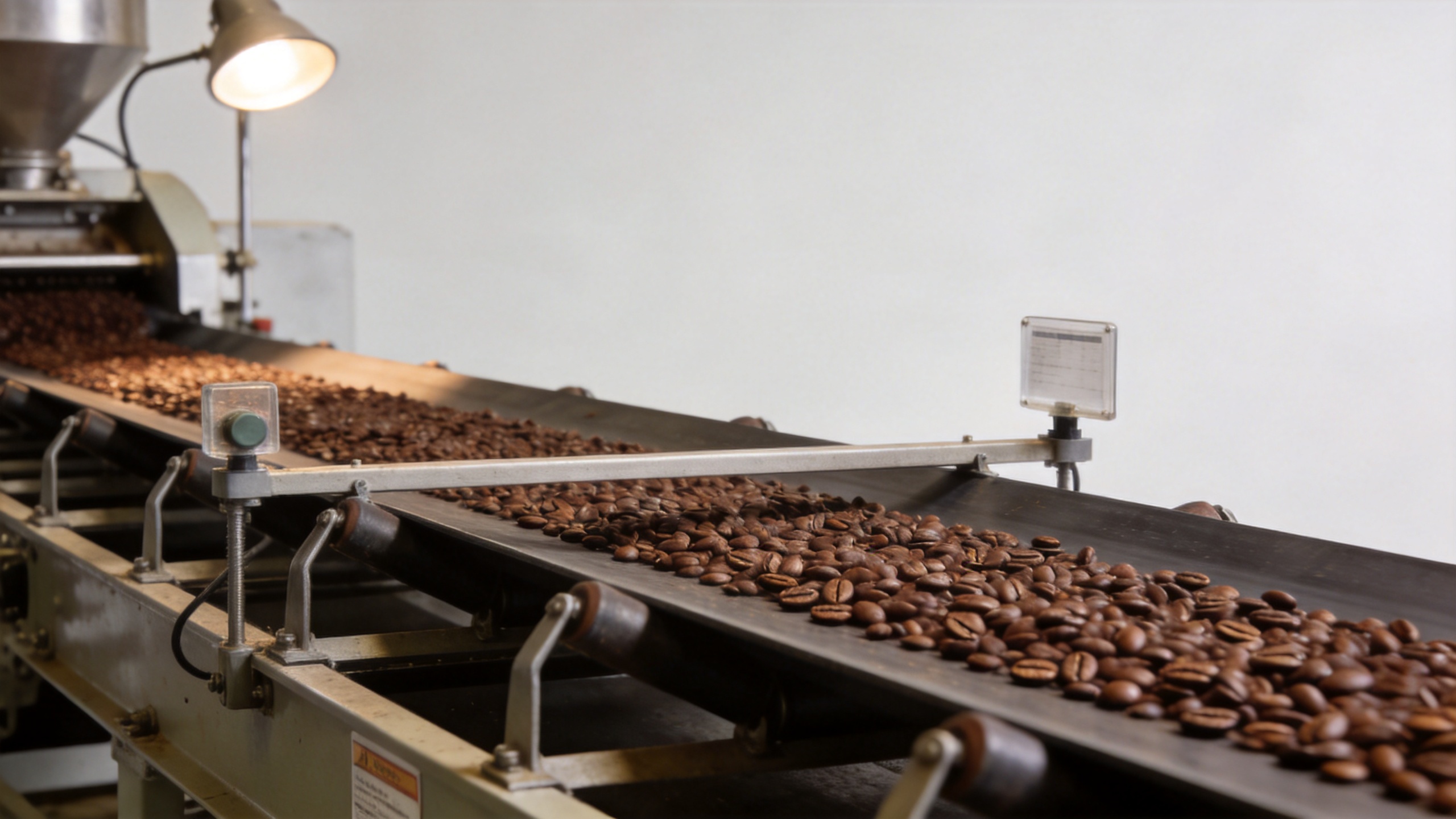
In a typical continuous arrangement, prepared material is fed onto a moving belt or conveyor surface, passes through a heated roasting section, and exits for the next stage of the process. The belt establishes movement through the machine; heat settings, feed consistency, layer depth, residence time, and cooling arrangements are the wider operating variables that affect the result. This is unlike a batch coffee roaster, where one charge is loaded, roasted, discharged, and then replaced by the next charge.
The practical benefit of this process concept is flow. Instead of treating each roast as an isolated event, an operator creates a controlled sequence from feeding to discharge. That can simplify planning when the production schedule calls for sustained runs. It also means inconsistency at the front of the line can continue through the system. Uneven feeding, changing raw-material condition, or poor handoff to cooling can undermine the consistency a continuous layout is meant to support.
Why It Is Not Simply a Larger Batch Coffee Roaster
It is tempting to compare any commercial coffee roaster only by physical size. That misses the operating model. A batch machine gives the team a natural pause between charges to inspect beans, make adjustments, and decide whether the next batch needs a different profile. A belt-based coffee roaster is built around continuity, so the team needs clear rules for setup, sampling, and response when raw material or roast appearance changes.
Commercial roasting technology is available in both batch and continuous configurations. Neither format is automatically better. The suitable choice depends on production volume, product range, how often the team changes recipes, available labor, and the level of process control the site can maintain. For a business that runs many small specialty lots, a batch coffee roaster may remain easier to manage. For a business with repeatable input and a steady output plan, continuous processing may be worth evaluating.
Suitable Applications for a Continuous Belt Coffee Roaster
A continuous belt coffee roaster is generally considered when a facility needs to process material in a steady rhythm rather than in many stop-start cycles. Common fit signals include planned production runs, a defined raw-material preparation routine, space for feeding and discharge, and a downstream process that can receive product without repeated interruption.
- Commercial food-machine operations: teams that already organize work around material flow and line handoffs may find the operating logic familiar.
- Repeatable roasting programs: a limited number of stable product specifications can be easier to manage than constantly changing small lots.
- Integrated processing layouts: the coffee roaster can be evaluated together with feeding, cooling, inspection, packing, or other downstream steps.
- Multi-material planning: some buyers compare belt roasting equipment across coffee beans, seeds, nuts, or related food materials, but compatibility must be confirmed for the actual product and process.
An electric coffee roaster may be attractive where the site prefers an electrically powered heating approach, but “electric” alone does not answer the application question. Buyers should ask how the heating method, controls, ventilation requirements, cooling setup, and local utilities match the planned operating conditions. The same discipline applies to any electric coffee roaster under consideration.
Questions to Answer Before You Request a Quotation
The most useful procurement discussion starts with operating facts, not a generic request for a coffee roaster. Prepare a short material and production brief before speaking with a supplier.
- What exactly will be roasted? State the material, its starting condition, expected moisture behavior if known, contamination concerns, and required finished appearance. Do not assume a machine listed for several food materials will produce the same result for each one.
- What output rhythm is needed? Describe kilograms or lots per hour, hours per shift, expected peak periods, and how frequently the product type changes. This helps determine whether a continuous coffee roaster suits the work better than batch handling.
- How will the material be fed and received? Feeding and discharge are not minor details. A stable conveyor process needs a practical way to load material evenly, inspect it, cool it as required, and move it onward without a bottleneck.
- What quality checks will operators use? Define who samples, what they observe, when they intervene, and how they record adjustments. An electric coffee roaster with adjustable controls still needs an operating procedure.
- What site conditions are available? Confirm electrical supply, ventilation, floor space, cleaning access, maintenance access, and local food-safety obligations with the supplier and local specialists.
A Practical Comparison: Continuous Flow vs. Batch Work
| Decision area | Continuous belt approach | Batch approach |
|---|---|---|
| Production rhythm | Designed for ongoing material flow | Built around individual charges |
| Changeovers | Best assessed when product flow is relatively stable | Often easier to pause and reset between lots |
| Operator focus | Feeding consistency, process monitoring, and line coordination | Charge-by-charge roast observation and adjustment |
| Procurement emphasis | System integration and sustained throughput planning | Lot size, flexibility, and profile management |
This table is a planning aid, not a performance claim. Actual coffee roaster suitability depends on the confirmed machine configuration and the buyer’s materials. Temperature settings, airflow, and roasting-cycle control are commonly considered in commercial equipment selection, but buyers should obtain the relevant specifications and operating guidance for the exact configuration they intend to purchase.
Using a Confirmed Product Page Responsibly
For buyers researching a belt-style coffee roaster, one available reference is the commercial belt continuous electric roasting machine. The product title indicates a commercial belt continuous electric machine for several listed food materials. It does not, by itself, confirm a specific output, roast profile, certificate, or site requirement. Ask for current technical documents and application confirmation before using it in a production plan.
Frequently Asked Questions
Is a continuous belt coffee roaster suitable for every coffee business?
No. A continuous belt coffee roaster is most relevant where steady processing and line coordination fit the production plan. Small, frequently changing specialty lots may favor a batch workflow instead.
Can an electric coffee roaster be used for commercial production?
An electric coffee roaster can be evaluated for commercial use when its confirmed configuration, site utilities, process controls, and production target match the application. Verify those details for the exact model.
What should a buyer test first?
Start with the material, required throughput, feeding method, cooling and discharge plan, utility conditions, and acceptance criteria. A well-defined trial brief makes it easier to evaluate a coffee roaster without relying on unverified assumptions.
Final Takeaway
A continuous belt coffee roaster is a process choice as much as an equipment choice. It can support sustained commercial roasting when the business has stable inputs, a clear production rhythm, and disciplined line management. Before purchasing, turn the intended application into a concise technical brief, verify the actual machine configuration, and assess the full flow around the coffee roaster rather than the roasting section alone.