EN
EN


What Is a Food Dehydrator Machine and What Foods Can It Process?
When I first looked into equipping a small food processing operation, the term food dehydrator machine — sometimes spelled as "de hydrator" in supplier catalogs — showed up everywhere, yet I had almost no framework for comparing models, technologies, or what each type was actually built to handle. If you are in a similar position as a first-time buyer, this guide is here to give you that foundation before you talk to any supplier.
How Does a Food Dehydrator Machine Work?
A de hydrator machine removes moisture from food by circulating warm air at controlled temperatures. The process brings the water content of fresh produce down from roughly 90–95% (the typical moisture level of fruits like strawberries or tomatoes) to below 15%, which is low enough to inhibit microbial growth and extend shelf life without refrigeration.
Most industrial food dryer machines operate across an adjustable temperature range of roughly 32°C to 74°C (90°F to 165°F), though the exact range depends on the machine type and the food being processed. The precise combination of temperature, airflow velocity, and exposure time determines both the quality of the finished product and the energy consumed per kilogram of dried output.
Main Types of Food Dehydrator Machines
Before evaluating capacity or price, understanding the three most common machine types makes a difference: each involves real trade-offs in energy use, product quality, and operational complexity.
1. Heat Pump Food Dryer Machines
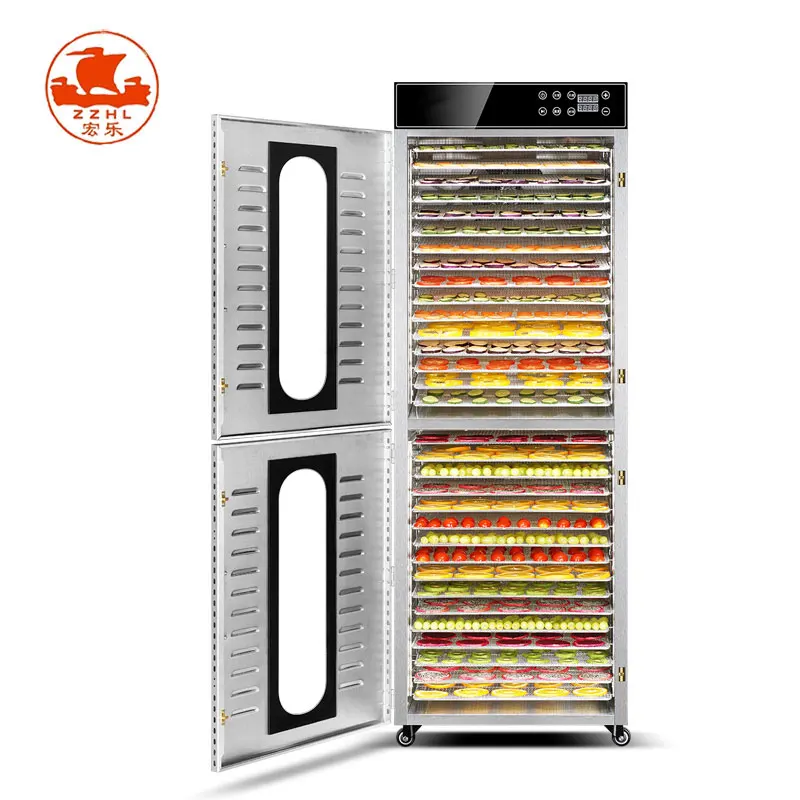
Heat pump dryers recover and recirculate thermal energy instead of venting it — this is what gives them lower running costs compared to direct-heat alternatives. Standard energy consumption runs approximately 240–300 kWh per ton of water evaporated, and operating temperatures typically sit in the 45–50°C range. This makes heat pump de hydrator machines well suited to heat-sensitive products like certain fruits, flowers, and herbs where high temperatures would degrade color, flavor, or active compounds.
The trade-off is a longer drying cycle compared to high-temperature alternatives, and the initial equipment cost tends to be higher. For operations prioritizing product quality and running costs over raw throughput, heat pump systems are often worth the investment.
2. Belt Conveyor Food Dryer Machines
Belt or mesh-belt dryers move product continuously on a conveyor through a tunnel with multiple temperature zones. The initial zone may use temperatures from 90°C to 110°C to rapidly remove surface moisture, with subsequent zones at progressively lower temperatures to finish the drying process gently. This staged approach allows for high throughput and consistent results at industrial scale.
Full automation here means higher electrical control complexity. A fully automated food dryer machine is efficient — but if your facility does not have a maintenance engineer on staff, a simpler semi-automatic model with fewer electronic components is often a more practical choice.
3. Microwave-Assisted Food Dryers
Microwave drying works by generating heat from within the food itself rather than from an external heat source. This dramatically reduces drying time but requires precise power control to avoid uneven heating or scorching. It is used in specific applications — particularly for finishing or sterilizing already partly dried products — rather than as a primary drying method for bulk raw materials.
What Foods Can a Food Dehydrator Machine Process?
A fruit dryer machine or vegetable de hydrator handles a wide range of raw materials, though each food type has its own temperature and time requirements.
Fruits and Fruit Products
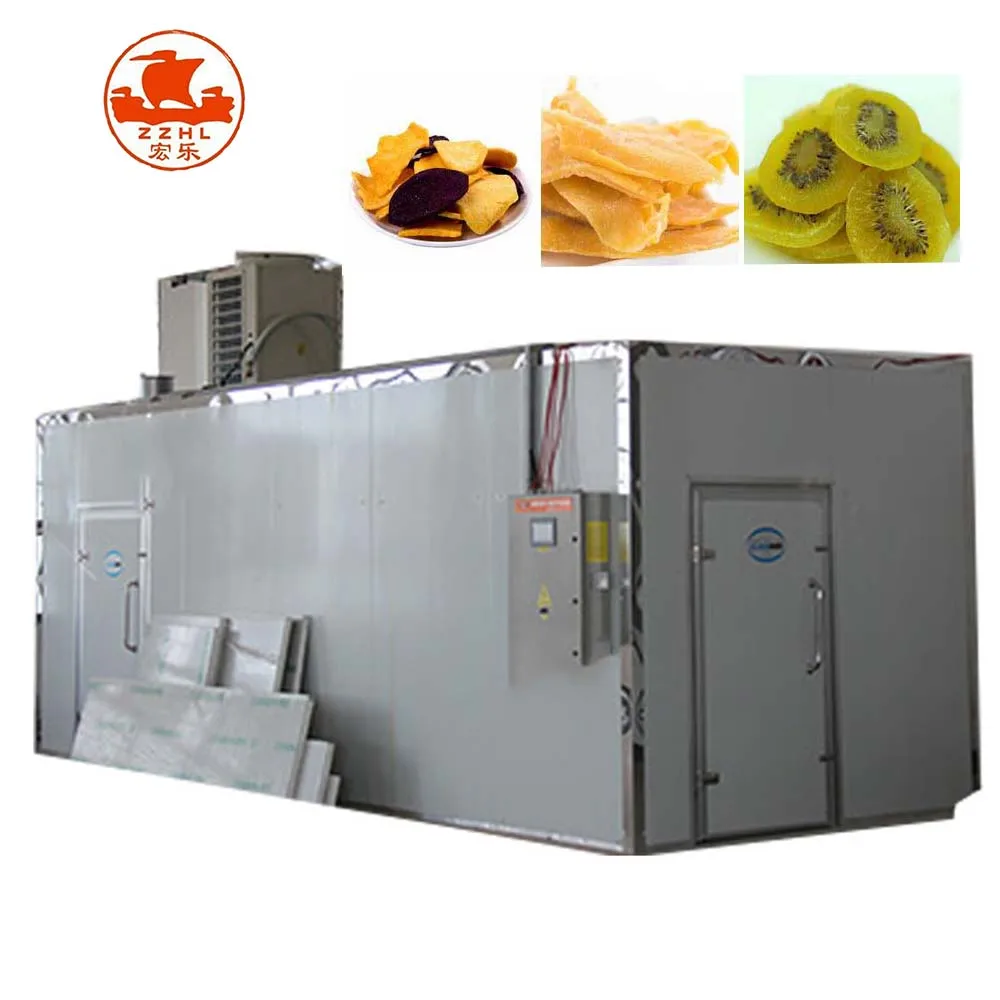
Fruits are among the most common applications. Typical drying temperatures run around 57°C (135°F), with processing times ranging from 6 hours for thin-sliced items like bananas to 36 hours for dense fruits like whole figs or grapes. Cassava, mango slices, papaya, and pineapple are common high-volume fruit products in export markets across Africa and Southeast Asia. A fruit dryer machine designed for these crops will often include stainless steel mesh trays or belt surfaces that are easy to clean between batches.
Vegetables
Leafy greens, root vegetables, chili peppers, and mushrooms are all processable with a food dryer machine set to around 52°C (125°F), with typical cycle times of 4 to 10 hours depending on slice thickness and initial moisture content. Uniform slicing before loading is more important than most first-time buyers expect — inconsistent thickness is one of the most common reasons batch quality varies even when the machine is set correctly.
Meat and Fish
Drying meat and fish requires higher temperatures — typically 63–74°C (145–165°F) — to meet food safety standards for pathogen reduction. A de hydrator machine used for beef jerky, dried fish, or meat snacks must be capable of sustaining these temperatures reliably throughout the entire drying cycle, not just at peak readings. This is a point worth verifying with any supplier before purchase.
Herbs, Spices, and Medicinal Plants
For herbs and aromatic plants, the priority shifts from throughput to preserving volatile compounds. Heat pump food dryer machines are usually the preferred technology here, since the lower operating temperatures protect the essential oils and active ingredients that give these products their commercial value.
What to Consider Before Purchasing a Food Dehydrator Machine
A practical question to start with: what food will you process first, and at what volume? The answer shapes every other decision — machine type, tray area or belt width, temperature range, and whether automation is an asset or a liability for your team.
One thing that surprises many first-time buyers: rated capacity figures are typically measured under ideal conditions — consistent input material, continuous operation, and standard product thickness. In real production, batch changeovers, material variations, and scheduled cleaning will bring actual output to roughly 70–80% of rated capacity. Plan for that gap when sizing your equipment.
If your priority is energy cost over the long term, heat pump technology is usually worth the higher upfront investment. If you need maximum throughput for a single product, a continuous belt food dryer machine will likely be the better fit. Neither answer is universal — it depends on your specific production conditions.
Hongle Machinery supplies industrial-scale food dehydrator machines designed for B2B buyers in Africa, Southeast Asia, South America, and other export markets. If you are evaluating options for cassava, fruit, vegetable, or meat drying at commercial scale, you can review the heat pump dehydrator machine and the industrial vegetable and fruit dryer machine as starting points for discussion. The right configuration depends on your raw material, target moisture level, and available floor space — all of which are worth covering in detail before a final decision.