EN
EN


What Is a Fruit and Vegetable Washing Machine? Types, Functions, and Industrial Applications
If you have spent any time sourcing equipment for a food processing line, you have likely run into a common challenge: the term "fruit and vegetable washing machine" covers a surprisingly wide range of equipment. A small ozone device sold through a retail channel and a 2,000 kg/h industrial bubble washer for a lettuce processing plant both carry the same label — but they serve entirely different purposes.
This guide is written for procurement managers, food factory operators, and equipment buyers who need to understand the real distinctions between machine types, working principles, and factory applications before they start comparing specifications or requesting quotes.
What Is a Fruit and Vegetable Washing Machine?
A fruit and vegetable washing machine is a food-processing device designed to remove surface contaminants from produce at a consistent, controllable rate. In an industrial context, these contaminants typically include soil, sand, dust, pesticide residues, surface bacteria, and light organic debris.
What separates an industrial fruit and vegetable washing machine from a household gadget is scale, construction material, and line integration capability. Industrial machines are built from food-grade SUS304 stainless steel, designed for continuous operation, and configured to sit within a larger processing workflow that may also include peeling, blanching, dewatering, and packaging stages.
How Does a Fruit and Vegetable Washing Machine Work?
There are three primary working principles found in commercial and industrial washing equipment, each suited to different produce types and cleaning requirements.
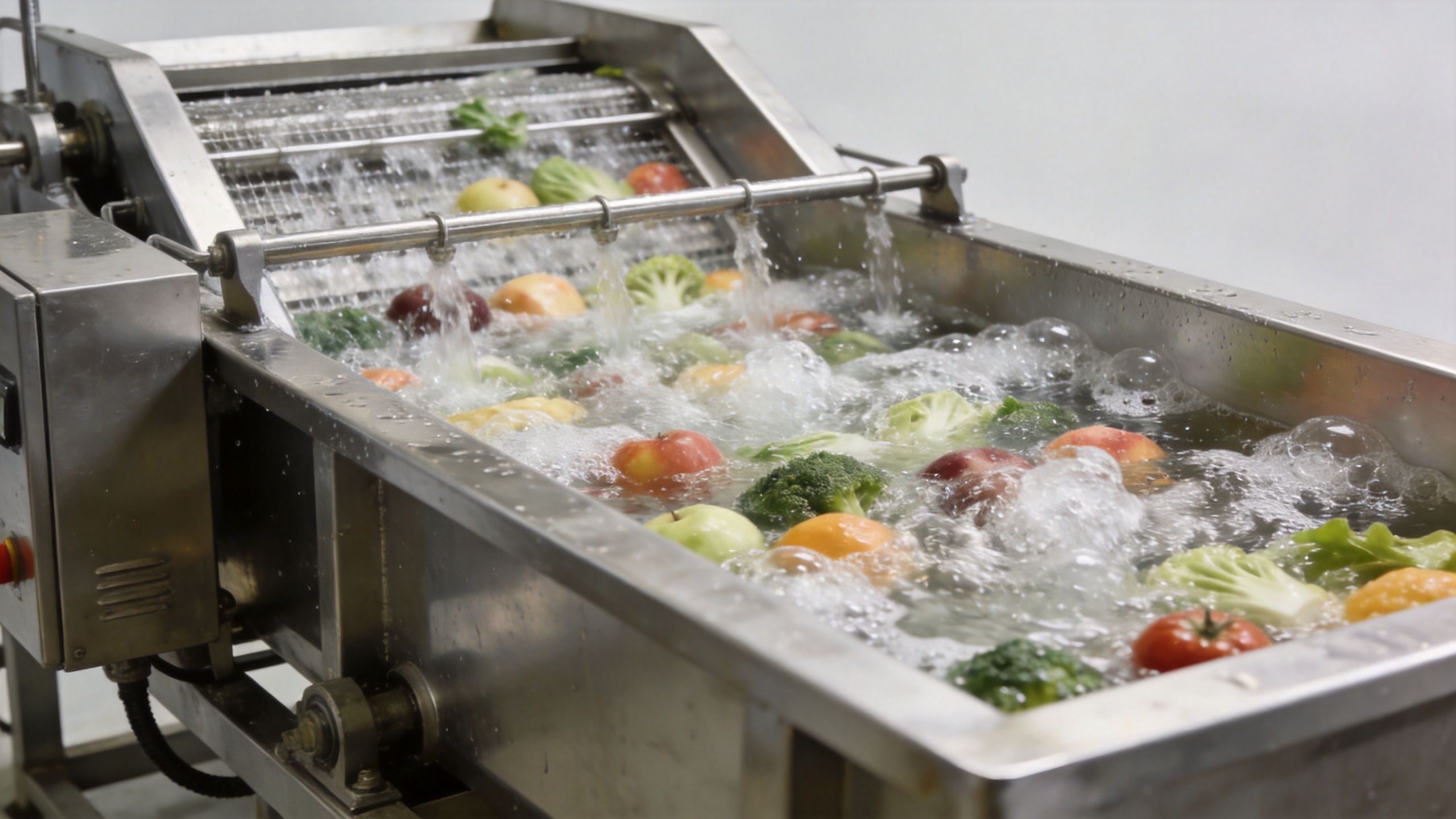
Air Bubble Washing
Air is pumped into the wash tank from below, generating a dense column of rising bubbles. As bubbles travel upward past produce surfaces, they create a gentle micro-agitation that lifts soil particles and light debris without bruising delicate items. Bubble washing is widely used for leafy greens, mushrooms, strawberries, and other fragile produce that cannot withstand friction-based cleaning.
Vortex (Turbulence) Washing
A vortex washer uses an impeller or circulation pump to create a swirling, turbulent water flow inside the tank. Produce tumbles continuously in the moving water, allowing contaminants to detach and settle to the bottom for drainage. Some systems combine vortex action with bubble agitation and overhead spray rinsing — creating what is sometimes called triple-action cleaning — for more thorough results on root vegetables and firm produce.
Brush Roller Washing
Brush roller machines move produce along a series of rotating brush cylinders. The friction between brushes and produce surfaces removes soil, wax coatings, or surface residues more aggressively than water-only methods. This approach is typically reserved for firm items such as potatoes, carrots, cucumbers, and apples that can withstand direct-contact cleaning without damage.
Types of Industrial Fruit and Vegetable Washing Machines
Understanding the three working principles above helps clarify why different machine categories exist. Industrial buyers will typically encounter the following options:
- Bubble washing machines — well-suited for fragile, leafy, or irregularly shaped produce; gentle on product integrity; often used as the first stage in multi-step processing lines
- Vortex washing machines — strong all-around performers for mixed vegetables; vortex plus spray combinations can reduce water consumption while improving cleaning depth
- Brush roller washing machines — higher friction output; suited for root vegetables and firm-skinned fruits where surface scrubbing is needed
- Multi-function or combined machines — integrate two or more working principles, often with an optional ozone (O₃) or UV disinfection module to reduce microbial load and support food safety compliance
For operations handling a diverse product mix (such as a central kitchen supplying multiple retail categories) a combined machine with configurable cleaning modes offers more operational flexibility than single-function equipment.
Matching Machine Type to Produce and Factory Scenario
Choosing the right fruit and veg washing machine starts with understanding what produce you process and at what volume. If your line handles only leafy greens at 300 to 500 kg/h, a dedicated bubble washer will likely be the most cost-effective solution. If you process both root vegetables and salad greens on the same line, a multi-stage system is worth evaluating.
Some factors worth checking before you specify a machine:
- Produce fragility: Delicate items such as herbs, berries, and spinach need bubble or vortex methods; brush rollers will damage them
- Contamination type: Surface soil removal, pesticide reduction, and microbial reduction each require different technical approaches
- Line integration: A washing machine that cannot connect cleanly to your dewatering or conveyor system creates bottlenecks downstream
- Export compliance: Food factories shipping to Europe or North America may need machines that support HACCP protocols or can be fitted with ozone or UV disinfection modules
Key Functions to Understand Before Buying a Vegetable Cleaner Machine
Specifications alone rarely tell you whether a machine will perform well in your facility. Before comparing prices, take time to check these factors:
- Build material: SUS304 food-grade stainless steel is the industry standard for commercial fruit and vegetable washing machines; lower-grade materials corrode faster under continuous water exposure
- Capacity range: Industrial machines typically handle between 200 and 3,000 kg/h; units at the lower and upper ends of this range are structurally different, not just scaled versions of the same design
- Water recycling and filtration: Machines that filter and recirculate wash water reduce operating costs in high-volume continuous operation
- Optional disinfection modules: Ozone and UV modules are common add-ons; verify that the module certification aligns with your target food safety standard before specifying
- Maintenance access: Equipment designed for clean-in-place (CIP) operation or quick disassembly reduces downtime between product batches
Industrial Fruit and Vegetable Washing Solutions from Hongle Machinery
Zhengzhou HongLe Machinery Equipment Co., Ltd. manufactures commercial and industrial fruit and vegetable washing machines for food processing facilities across Africa, Europe, Southeast Asia, and the Americas. Their lineup includes vortex-type and disinfection-integrated washing systems built from SUS304 stainless steel, designed for integration into complete food processing lines.
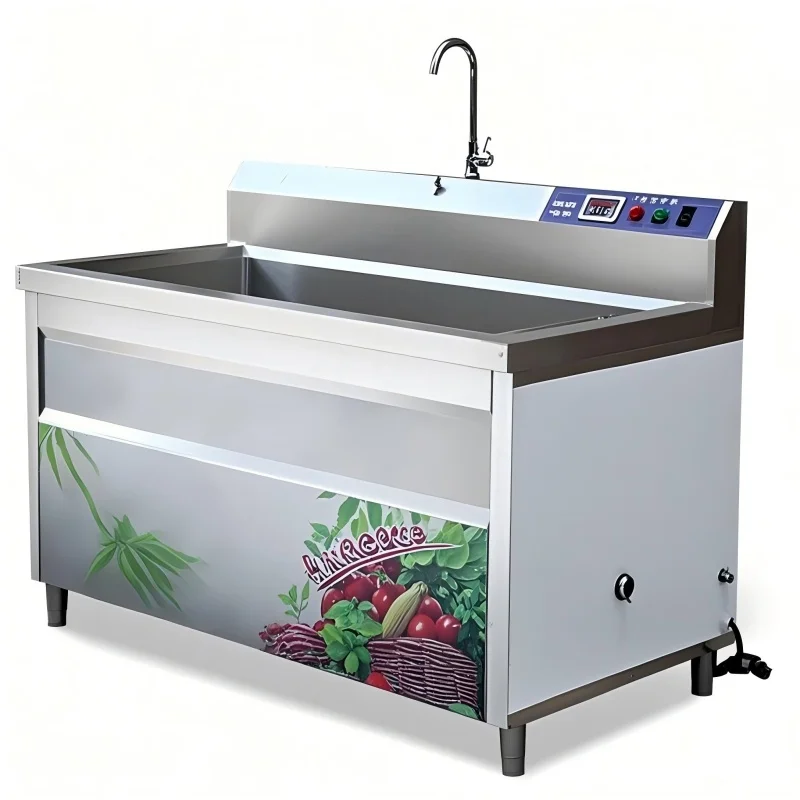
Their multi-function vortex fruit and vegetable washing machine handles a wide range of produce including potatoes, chilli, mushrooms, and mixed fruit, with an integrated drying function suited for facilities that need both washing and surface moisture removal in a single pass. For operations prioritizing disinfection alongside physical cleaning, their high-efficiency vortex disinfection washing machine combines turbulence washing with chemical disinfection capability in a stainless steel housing.
If you are at the early stage of evaluating equipment options, the working principles and feature checklist in this guide will help you ask better questions when you reach out to a supplier — regardless of which manufacturer you ultimately choose.