EN


What Is a Fruit Pulper Machine and How Does It Work?
A fruit pulper machine is a processing unit that turns prepared fruit into a smooth pulp or puree while separating the usable flesh from skins, seeds, cores, fibres, and other coarse residue. It is commonly placed after washing, sorting, and—where needed—cutting, crushing, heating, or destoning. For processors making mango pulp, tomato pulp, guava puree, berry bases, or similar products, the goal is not simply to break fruit apart. The goal is to recover a consistent pulp stream that can move reliably to blending, pasteurizing, filling, freezing, or further extraction.
From a food-processing perspective, a fruit pulper is valuable because it combines mechanical action with controlled screening. That combination makes it possible to handle soft fruit flesh efficiently while directing unwanted solids to a separate discharge. The exact configuration depends on the fruit, its ripeness, the desired texture, and the wider line layout.
What Does a Fruit Pulper Machine Do?
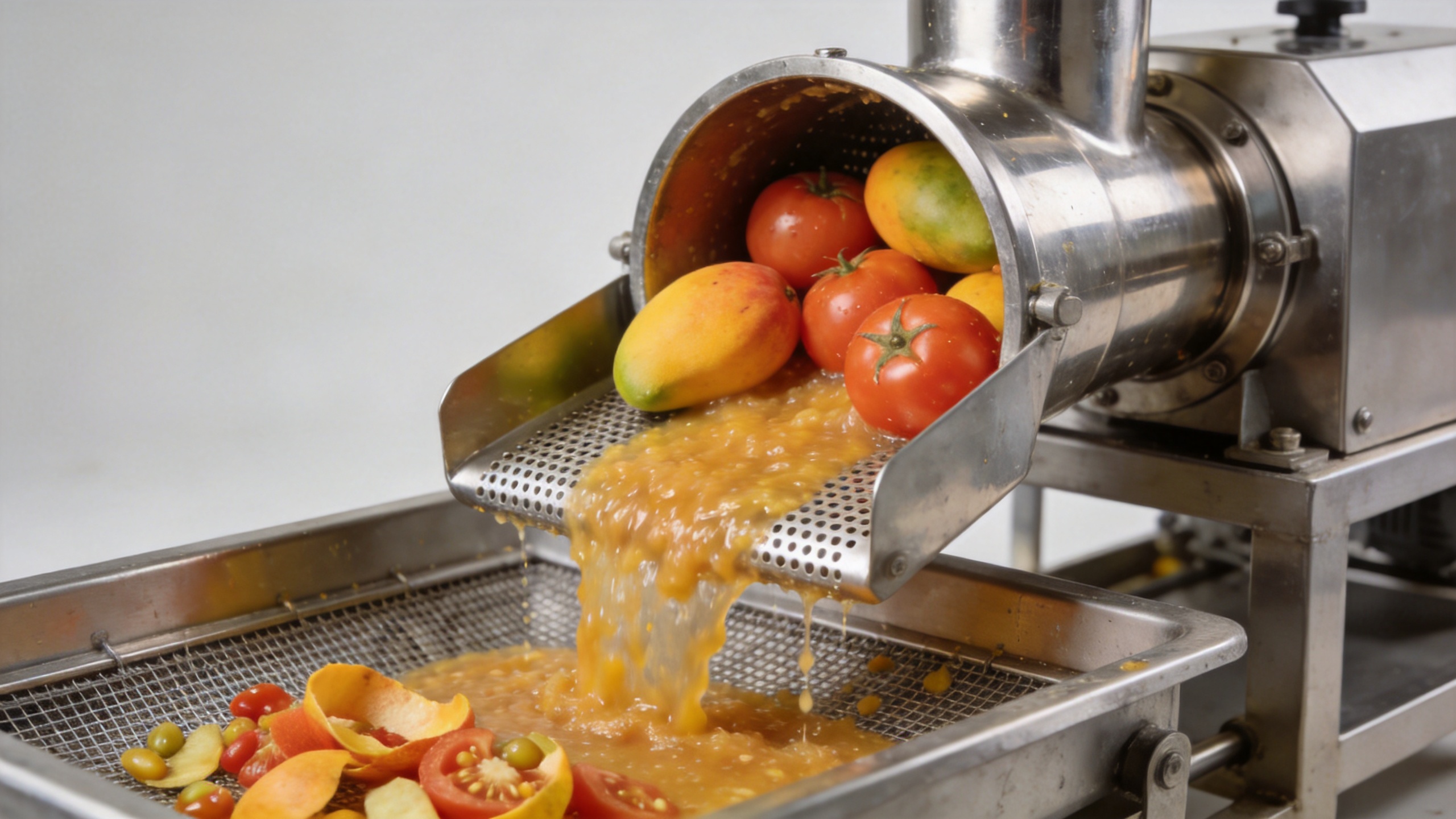
At its core, a fruit pulper machine performs pulp-residue separation. Fruit enters a processing chamber, where a rotating component such as a beater, scraper, paddle, or rotor works the material against a perforated screen. Soft edible tissue passes through the screen as pulp. Larger pieces that cannot pass through—such as peel fragments, seeds, fibrous strands, or hard particles—move toward the residue outlet.
This is different from a machine that only chops fruit. Chopping reduces size, but it does not create a controlled separation between pulp and waste. A fruit pulper machine is designed to produce a more uniform intermediate product, which can improve consistency in sauces, nectars, jams, fruit fillings, and puree-based beverages.
For a mango processing machine line, pulping is especially important because the product value is concentrated in the soft flesh. With suitable preparation and screening, the line can recover pulp while keeping coarse peel and seed material out of the finished stream.
How a Fruit Pulper Machine Works Step by Step
- Fruit preparation: Operators wash and sort incoming fruit first. Depending on the raw material, they may remove stones, trim damaged sections, cut large fruit, or apply a softening step. Good preparation reduces contamination and helps the pulper work more evenly.
- Controlled feeding: Prepared fruit enters the fruit pulper machine through a hopper or feed port. Stable feeding matters: overloading can reduce separation quality, while an inconsistent feed can cause uneven pulp texture.
- Mechanical pulping: Inside the chamber, the rotating working element pushes and rubs soft fruit tissue against the screen. This releases the edible flesh without relying on a single crushing action alone.
- Screen separation: The screen is the key control point. Pulp small enough to pass through its openings collects outside or below the screen, while larger solids remain inside the chamber.
- Separate discharge: The pulp exits through its designated outlet, and the retained residue leaves through another path. The pulp can then be refined, blended, heated, or sent to the next stage of the line.
In practice, the fruit pulper machine must be matched to the fruit condition. Very ripe mango, fibrous guava, seeded berries, and tomato products do not behave in the same way. Feed rate, screen opening, rotor speed, and whether the machine is used in one or more stages should all be evaluated during line planning.
Fruit Pulper vs. Juice Press: Why the Difference Matters
A fruit pulper machine is primarily intended to make pulp or puree. A juice press is generally used to apply pressure and recover liquid juice from prepared fruit or vegetable material. Some production lines use both, but they do different jobs.
| Equipment | Main purpose | Typical output |
|---|---|---|
| Fruit pulper machine | Separate soft flesh from coarse residue | Pulp or puree |
| Juice press | Apply pressure to recover liquid | Juice and pressed solids |
When a line needs a pressing stage after fruit preparation, processors can review a food-grade screw press for fruit and vegetable processing as a separate piece of equipment. It should not be treated as a substitute for a pulper without checking the intended product, texture target, and process flow.
Which Fruits Can a Fruit Pulper Machine Process?
A fruit pulper machine can be used with many soft or softened fruits and vegetables, including mango, tomato, guava, apple, pear, strawberry, kiwi, berry fruits, and some tropical fruit varieties. Suitability still depends on factors such as hardness, seed size, fibre level, and maturity.
For example, a mango processing machine setup may include washing, peeling or destoning as required, pulping, and later thermal treatment. Tomato applications may prioritize a continuous flow into refining or sauce production. For fibrous fruit, processors often pay closer attention to screen selection and residue management. A suitable equipment arrangement starts with the final product specification rather than the fruit name alone.
What Should Buyers Check Before Choosing a Fruit Pulper Machine?
- Raw material: Identify the fruit varieties, ripeness range, fibre level, and seed characteristics.
- Required capacity: Match the equipment to the expected hourly throughput and avoid sizing only for peak intake.
- Screen configuration: Choose a screen arrangement that supports the desired pulp texture and residue separation.
- Line integration: Confirm how the pulper will connect with washing, crushing, refining, pressing, pasteurizing, or filling equipment.
- Cleaning and access: Food-contact areas should be practical to inspect and clean between production runs.
- Testing: If possible, test representative fruit samples, because the same fruit pulper machine can perform differently with changes in variety or maturity.
A Practical Place in the Fruit Processing Line
A fruit pulper machine is most usefully understood as a controlled separation stage, not a stand-alone answer to every fruit-processing task. When upstream washing and preparation are stable, the pulper can create a cleaner, more consistent base for downstream production. When the machine is selected around the fruit, product texture, capacity target, and sanitation needs, it becomes easier to build a line that is practical to operate and easier to adjust as product requirements change.
For processors evaluating a fruit pulper, start by mapping the material flow: what enters the machine, what must pass through the screen, what must be rejected, and what happens to the pulp next. That simple exercise helps distinguish a pulp-making requirement from a pressing requirement and supports a more useful equipment discussion.