EN


What Is Pre-Cutting in Commercial Vegetable Processing?
In a commercial kitchen, central kitchen, fresh-cut plant, or produce-packing operation, pre cutting vegetables means preparing raw vegetables into specified, repeatable pieces before the next production stage. The pieces may be slices, dices, strips, shreds, florets, wedges, or other agreed formats. The idea is simple, but the process is not just “chopping earlier.” It is a controlled step that connects receiving, washing, inspection, portioning, packing, cold holding, and final cooking.
For a production supervisor, the real value of pre cutting vegetables is consistency. A batch of onions cut into even dice behaves more predictably in a prepared-food recipe than a batch with irregular pieces. The same applies to potatoes for fries or cubes, carrots for mixed vegetables, cabbage for slaw, and green onions for garnish. When cut size is specified and repeated, downstream teams can plan yield, portion sizes, cooking time, and packing presentation with fewer surprises.
Pre-Cutting Is a Process Step, Not Just a Convenience Feature
Commercial pre-cutting begins with a product specification. That specification normally identifies the vegetable, trim standard, cut geometry, target size or thickness, acceptable variation, and destination use. A 10 mm potato dice for soup, for example, is a different operating requirement from a thin cucumber slice for a salad kit. The cut must fit the product, the recipe, and the equipment that follows.
In a typical line, vegetables are received and inspected, then washed or otherwise prepared according to the operation’s food-safety program. They may be sorted, trimmed, peeled, or cored before cutting. After cutting, the product can move to rinsing, dewatering, weighing, mixing, packing, chilling, or a cooking process. The exact sequence changes by vegetable and final product, but pre cutting vegetables is usually the point where an intact raw material becomes a controlled ingredient.
This distinction matters because cutting increases the exposed surface area. That can improve usability and portion control, while also making sanitation, handling time, and temperature management more important. USDA fresh-produce guidance emphasizes safe handling and clean food-contact surfaces. For cut leafy greens specifically, FDA guidance calls for cold storage and display at 41°F (5°C) or below. Operations should apply the rules and validated controls relevant to their market, product, and process rather than treating one example as a universal requirement.
Why Pre Cutting Vegetables Matters in a Commercial Line
For high-volume production, pre cutting vegetables creates a defined handoff between raw-material preparation and the next value-adding operation. It helps a central kitchen load recipe components in a predictable order, helps a fresh-cut packer present uniform pieces, and helps a food-service supplier prepare customer-specific formats. The gain is not merely speed: it is a repeatable input for the rest of the line.
When pre cutting vegetables is planned well, operators can compare actual output against the stated cut specification, detect blade wear or poor raw-material condition sooner, and reduce rework caused by inconsistent pieces. When it is poorly controlled, the downstream effect can include uneven cooking, excess fines, irregular pack weights, and extra manual sorting.
Common Commercial Cut Types
The cut type should be chosen for the final application—not because one shape looks more sophisticated than another. Common formats include:
- Slices: often used for cucumbers, potatoes, onions, tomatoes, and root vegetables.
- Dice: useful for soups, sauces, frozen mixes, fillings, and ready-meal components.
- Julienne or strips: common for carrots, peppers, cabbage, and stir-fry blends.
- Shreds: used for slaw, salad mixes, hash browns, and fillings.
- Wedges, chunks, or florets: used when the finished dish needs a more substantial visual and bite profile.
Uniformity is more than appearance. If one potato batch contains thin fragments and large cubes, it will not cook evenly and may not pack consistently. Irregular material also makes yield measurement and portion control harder. A commercial cutter helps the team repeat a defined cut, but the feed condition, blade selection, product firmness, and cleaning routine still influence the result.
Where a Commercial Vegetable Cutter Fits
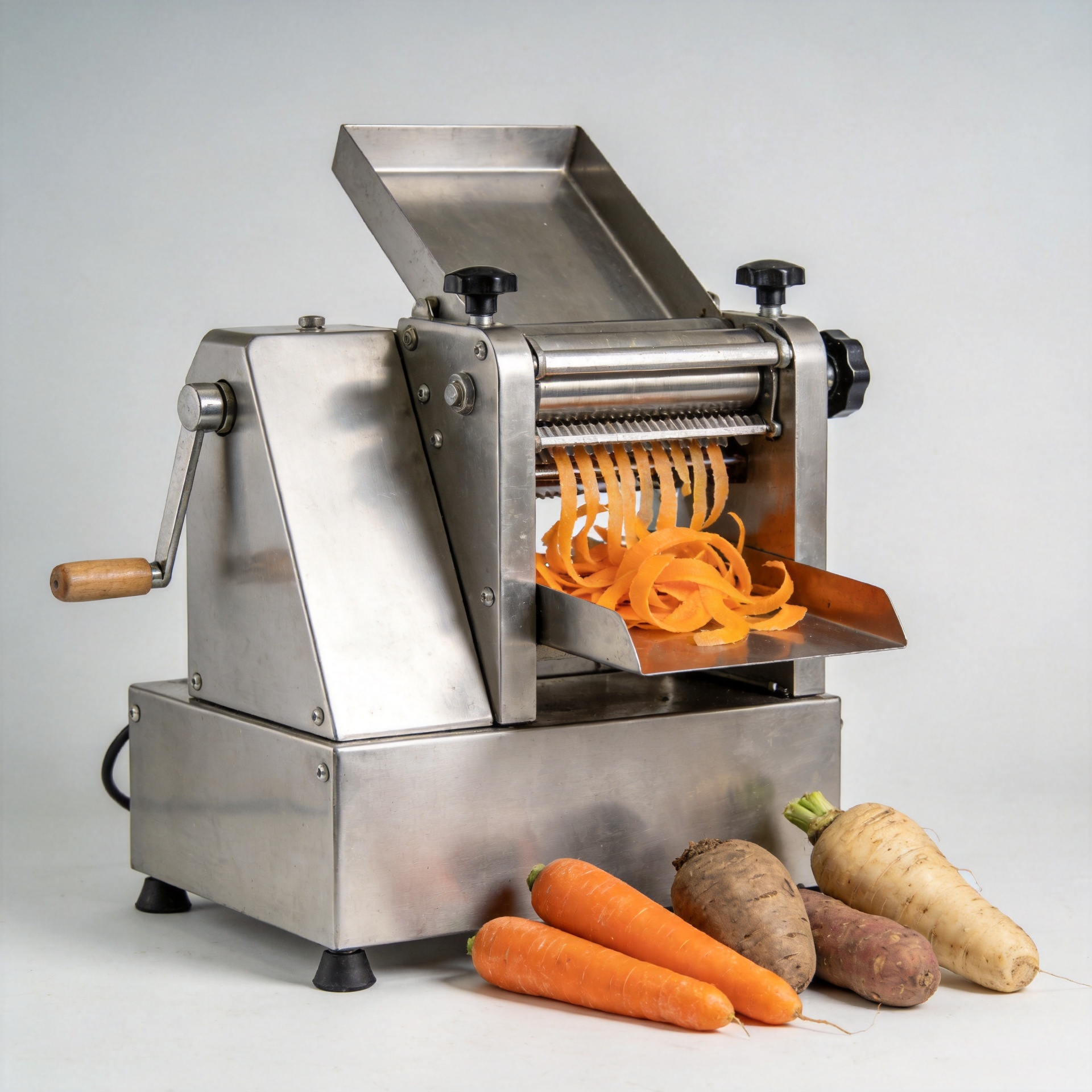
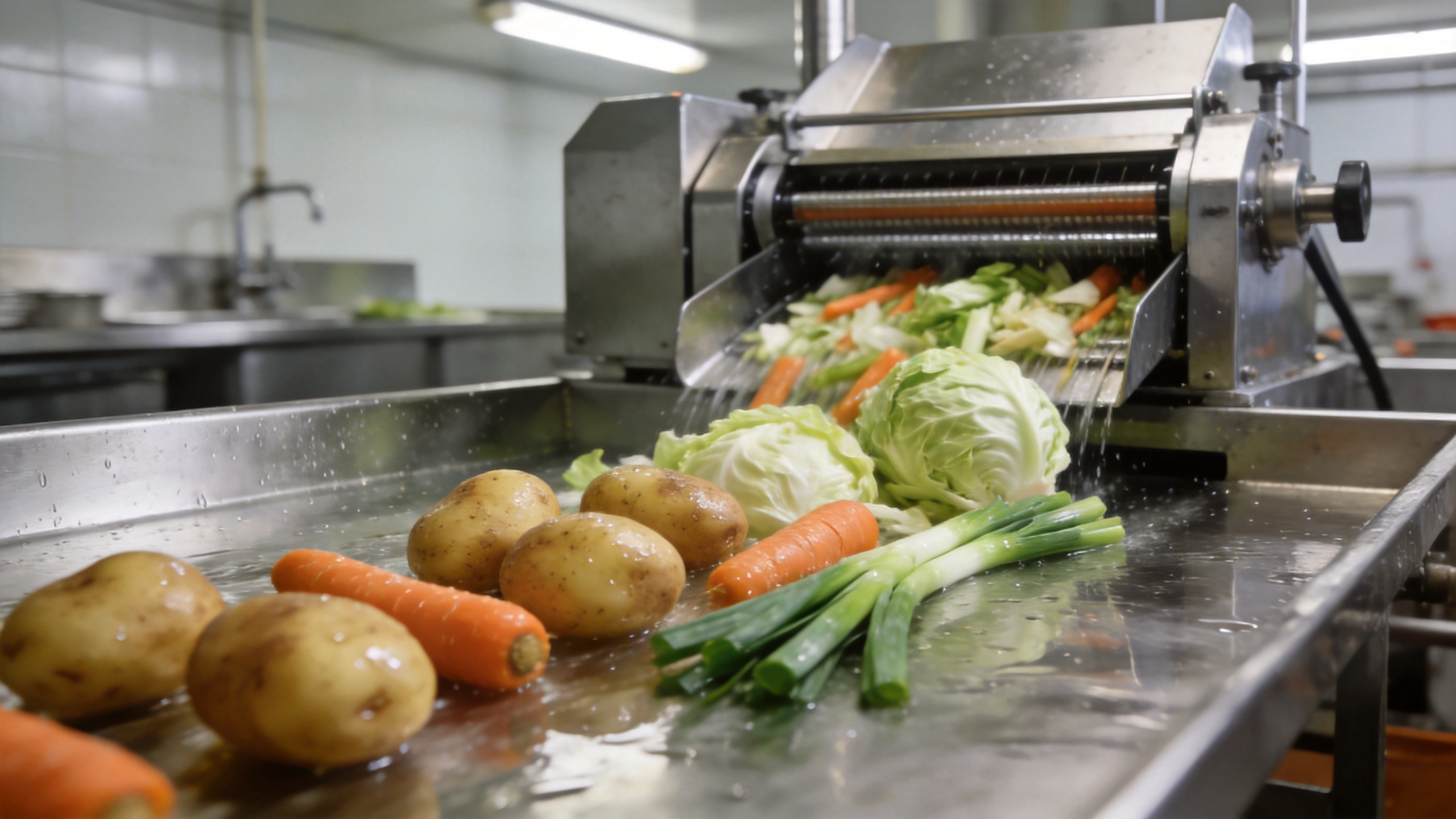
A vegetable cutter is typically placed after the raw material has been made suitable for cutting and before the product is packed or sent to cooking. Depending on the line, this may mean after washing and draining, or after trimming and peeling. The goal is to deliver pieces that are appropriate for the next operation without creating unnecessary handling or waiting time.
When evaluating equipment, begin with the vegetable range, desired cuts, expected hourly throughput, cleaning access, operator workflow, and available floor space. Buyers should also check how the machine handles delicate versus firm vegetables, how quickly cutting components can be changed, and how the receiving and discharge points fit with the surrounding line. Machine capacity alone does not define practical output; preparation time, loading rhythm, changeovers, and quality checks all affect the usable result.
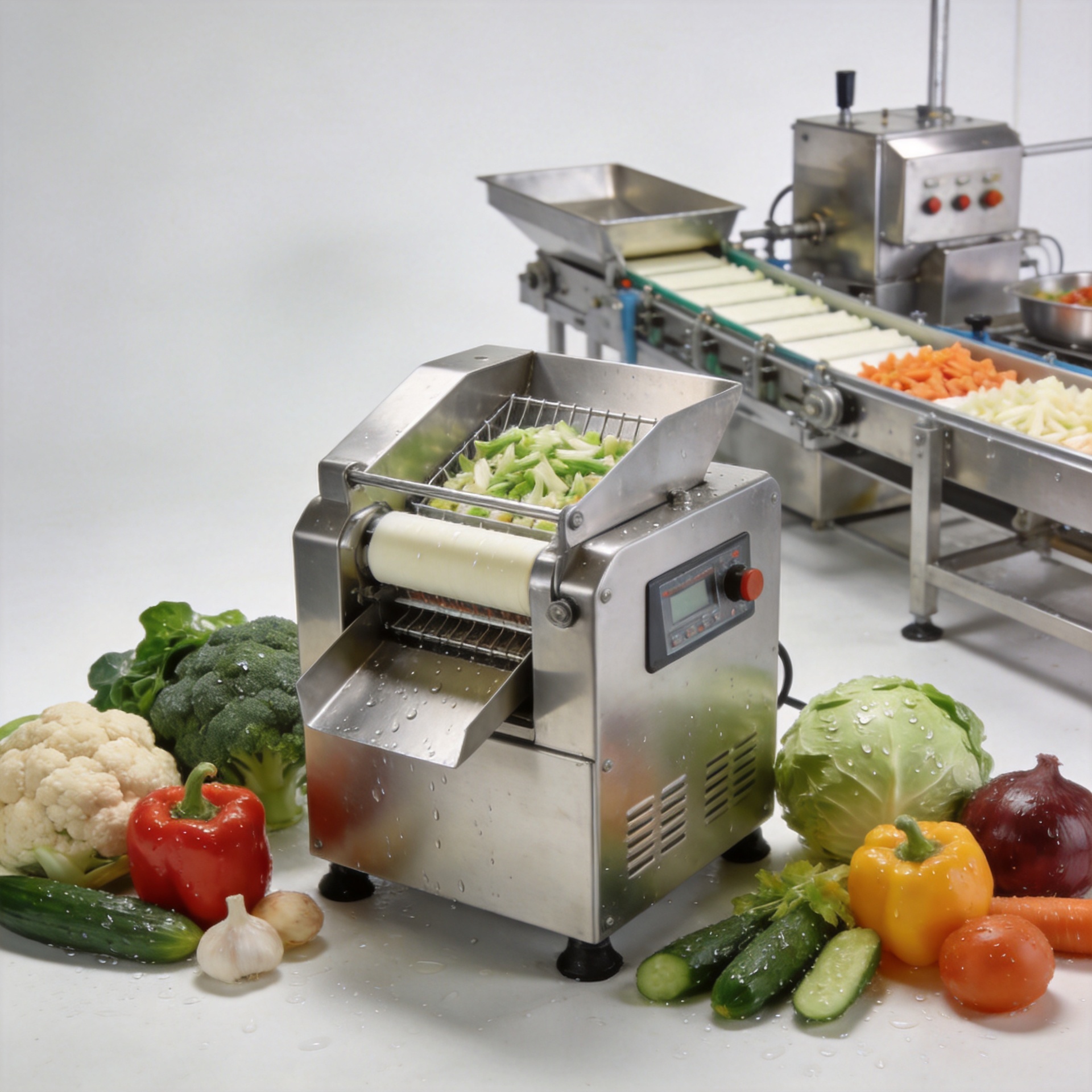
For operations reviewing a dicing-focused option, the commercial industrial electric vegetable cutter dicing machine for potato, fruit, and green onion provides a relevant product reference. The final selection should still be verified against the facility’s actual vegetable types, cut specifications, capacity target, and sanitation procedures.
Pre-Cutting Vegetables and Food-Safety Workflow
In commercial production, pre cutting vegetables must fit the facility’s food-safety program. Clean food-contact surfaces, orderly product flow, and appropriate temperature management are essential after the cut. The purpose of pre cutting vegetables is to create a consistent ingredient—not a queue waiting for packing or chilling.
Pre-Cutting Specification Checklist
For each product, record whether pre cutting vegetables means slices, dice, strips, shreds, wedges, chunks, or florets. Then document these process checks:
- Pre cutting vegetables: confirm the raw-material condition before loading.
- Pre cutting vegetables: confirm the required shape and dimension.
- Pre cutting vegetables: verify the first pieces after start-up.
- Pre cutting vegetables: sample for fines and uncut pieces.
- Pre cutting vegetables: review blade condition during the run.
- Pre cutting vegetables: keep product-contact surfaces clean.
- Pre cutting vegetables: separate trim from usable output.
- Pre cutting vegetables: avoid unnecessary waiting after cutting.
- Pre cutting vegetables: coordinate output with packing speed.
- Pre cutting vegetables: move chilled products promptly.
- Pre cutting vegetables: check pack weights after changeovers.
- Pre cutting vegetables: document cleaning between products.
- Pre cutting vegetables: assess results using representative produce.
- Pre cutting vegetables: note variation in size and firmness.
- Pre cutting vegetables: review yield against the specification.
- Pre cutting vegetables: confirm operator access for cleaning.
- Pre cutting vegetables: align the cutter with downstream capacity.
- Pre cutting vegetables: retain the approved production record.
What Good Process Control Looks Like
Reliable pre cutting vegetables depends on simple controls being performed consistently. Teams commonly use a documented cut specification, first-piece checks after start-up or blade changes, periodic visual checks during the run, and clear segregation of unusable trim from saleable product. Cleaning and sanitation procedures should cover the cutter, blades, guards, conveyors, bins, and any food-contact tools around the workstation.
It is also useful to look at the process as a flow rather than a standalone machine task. If washed vegetables wait too long before cutting, if cut product queues before chilling, or if packing cannot keep pace with output, the line may create avoidable quality and food-safety pressure. A practical line review asks: where does product wait, where can it be damaged, how is cut size verified, and when are food-contact surfaces cleaned between products or shifts?
How to Define a Pre-Cutting Requirement
- Name the vegetable and final use. State whether the output is for soup, salad, frozen vegetables, a meal kit, a food-service kitchen, or another application.
- Specify the cut. Include the shape and target dimension or thickness, plus an acceptable range if the process uses one.
- Map the surrounding steps. Identify washing, trimming, dewatering, packing, cooking, or chilling steps before and after the cutter.
- Set the quality checks. Define what counts as excessive fines, broken pieces, uncut pieces, or unacceptable variation.
- Confirm hygienic handling. Align cleaning, allergen controls where applicable, temperature management, and product segregation with the operation’s documented program.
Starting with these requirements makes equipment discussions more useful. Instead of asking only, “How many kilograms per hour can it cut?” a buyer can explain what needs to be cut, how consistently, and what happens next.
Conclusion
Pre-cutting is the controlled conversion of whole vegetables into defined pieces for the next commercial processing step. It supports consistency, portioning, line organization, and product presentation—but it also requires attention to cut specification, food-contact sanitation, handling time, and cold-chain control. For central kitchens and vegetable-processing operations, a practical approach is to design the entire flow around the finished product, then choose a cutter and operating method that can reproduce that requirement reliably.