EN
EN


What Is Vegetable Dicing? A Guide to Industrial Dicing Machines for Food Factories
If you are running a food processing operation — whether a frozen vegetable line, a ready-to-eat meal facility, or a canning plant — uniform vegetable dicing is not a finishing touch. It is a production requirement. Irregular cuts create problems throughout the line: inconsistent cooking times, packaging weight variance, and quality inspection failures that slow everything down.
Having spent time working with food machinery buyers across multiple markets, one pattern stands out clearly: facilities that invest in the right industrial vegetable dicing equipment early avoid the rework costs and downtime that come from relying on manual labor or undersized machines. This guide explains what vegetable dicing actually means at an industrial scale, how these machines work, and what food factories need to understand before making a purchase decision.
What Is Vegetable Dicing?
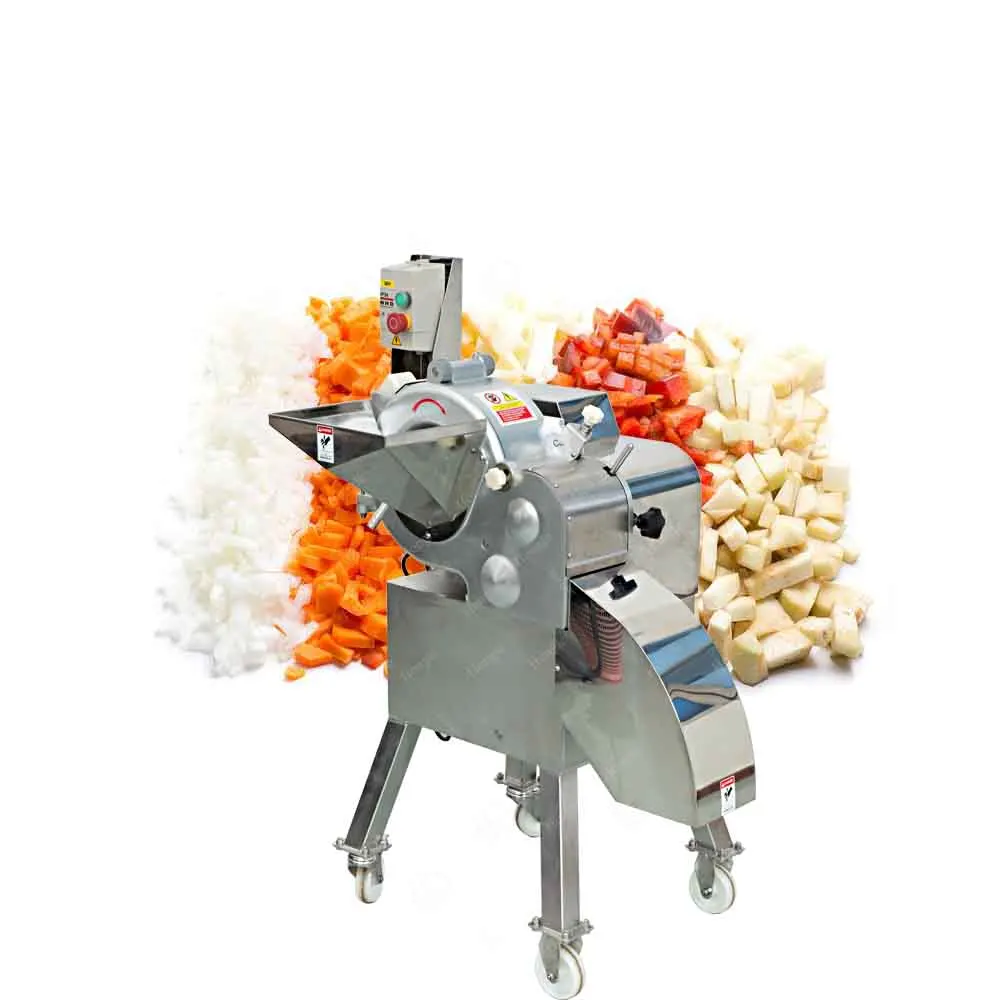
In food processing terminology, vegetable dicing refers to cutting vegetables into uniform cube shapes, typically square or near-square in cross-section, across all three dimensions. Unlike slicing (one cut) or shredding (long strips), vegetable dicing produces a consistent volumetric piece that behaves predictably during blanching, freezing, mixing, or cooking.
Industrial vegetable dicing specifications are defined by the length of a cube's edge. Standard dice sizes in commercial food production typically range from 4mm to 15mm, with common sizes being 5mm, 8mm, 10mm, and 12mm. Some high-precision machines can produce cuts as small as 3mm for applications requiring fine, uniform pieces. As a general reference, a "small dice" is around 6mm per side, while a "medium dice" falls near 12mm — terminology that buyers and specification sheets often use interchangeably with millimeter measurements.
Vegetables most commonly processed through industrial vegetable dicing machines include:
- Root vegetables: potatoes, carrots, beets, turnips
- Alliums: onions, shallots
- Fruiting vegetables: tomatoes, bell peppers, cucumbers, zucchini
- Leafy stems: celery
- Other: green onion (scallion) bulbs, cabbages (for certain cube-cut applications)
The vegetable type determines blade selection, feed pressure, and pre-conditioning requirements, so a machine's compatibility list is a practical starting point when evaluating equipment for your specific vegetable dicing requirements.
How Industrial Vegetable Dicing Machines Work
A standard industrial vegetable dicing machine operates in a three-stage cutting sequence. Understanding this sequence helps buyers evaluate machine specifications more accurately and compare vegetable dicing solutions from different manufacturers.
Stage 1 — Slicing: The vegetable is first fed through a rotating or reciprocating blade that creates parallel slabs of the target thickness. This establishes the first dimension of the cube.
Stage 2 — Strip cutting: The slabs pass through a second blade set oriented perpendicularly to the first cut, producing long rectangular strips and defining the second dimension.
Stage 3 — Dicing: The strips move into a cross-cutting mechanism that sections them into individual cubes. Some machine designs combine stages 2 and 3 into a single grid blade assembly, while others process them sequentially through separate cutting chambers.
The drive system matters significantly at the industrial scale. Electrically driven machines with variable frequency drives (VFD) allow operators to adjust blade speed to match the firmness and moisture content of different vegetables. Harder root vegetables like carrots and beets require lower feed speeds and more robust blade materials compared to softer produce like tomatoes.
Machines designed for commercial and industrial vegetable dicing are built for continuous operation and typically feature stainless steel contact surfaces for food safety compliance, easy-clean blade assemblies, and feed hopper systems sized for sustained throughput rather than batch loading.
Industrial Applications: Where Vegetable Dicing Machines Are Used in Food Factories
Understanding the end application is critical when specifying a vegetable dicing machine, because the output requirements — cube size, throughput, moisture tolerance — differ substantially across factory types.
Pre-made and Ready-to-Eat Meal Production
Pre-made meal facilities require consistent vegetable dicing to meet portion weight standards and ensure even heating during final cooking. Potatoes, carrots, and onions diced to 8–10mm are common in stew bases, rice bowl toppings, and soup mixes. Volume demands in this segment are high, and machines need to handle multiple vegetable types across a full production shift.
Frozen Vegetable Processing
Frozen food factories rely on uniform vegetable dicing for IQF (individually quick frozen) lines. A consistent cube size ensures even freezing and prevents moisture-related clumping. Standard frozen diced vegetable specifications typically fall in the 8–12mm range, and output is measured in hundreds of kilograms per hour at this scale.
Canned Food and Pickle Processing
Canning lines and pickle processing facilities use vegetable dicing operations — particularly for carrots, turnips, onions, and peppers — where cube consistency directly affects fill weight accuracy and brine penetration uniformity. The machine must also be compatible with washing and blanching lines that precede or follow the cutting step.
Central Kitchens and Canteens
Central kitchens serving institutional clients, hotel groups, or restaurant chains use industrial vegetable dicing machines as a labor-reduction tool. A single machine can replace hours of manual vegetable prep, processing potatoes, onions, and peppers for daily volume requirements with consistent output quality.
Key Considerations When Choosing an Industrial Vegetable Dicing Machine
For a food factory entering this market for the first time, a few practical factors deserve attention before comparing vegetable dicing machine models or requesting quotes.
- Cube size adjustability: Does the machine support the specific vegetable dicing range your product requires? Confirm whether size changes require blade replacement or an adjustment mechanism.
- Throughput capacity: Stated throughput (kg/hour) is typically measured for a standard vegetable under ideal conditions. Ask suppliers about actual throughput for the specific vegetables and moisture content in your operation.
- Cleaning and sanitation: Industrial food machinery must meet cleaning cycle requirements between product runs. Quick-disassembly blade assemblies and washdown-rated electrical components reduce downtime.
- Motor specification: The motor is the core mechanical component. Machines designed for sustained industrial vegetable dicing — rather than light commercial duty — have motors rated for continuous operation, not intermittent duty cycles.
- After-sales support: For export buyers or facilities without on-site engineering resources, remote technical guidance, spare parts availability, and operation manuals in accessible formats are practical requirements, not optional extras.
Industrial Vegetable Dicing Machines from Hongle Machinery
Zhengzhou Hongle Machinery Equipment Co., Ltd. manufactures and exports commercial and industrial-grade food processing equipment to customers in Africa, Europe, Asia, the Americas, and Oceania. Their equipment line includes vegetable dicing and cutting machines designed for food factory applications.
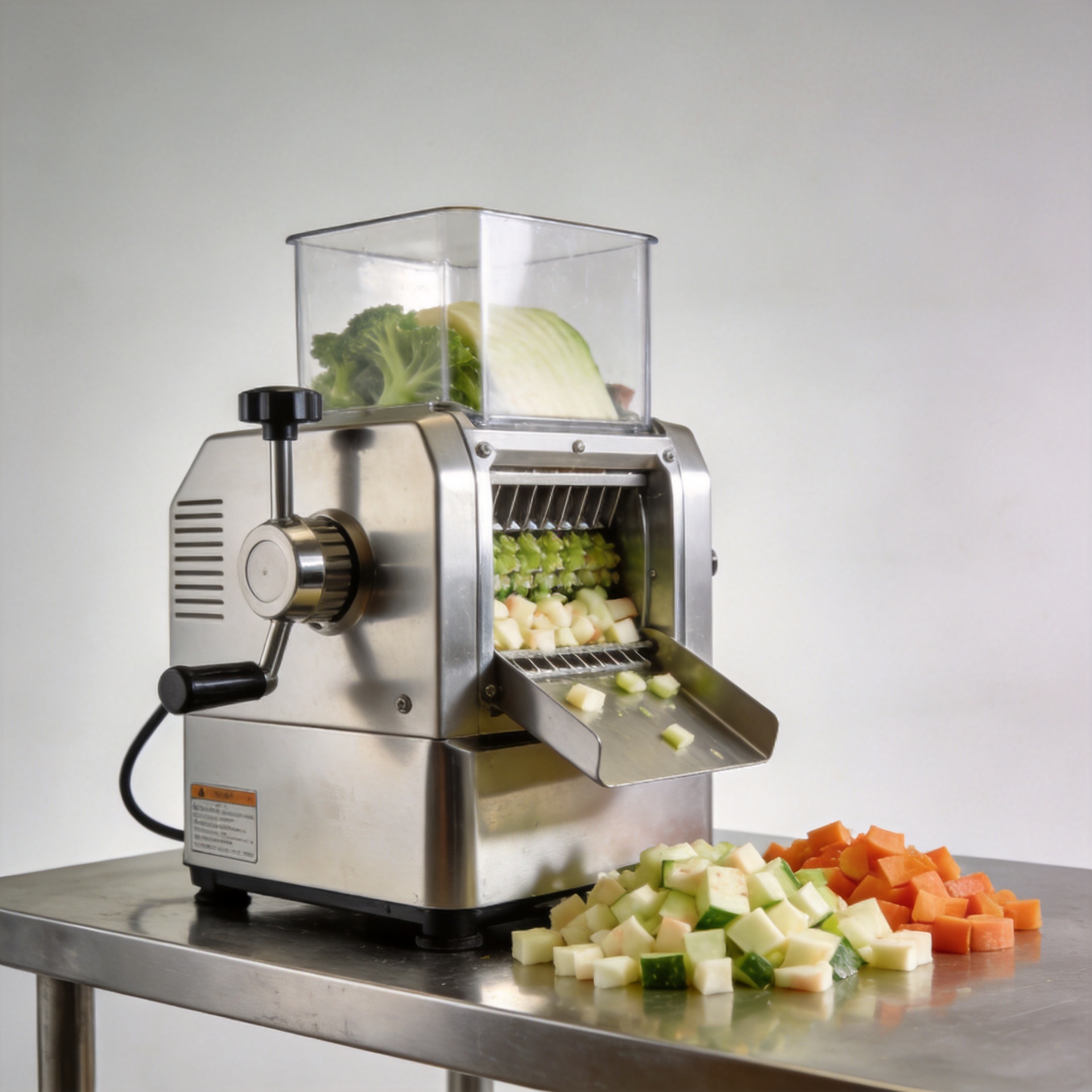
The Commercial Industrial Electric Vegetable Cutter Dicing Machine is built around a motor-driven design suited for continuous production environments, handling potatoes, fruit, and green onion vegetable dicing applications with consistent output.
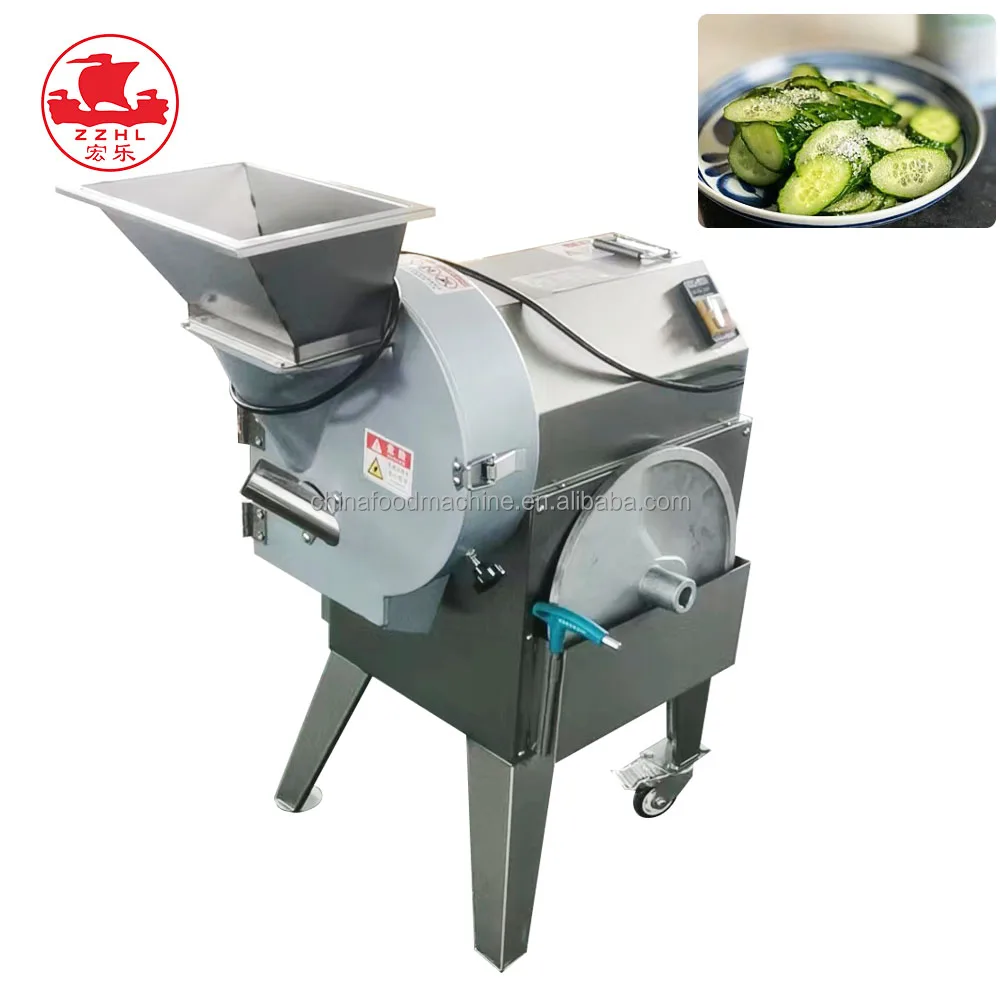
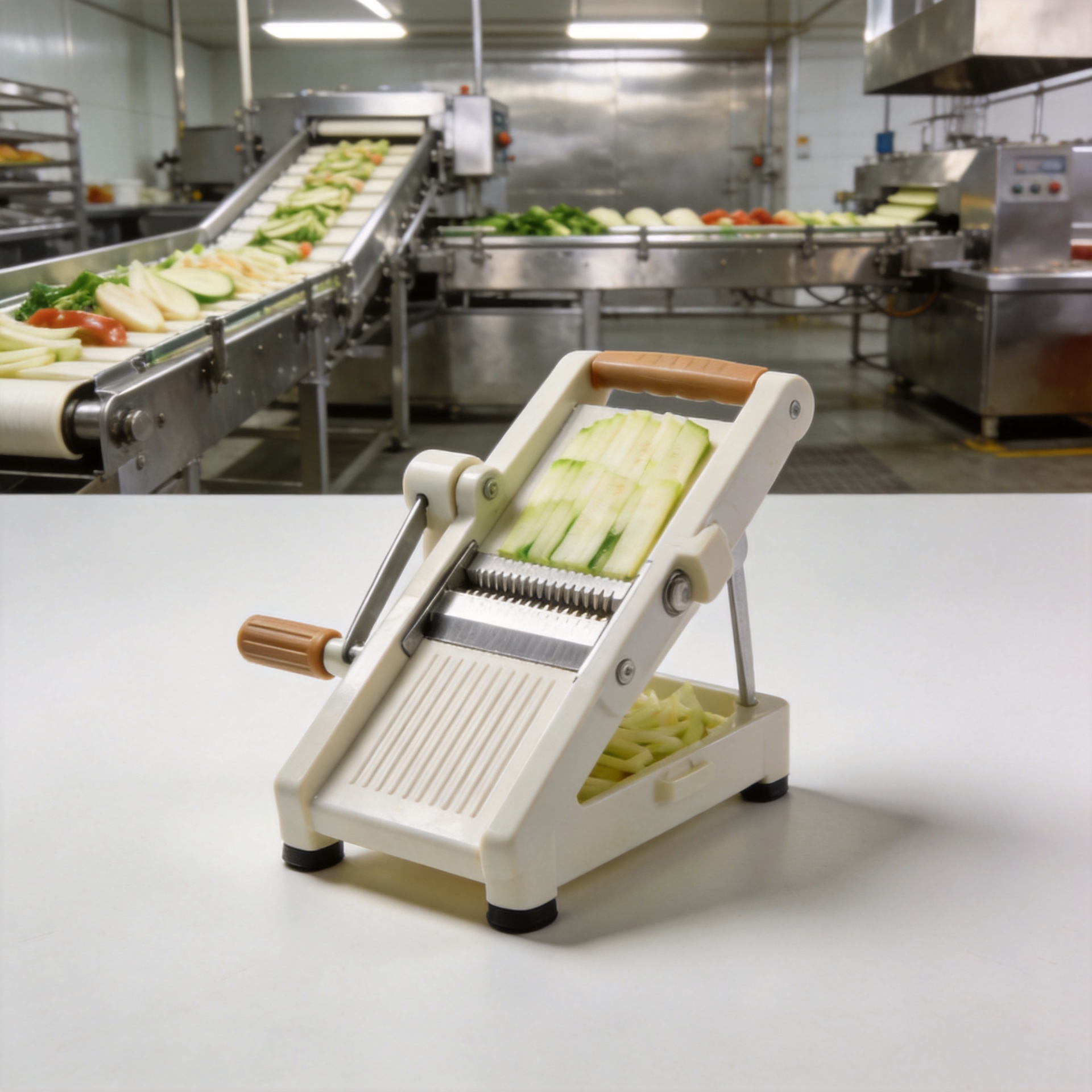
For facilities requiring multi-function capability, the Multi-Function Vegetable Cutting Machine covers slicing, vegetable dicing, and shredding in a single platform — a practical choice for central kitchens or mixed-product processing lines where switching between cut types is part of regular operations.
Hongle provides technical guidance and after-sales support for international buyers, with remote video assistance and operating documentation to support smooth commissioning. For procurement inquiries or detailed specifications, contact the team at honglemachine.com.