EN
EN


What Is Vegetable Dicing and Why Does Cut Consistency Matter?
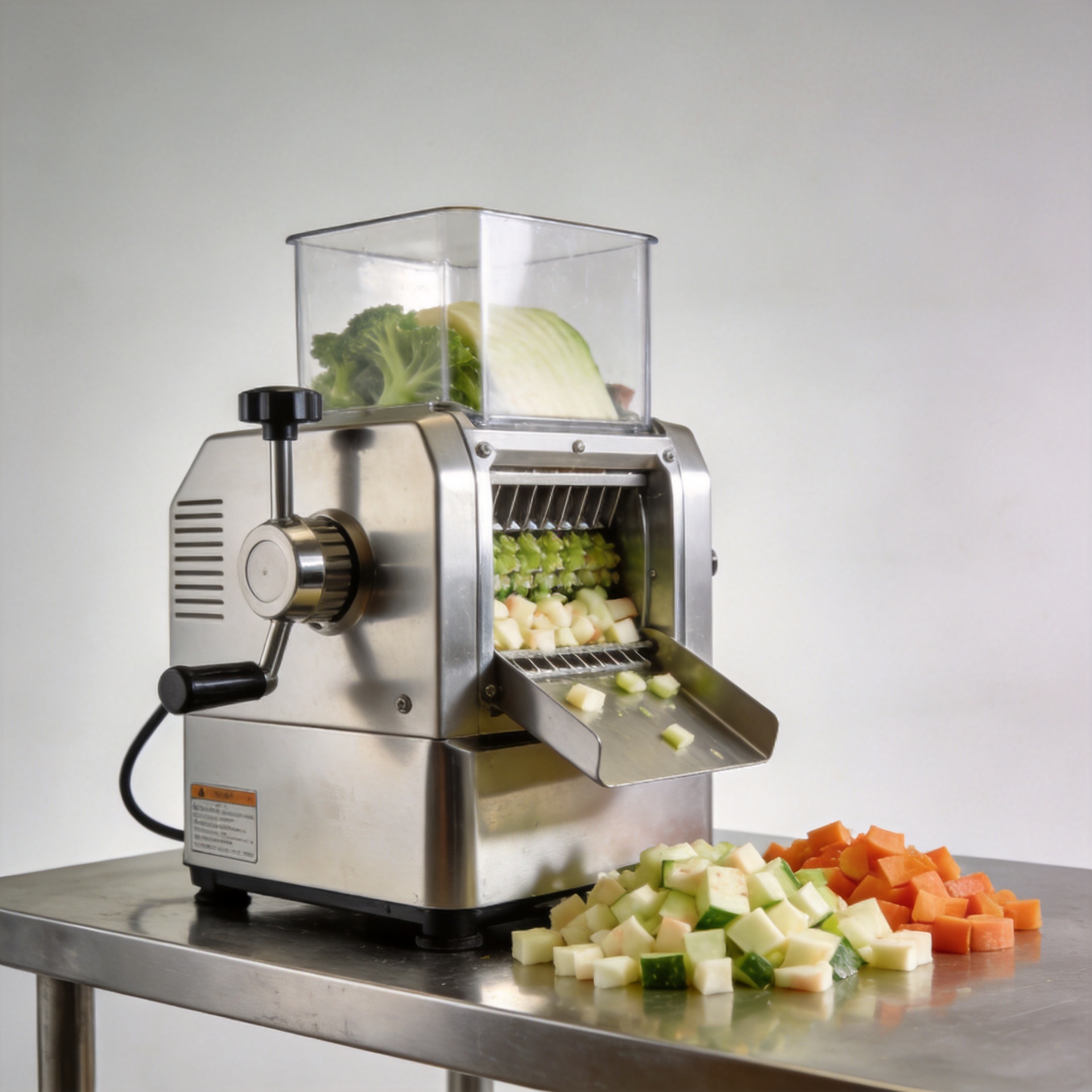
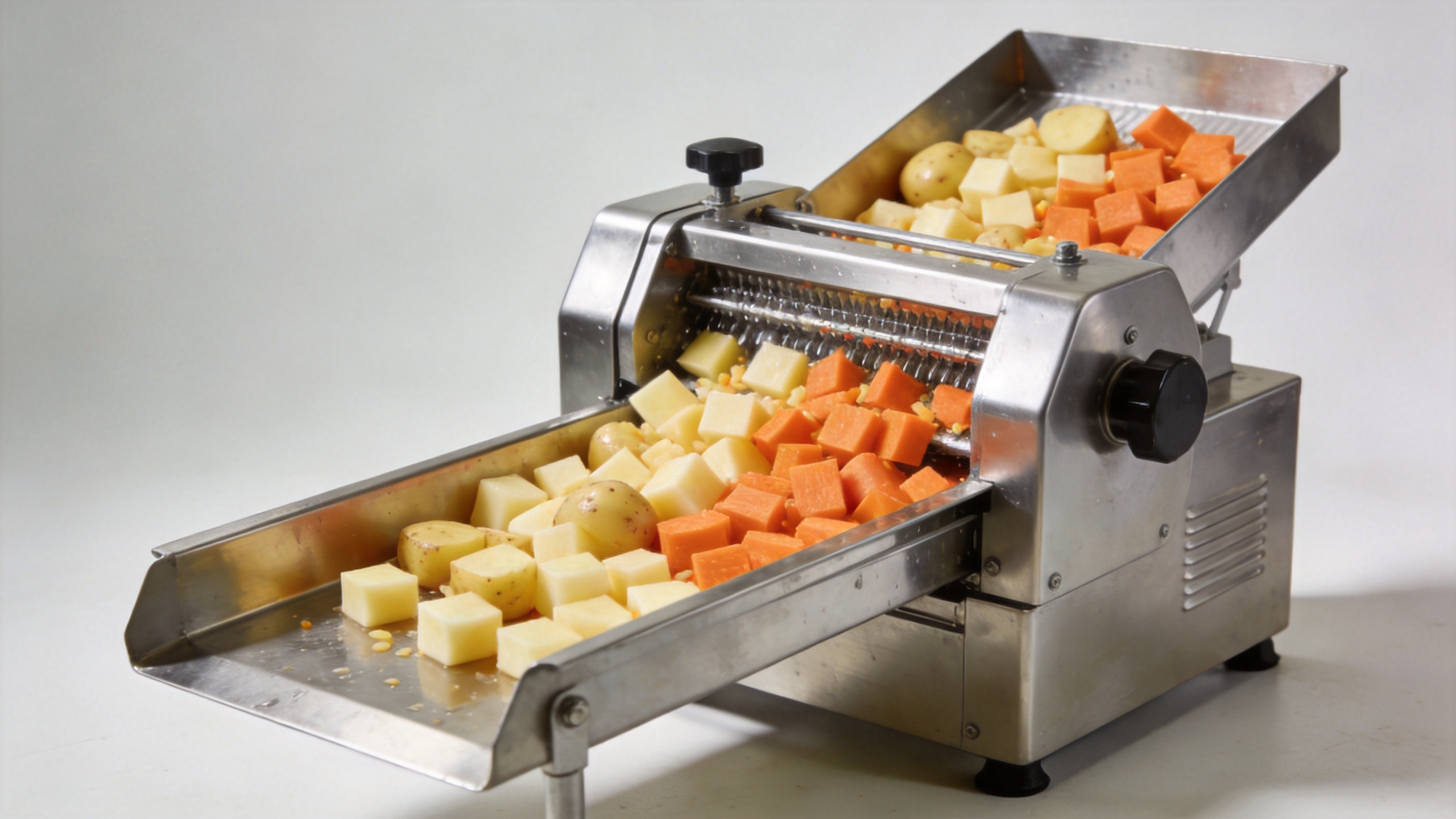
In a busy prep room, vegetable dicing is the controlled reduction of washed produce into cubes or near-cubes of a planned size. It sounds simple, yet it affects far more than appearance. A reliable vegetable chopper dicer helps a kitchen, central kitchen, or food processor turn potatoes, carrots, onions, peppers, fruit, and similar ingredients into pieces that behave predictably in the next step. That predictability is the real value of dicing.
For commercial operators, the question is not merely whether a vegetable chopper dicer can cut quickly. The better question is whether it produces the intended cut size repeatedly while the produce, operator, and workload change. Consistent cuts can make cooking, portioning, packing, and visual presentation easier to manage. They also give the team a clearer standard for checking output before it moves downstream.
Vegetable dicing is a process, not just a shape
Dicing normally means creating pieces with similar length, width, and thickness. The finished shape may be a true cube or a practical cube-like piece, depending on the product and machine. In commercial preparation, the chosen size should serve the recipe or process: a fine dice may suit garnish, onion mixes, or sauces, while a medium dice may suit soups, fillings, frozen mixes, and roasted-vegetable products.
A vegetable chopper dicer typically uses a cutting grid, knife assembly, or coordinated slicing and cross-cutting action to create that result. The important operating variables are the selected grid, produce firmness, feed method, blade condition, and cleaning discipline. Changing any of these can change the cut. That is why dicing should be treated as a controlled preparation stage rather than an isolated machine task.
Why cut consistency matters in commercial food preparation
Uniform pieces move through a recipe more evenly. When very small and very large pieces are mixed together, the small pieces can soften, brown, or dehydrate before the larger pieces reach the same state. With a consistent dice, teams can develop a cooking time around a narrower range of piece sizes. The result is not a guarantee of identical cooking outcomes, but it gives chefs and production staff a more stable starting point.
Consistency also supports portion control. A scoop of evenly diced vegetables has a more repeatable visual volume than a scoop containing long strips, fragments, and oversized chunks. For foodservice, this can help with plating and batch-to-batch presentation. For processors, it can make filling, mixing, and package appearance easier to monitor. A vegetable chopper dicer is therefore part of a broader repeatability system that includes specifications, operator checks, and handling practices.
There is a quality reason as well. In a prepared salad, soup base, or frozen vegetable blend, an even cut makes the ingredient mix look deliberate. Buyers and end users may not measure every cube, but they usually notice when a product appears irregular. A commercial dicer machine can help reduce avoidable variation when its cut size matches the application and its blades are maintained.
Choose the dice size around the end use
There is no single universally suitable cube size. A 3 × 3 mm grid is often used as a fine-dice reference for onions, garnishes, and small vegetable mixes, while a 6 × 6 mm grid is commonly discussed as a medium-dice reference. These examples are useful starting points, not universal specifications. Product moisture, variety, recipe design, and downstream equipment all influence the final choice.
| Production question | Why it matters |
|---|---|
| What will happen after cutting? | Cooking, mixing, packing, or freezing can require different piece sizes. |
| How firm is the produce? | Soft, ripe, or damaged material may produce more fragments than firm, properly prepared produce. |
| Which grid is installed? | The grid establishes the intended size and should match the written product specification. |
| How is output checked? | A simple sample check helps identify drift before a full batch is affected. |
When assessing a vegetable chopper dicer, ask suppliers how grid options are changed, how the cutting area is cleaned, and what types of produce the configuration is designed to process. A machine should be selected for the actual ingredient mix and throughput target, not only for its headline capacity.
What causes uneven dice?
Uneven pieces often come from the raw material as much as from the equipment. Produce that is overly soft, poorly trimmed, inconsistently sized before feeding, or stored under unsuitable conditions can break or compress during cutting. Dull or damaged blades may tear instead of making a clean cut. Feeding too aggressively can also make it harder for the cutting system to work consistently.
Before blaming a vegetable chopper dicer, review the full workflow. Are operators removing unsuitable pieces? Is the produce washed and drained according to the site procedure? Is the selected grid appropriate? Are blades inspected and replaced according to the equipment manual? A practical trial with the real ingredient, target size, and expected production rate gives more useful information than a generic demonstration.
Consistency supports operations, but it does not replace food safety
Even cutting can improve process control, but it is not a food-safety control by itself. Food-safety practices still require cleaning food-contact surfaces, separating raw proteins from ready-to-eat produce, following time-and-temperature procedures, and maintaining the equipment according to the site sanitation plan. USDA food-safety guidance similarly emphasizes cleaning, separating, cooking, and chilling as core practices.
A well-maintained vegetable chopper dicer can make sanitation work more manageable when operators can access, clean, inspect, and reassemble food-contact parts correctly. The exact procedure should follow the machine documentation and the facility’s food-safety program. Do not treat a uniform-looking dice as proof that a process is hygienic.
How to build a repeatable dicing routine
- Write down the ingredient, target dice size, acceptable variation, and intended downstream use.
- Prepare produce consistently: inspect, wash, trim, and drain according to the approved process.
- Set up the vegetable chopper dicer with the required grid and verify the cutting components are clean and in good condition.
- Run a small sample, compare it with the specification, and adjust only through the approved setup process.
- Check output at planned intervals, especially when produce lots, operators, or settings change.
- Clean and maintain the machine as specified so the next batch starts from a controlled condition.
A commercial dicer should fit the real workflow
For operations seeking an equipment reference, Hongle Machinery lists a Commercial Industrial Electric Vegetable Cutter Dicing Machine for Potato, Fruit & Green Onion. Treat the product page as a starting point for a conversation about your actual ingredients, desired cut, and production process; confirm current configuration details directly before purchasing.
The most useful vegetable chopper dicer is not necessarily the one with the most features. It is the one that allows your team to create the intended cut consistently, clean it correctly, and verify output with a simple routine. When dicing becomes repeatable, it can support smoother cooking, clearer presentation, and more dependable preparation across the line.