EN


Freeze Dried Food Machine for Sale: What to Check Before Buying
When you see a freeze dried food machine for sale, the specifications can look reassuring: tray area, chamber size, pump type, and a quoted batch capacity. For a food project, however, those figures are only a starting point. A suitable machine must fit the product, expected throughput, utilities, hygiene plan, and the supplier’s ability to support commissioning after delivery.
From a procurement perspective, the most useful question is not “Which machine is largest?” It is “What proof shows that this machine can run our product and our production plan reliably?” That shift helps a buyer compare a freeze drying machine for sale on total operating fit rather than on purchase price alone.
Start with the food project—not the catalog capacity
Before requesting a quotation for a freeze dried food machine for sale, prepare a short product brief. Include the food type, piece size or fill depth, initial moisture condition, desired final texture, planned shifts, batch frequency, and packaging handoff. Fruits, vegetables, prepared meals, ingredients, and sensitive products do not place the same load on a freeze-drying system.
Ask the supplier to explain how the stated capacity relates to your material. Is it based on fresh input weight, water removal, usable tray area, or a reference product? These measures are not interchangeable. A supplier should be able to distinguish a nominal chamber rating from the expected performance of a loaded production cycle.
It is tempting to assume a larger freeze dried food machine for sale is automatically better. That assumption may not hold. If orders are seasonal or product formats change often, an oversized chamber may be underused while still adding utility and maintenance obligations. Capacity that matches the current process, with a realistic expansion path, is usually easier to defend in a purchase decision.
Turn batch capacity into acceptance criteria
A credible food-equipment quotation should make batch capacity testable. Ask for a proposed loading arrangement, the number and dimensions of trays, the reference product used for the estimate, and the anticipated cycle phases. Then define what you want to witness during pre-shipment testing or commissioning.
- Product weight and loading pattern for the agreed test batch
- Freeze, primary-drying, and final-drying records for that batch
- Product condition and uniformity checks from more than one tray location
- Cycle alarms, control setpoints, and the operator actions required
- Cleaning access and changeover steps for the actual food-contact areas
This matters because drying can be uneven across a load. Food-preservation guidance also stresses checking multiple samples rather than assuming every tray has behaved identically. For a commercial purchase, treat that as a prompt to agree on a sampling and acceptance method for your own product.
Check the vacuum system, condenser, and controls as one system
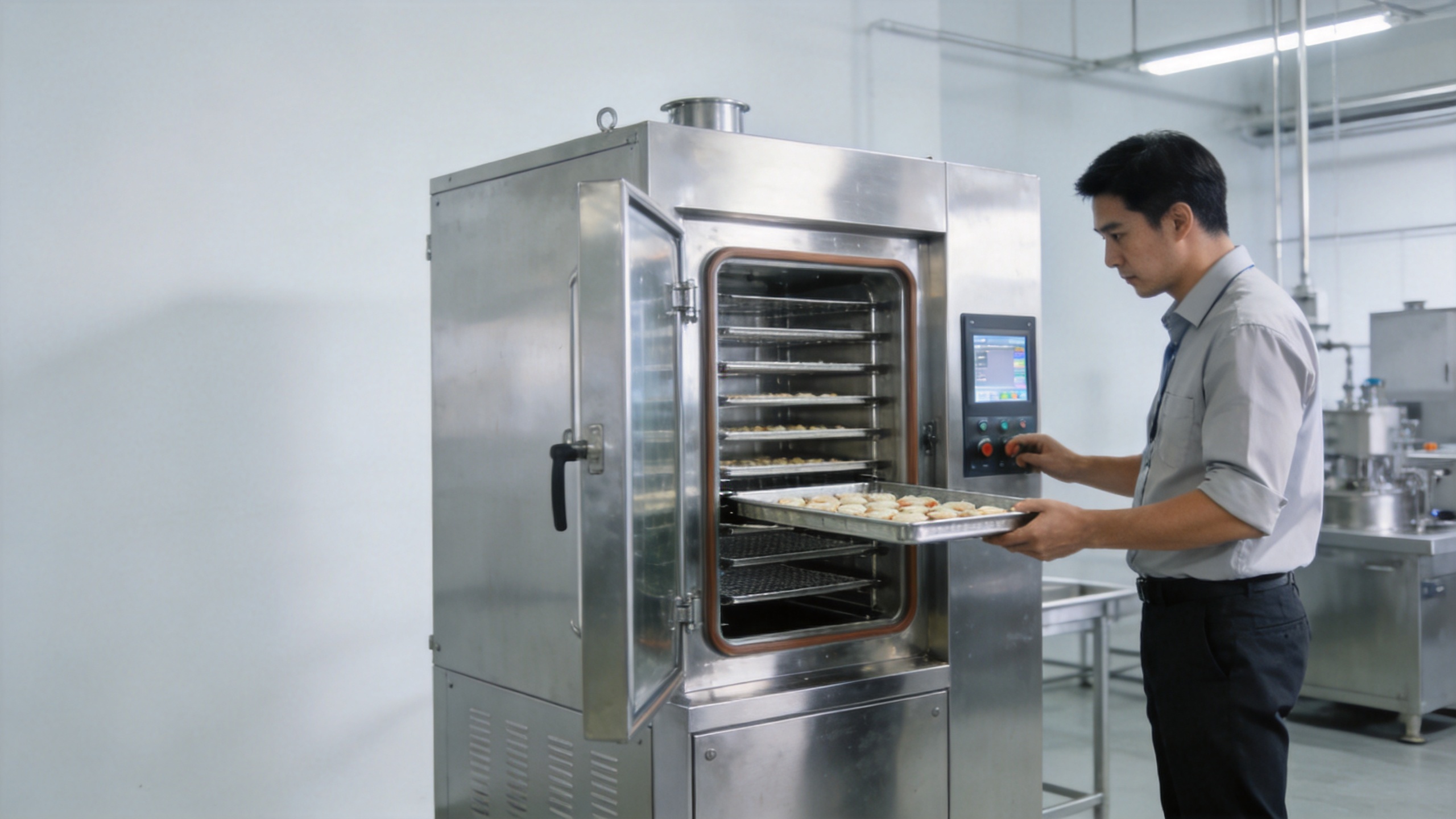
Assess the vacuum pump in the context of the full system, not in isolation. In a freeze dried food machine for sale, pump performance, chamber integrity, vapor path, condenser duty, refrigeration, and controls work together. A strong supplier discussion therefore covers more than the brand or nominal pumping speed of a vacuum pump.
| What to verify | Why it affects the purchase | Evidence to request |
|---|---|---|
| Vacuum stability under load | It indicates whether the system can maintain the required process condition while moisture is leaving the product. | Loaded-cycle trend records and the test conditions used. |
| Condenser performance | The condenser must handle the vapor released by the intended load, not just an empty-chamber demonstration. | Condenser specification, refrigeration configuration, and a capacity explanation tied to the product. |
| Shelf or tray temperature control | Heat input affects both drying progression and product quality. | Controller screen examples, sensor locations, and calibration or verification approach. |
| Alarm and data handling | Operators need to identify deviations and retain records for troubleshooting or quality review. | Alarm list, data-export options, and sample batch records. |
Published food freeze-drying literature describes condenser conditions in a broad range that can depend on the material and process. That is exactly why copying a single temperature target is not a substitute for a product-specific trial. Ask the supplier how its proposed freeze dried food machine for sale will be demonstrated under the conditions you actually expect to run.
Verify food-safety and hygienic design responsibilities
Equipment can support a food-safety plan, but it does not replace product validation, sanitation controls, or local regulatory review. For time/temperature-control-for-safety foods, process validation may be required before a plan is accepted. Buyers should clarify these responsibilities before signing a contract.
Discuss food-contact materials, chamber and tray finish, drainage, seals, access for cleaning, documentation, and the boundaries between the machine supplier’s scope and the buyer’s quality team. If a supplier mentions HACCP, ask precisely what the machine documentation supports and what still must be validated for your recipe, facility, market, and packaging process. Avoid treating a general claim as proof of approval.
Compare the quotation by total ownership, not only the machine price
First-time buyers often spend most of their effort comparing the headline price. The more durable comparison is the cost and risk of operating the machine over time: utility demand, consumables, pump maintenance, refrigeration service, seals, spare parts, remote support, and downtime exposure. A lower initial quotation can be harder to justify if the support scope is unclear.
Ask each supplier to separate included and optional items: installation guidance, electrical requirements, commissioning, operator training, manuals, remote diagnostics, recommended spare parts, warranty exclusions, packing, and export documentation. Hongle Machinery describes its overseas support approach as including remote video technical guidance, operating manuals, and spare-parts support; buyers should still have the exact deliverables, response route, and exclusions written into the commercial offer.
Use the supplier review to test practical readiness
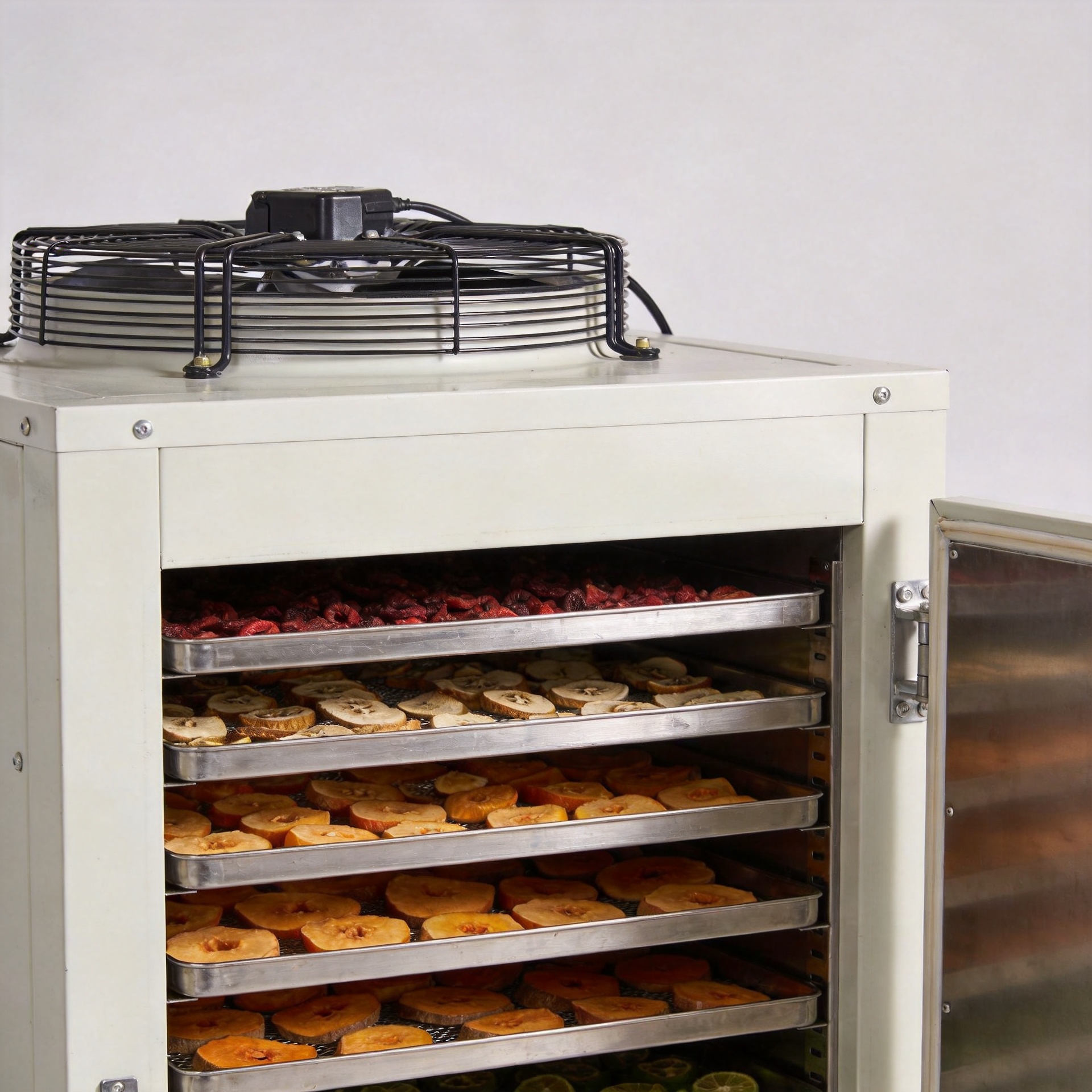
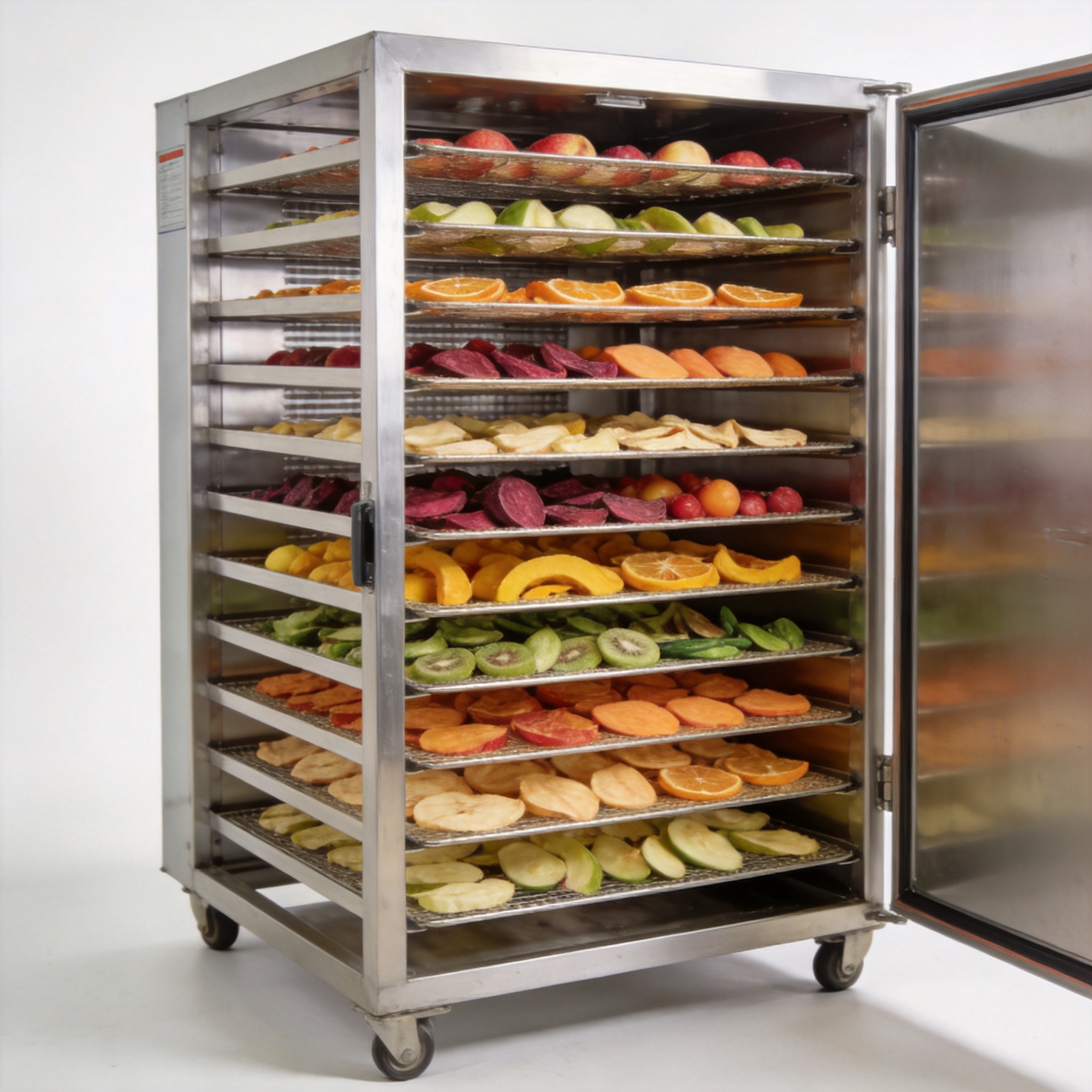
For a food project, a supplier review should produce answers that can be checked later. Request a layout drawing with utility connections, a clear responsibility matrix, a delivery schedule with milestones, and a test protocol. If you plan to evaluate drying or dehydration equipment alongside the freeze-drying project, you can also review Hongle Machinery’s fruit and vegetable dehydration air-source heat pump drying machine as a confirmed site product page; it should not be treated as a substitute for a freeze-dryer specification.
A practical checklist for a freeze dried food machine for sale should end with three documents: the agreed technical specification, the loaded-test acceptance criteria, and the service-and-spares scope. If any one of those is vague, the purchase risk remains open.
Final buying checklist
- Define the product, load, cycle target, and annual throughput before comparing machines.
- Ask how quoted capacity was calculated and require a product-relevant test plan.
- Review vacuum, condenser, refrigeration, temperature control, and data records together.
- Clarify hygienic design, cleaning access, validation responsibilities, and documentation.
- Compare utilities, maintenance, training, spares, commissioning, and service response—not just price.
- Put acceptance conditions and exclusions into the purchase documentation.
The right freeze dried food machine for sale is the one that gives your team evidence for a repeatable food process and a support path after shipment. Use the checklist to make supplier claims comparable, then choose the configuration that fits your product and operating plan.