EN


Heat Pump Drying for Fruits and Vegetables: Process Basics for Food Producers
For a food producer, a heat pump condenser dryer is not the same thing as a household laundry appliance. In a food-processing setting, a heat pump condenser dryer is part of a controlled-air process used to remove moisture from prepared fruit and vegetable pieces. The starting question is not simply which machine to buy. It is whether the crop, cut size, daily throughput, sanitation plan, and target finished texture can be managed as one repeatable process.
As a practical equipment-selection principle, start with the product rather than a catalogue specification. A heat pump condenser dryer can support a controlled drying environment, but the result still depends on raw-material variation and operator discipline. The following overview explains the process basics that should be understood before comparing equipment.
What a heat pump condenser dryer does in food production
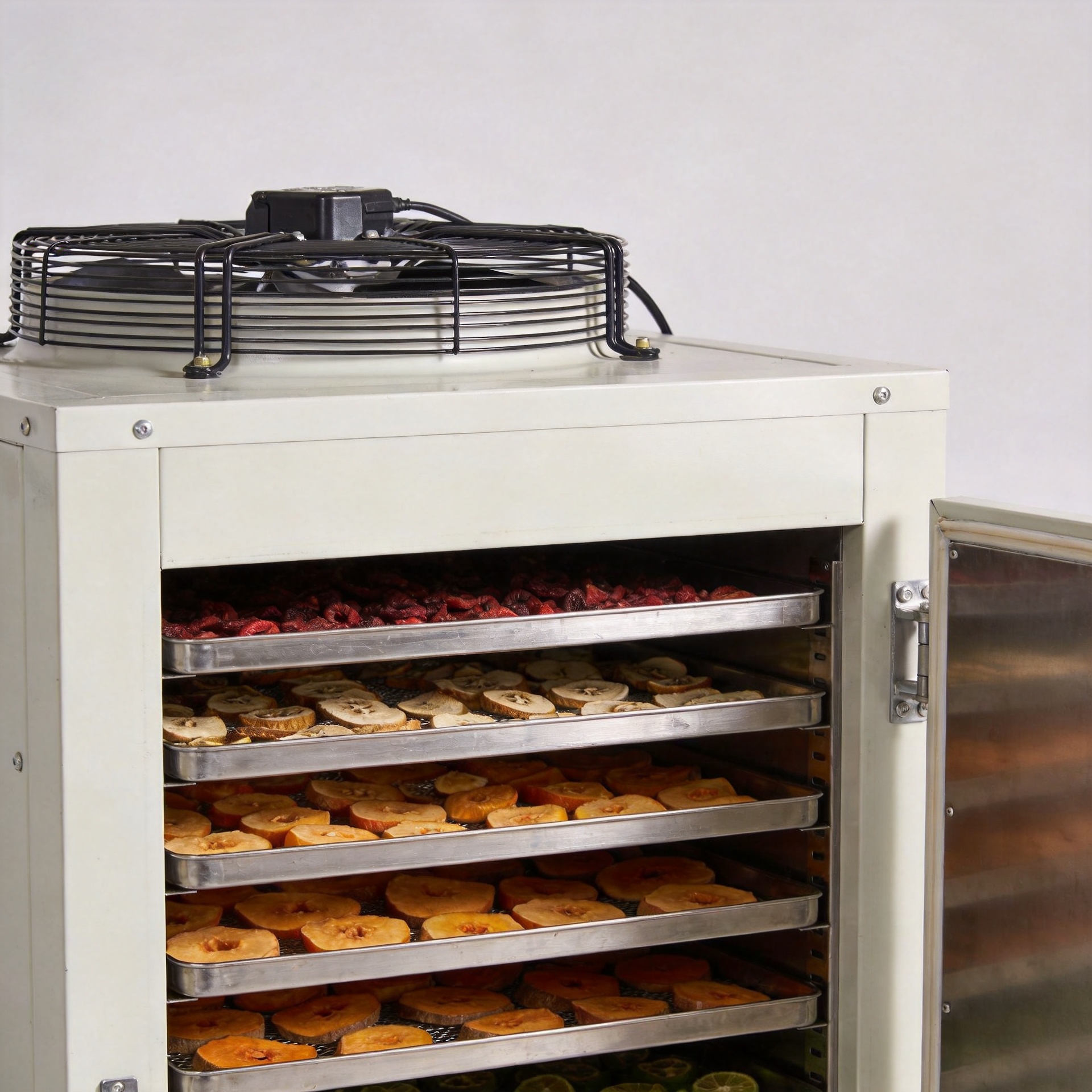
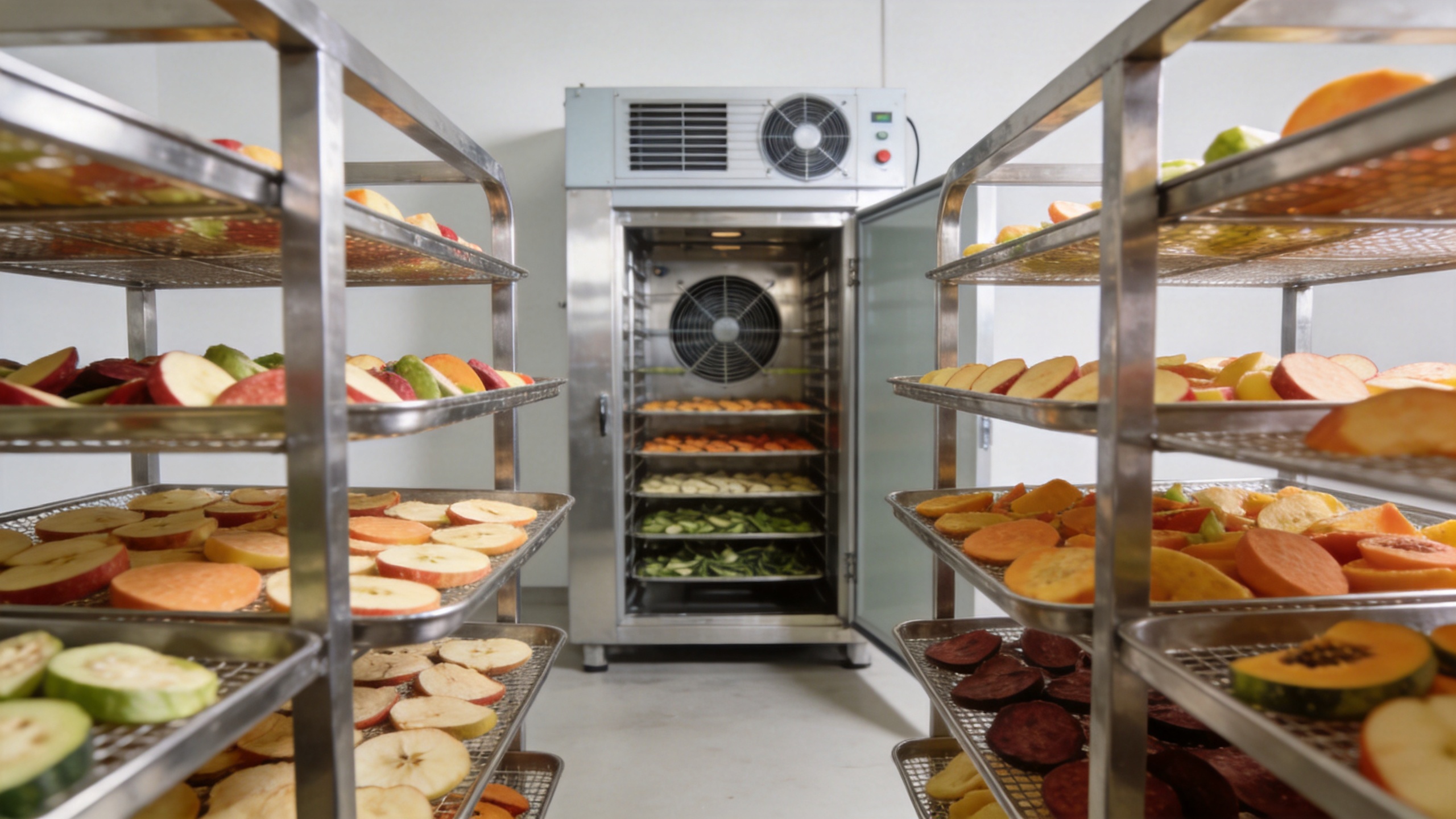
A food-oriented heat pump condenser dryer circulates air through a drying chamber, removes moisture from that air, and returns conditioned air to continue drying. This recirculating approach is useful when producers need closer control of air temperature and humidity than an open hot-air process may provide. Reviews of fruit and vegetable drying describe heat-pump systems as creating relatively low-temperature, controlled-humidity environments; that principle is relevant because many plant materials respond differently to heat, airflow, and moisture removal.
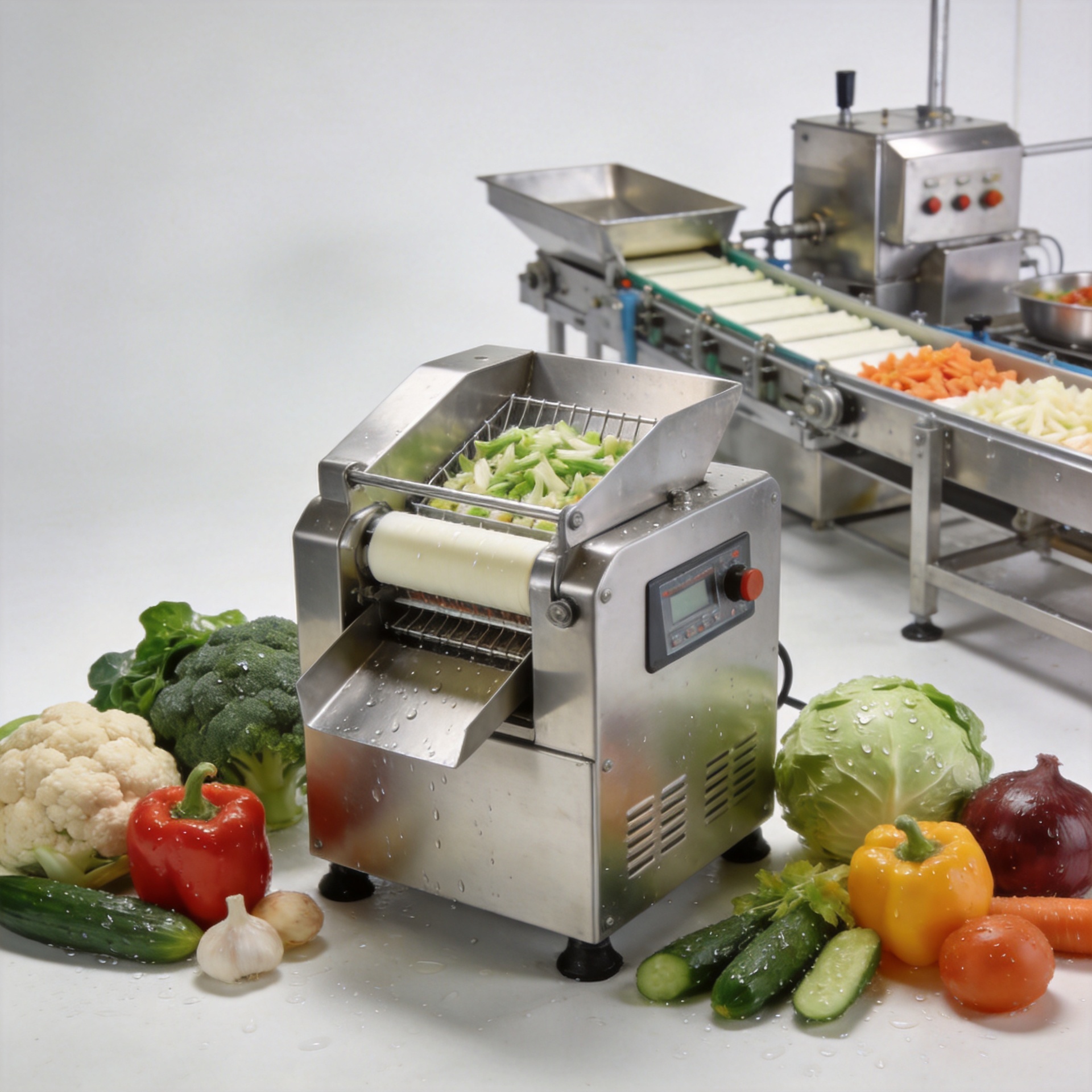
In operation, the heat pump condenser dryer is one part of a wider sequence: receiving, washing, sorting, cutting, loading, drying, cooling, inspection, and packaging. It does not make every product behave the same way. A thin pear slice, a diced carrot, a leafy herb, and a dense root vegetable release water at different rates. Good production planning therefore treats the heat pump condenser dryer as a controlled process chamber, not as a universal setting with one drying time.
Start with the raw material and the finished-product requirement
Before setting a heat pump condenser dryer programme, define what “finished” means for the product. A snack ingredient may need a crisp bite; a soup ingredient may need a specific rehydration response; a powder ingredient may need a moisture level compatible with milling and packaging. These outcomes influence slice thickness, loading depth, air movement, endpoint checks, and cooling time.
Raw material consistency is equally important. Fruit maturity affects sugar and water content. Vegetable size affects the amount of cutting needed to create even pieces. Bruised or mixed-grade material can introduce uneven drying behaviour. For that reason, a heat pump condenser dryer programme should be validated using representative lots rather than only a small, ideal sample. If seasonal supply varies, record the changes that matter: cut geometry, starting condition, load weight, drying time, and the observations made at discharge.
Prepare fruit and vegetables for even drying
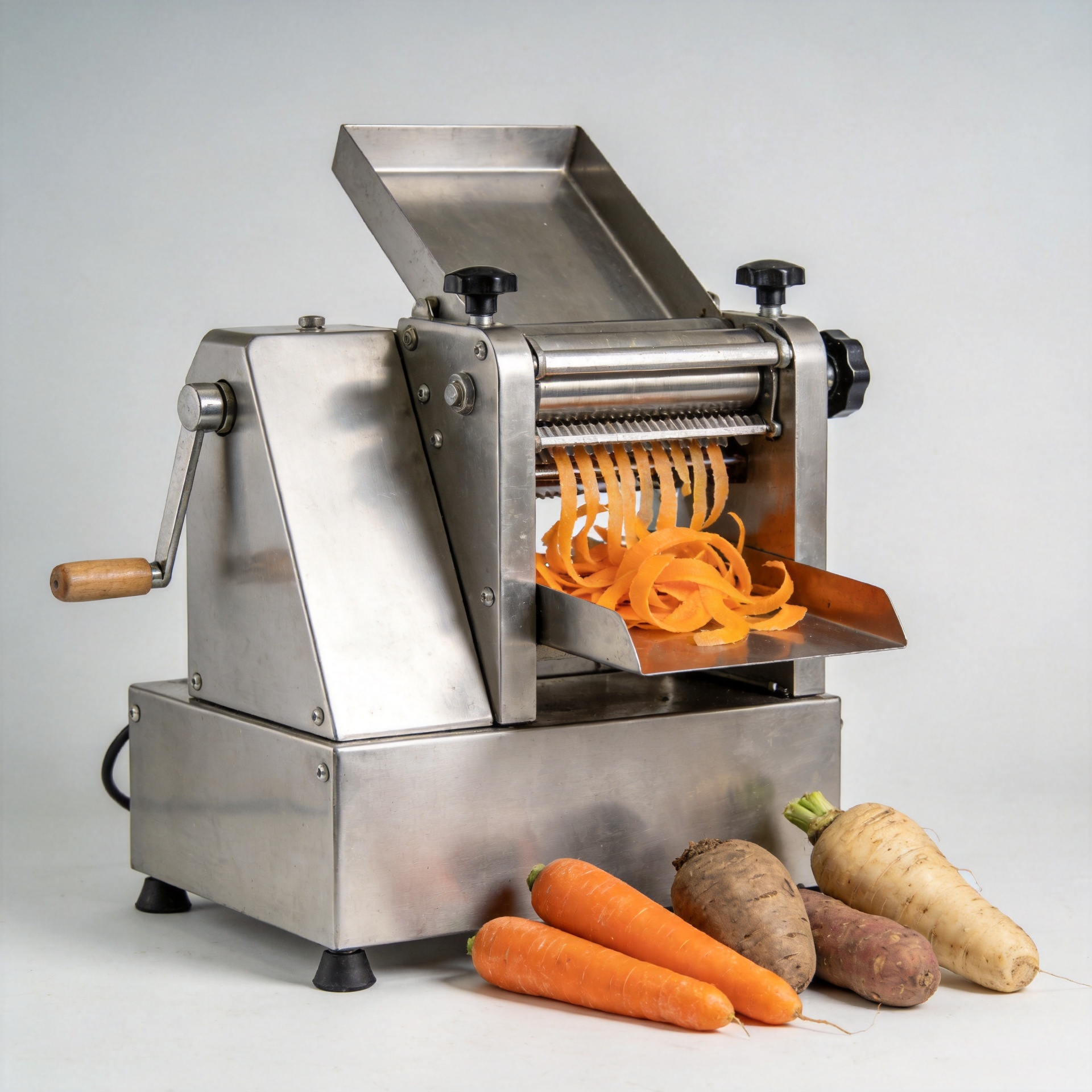
Many drying problems begin before product enters the chamber. Washing removes field debris; sorting removes material that does not fit the intended grade; and consistent cutting helps expose comparable surface area. Depending on the commodity and recipe, processors may also use approved preparation steps to manage colour or texture. Those choices should be established within the producer’s own food-safety and product-development controls.
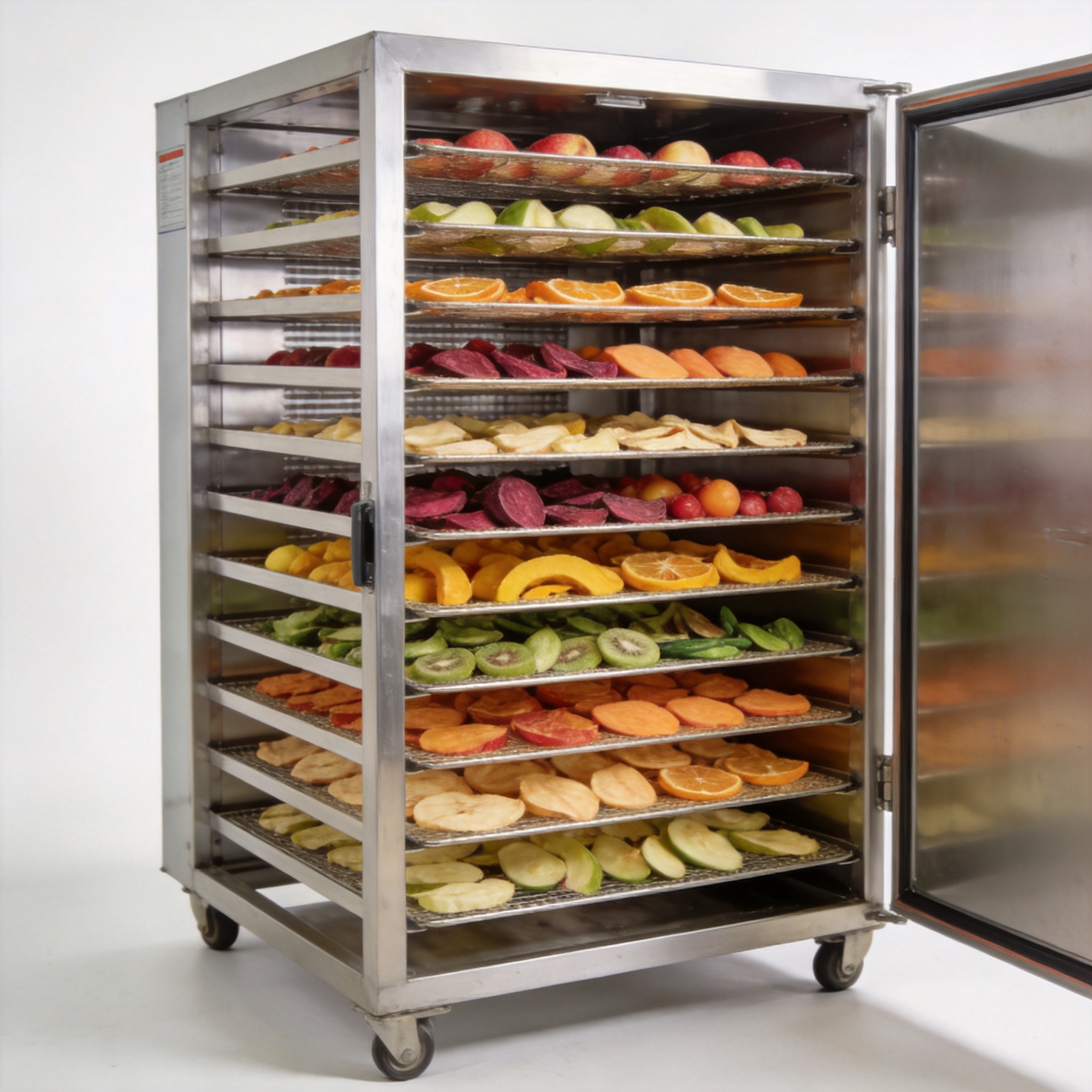
When trays are loaded, leave a layout that allows process air to contact the product rather than creating dense piles. A heat pump condenser dryer cannot compensate for overcrowded trays or large differences in piece size. Trial runs should check more than total hours: compare centre and edge trays, inspect different shelf levels, and record where product remains softer or darker than the intended result. This is the operational detail that turns a drying concept into a repeatable batch plan.
Control the drying curve, not only the temperature
Temperature matters, but it is only one operating variable in a heat pump condenser dryer. Air humidity, airflow path, product loading, and the changing moisture condition of the food all influence how quickly water can leave the material. Ambient conditions can also influence drying effectiveness, which is one reason a controlled system and consistent operating records are valuable to manufacturers.
For a new product, build a process sheet around phases rather than relying on a single instruction. An early phase may focus on removing surface moisture without damaging the product surface. A middle phase may require steady movement of moisture from within the pieces. A finishing phase may be adjusted to reach the required condition while avoiding unnecessary exposure. The exact programme must be verified for the specific product; a heat pump condenser dryer should be set from trial evidence, not copied from an unrelated commodity.
Plan batches around capacity, changeovers, and verification
A practical heat pump condenser dryer decision includes the work around the chamber. Estimate how many kilograms of prepared material can be loaded per batch, how long preparation and unloading take, how many product types share the line, and how cleaning fits between them. A nominal chamber capacity is less useful if upstream slicing cannot supply evenly prepared material or if finished product waits too long before packaging.
For each product family, define a simple verification routine. This may include visual checks for colour uniformity, physical checks for texture, weight-loss tracking, and the moisture or water-activity checks required by the producer’s quality plan. Retain batch records when scaling from trials to regular production. A heat pump condenser dryer creates repeatability only when the surrounding preparation, loading, and acceptance criteria are also controlled.
How to compare equipment without losing sight of the process
When evaluating a heat pump condenser dryer, ask suppliers to discuss the chamber layout, airflow path, tray configuration, operator controls, cleaning access, electrical requirements, and the support needed for commissioning. Then relate those answers to your own product list and shift pattern. It is more useful to review a proposed drying workflow than to compare isolated claims about capacity.
For producers exploring an equipment option, the Fruit Vegetable Agricultural Product Dehydration Air Source Heat Pump Drying Machine can serve as a starting point for a technical discussion. Bring representative product information, target output, available floor space, and expected batch schedule. Those details help make a heat pump condenser dryer assessment relevant to the actual line.
A sensible next step for food producers
Heat-pump drying is most effective when it is approached as a product-and-process project. Define the material, prepare it consistently, test loading patterns, monitor the drying curve, and confirm the quality attributes that matter after cooling and packaging. With that foundation, a heat pump condenser dryer becomes easier to assess as part of a stable fruit and vegetable dehydration operation.